
Trees
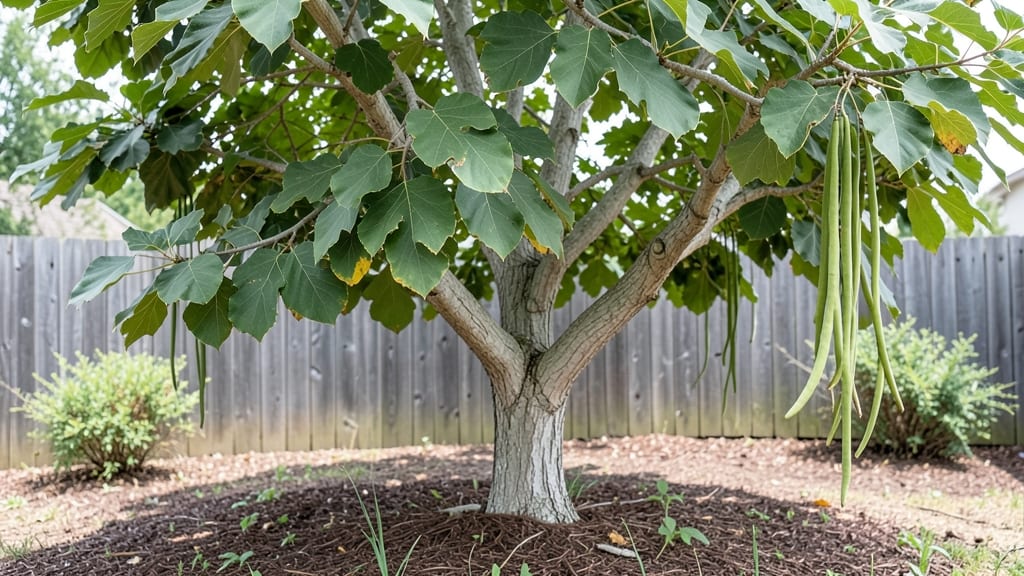
Growing a yellow catalpa tree means fast privacy with stunning summer blooms—this tree shoots up 12+ feet in just a few years while filling your yard with fragrant white flowers and golden foliage. 🌿 I planted mine last spring, and by summer, it already blocked the neighbor’s fence while smelling like a summer meadow after rain.
The secret isn’t just speed; it’s how effortlessly it thrives in tough conditions once established.
This tree loves full sun but handles partial shade surprisingly well, making it perfect for tight spaces or urban yards. It’s not picky about soil—sandy, clay, or loamy—just make sure it drains well. Water deeply when young, then let nature take over; mature catalpas are drought-tolerant once their roots spread.
The real magic happens in late summer when clusters of fragrant white blooms appear, followed by long seed pods that add winter interest.
Pruning is minimal—just remove dead branches in early spring—but you’ll want to shape it young to encourage a full, bushy form. The yellow leaves in fall? A bonus no other catalpa offers.
By year three, you’ll have a 15-foot privacy screen that smells amazing, attracts hummingbirds, and needs almost no care. Here’s how to get started without the guesswork.
Best for warm climates (zones 5-9), but cold-hardy enough for northern gardens with proper winter mulch. Whether you’re hiding an eyesore or adding fragrance to your yard, this tree delivers fast—and keeps delivering for decades. Let’s get yours growing.
Root Causes Of Yellowing Leaves
If your Catalpa speciosa (northern catalpa) or Catalpa bignonioides (southern catalpa) is showing yellowing leaves, it’s often a cry for help from the tree itself. Understanding the why behind the discoloration is key to reviving your fast-growing privacy screen.
Below, we break down the most common culprits—each with a clear scientific explanation and actionable steps to address them.
Yellowing leaves, especially on younger catalpa trees, are often a sign of root suffocation from excess moisture. Catalpas thrive in well-drained soil but struggle when their roots sit in soggy conditions. Here’s why:
- Oxygen deprivation: Roots need oxygen to absorb nutrients. Waterlogged soil pushes oxygen out, leading to anaerobic conditions—a toxic environment for roots.
- Fungal infections: Stagnant water invites pathogens like Phytophthora or Pythium, which rot roots and block nutrient uptake.
- Nutrient leaching: Excess water washes away essential minerals (e.g., nitrogen, potassium) that catalpas need for green foliage.
Actionable fix:
- 🔍 Test your soil: Dig 6–12 inches deep near the tree. If it’s damp after 2–3 days, drainage is the issue.
- 🏗️ Amend the soil: Mix in 2–3 inches of compost or coarse sand to improve aeration.
- 💧 Adjust watering: Water deeply once a week (or less in rain) rather than frequent shallow watering. Catalpas hate "wet feet."
Yellowing leaves can signal a nutritional imbalance, particularly if the discoloration starts on older leaves (a classic sign of chlorosis). Catalpas are heavy feeders, and soil depletion is common in fast-growing trees. The most likely deficiencies:
| Nutrient | Symptoms | Why It Happens |
|---|---|---|
| Nitrogen (N) | Yellowing between leaf veins (yellowing starts at leaf base, progresses upward). | Nitrogen is crucial for chlorophyll production. Depleted soil or poor organic matter leads to stunted growth and pale leaves. |
| Iron (Fe) | Bright yellow leaves with green veins (interveinal chlorosis). Common in alkaline soils. | Iron becomes unavailable in high-pH soils (>7.0), even if present. Catalpas can’t access it. |
| Magnesium (Mg) | Yellowing starts at leaf edges or tips, then spreads inward. | Magnesium is a chlorophyll component. Over-fertilization with nitrogen can displace magnesium. |
Actionable fix:
- 📊 Soil test first: Use a home test kit or send a sample to a local extension office. Catalpas prefer slightly acidic to neutral soil (pH 6.0–7.5).
- 💡 For nitrogen: Apply a balanced fertilizer (e.g., 10-10-10) in early spring or use composted manure.
- 🌡️ For iron/chlorosis: Use chelated iron supplements (e.g., iron sulfate or EDTA-chelated iron) in early spring when soil is moist.
- 🍃 For magnesium: Sprinkle Epsom salt (magnesium sulfate) around the base (1 tbsp per foot of tree height) and water deeply.
Pests can sap nutrients or physically damage leaves, leading to yellowing. Catalpas are particularly vulnerable to:
- Spotted lanternfly (Lycorma delicatula): This invasive insect feeds on sap, causing wilting, yellowing, and oozing sap. Heavy infestations can kill branches.
- Catalpa sphinx moth caterpillars: While their damage is usually chewed leaves, stressed trees may yellow faster due to reduced photosynthesis.
- Aphids & scale insects: These suck nutrients from leaves, leading to curling and yellowing, especially on new growth.
Actionable fix:
- 🔍 Inspect leaves/stems: Look for:
- 🟡 Sticky residue (honeydew) = aphids/scale.
- 🟣 Reddish-brown eggs in tree crevices = lanternfly.
- 🐛 Chewed holes or frass (sawdust-like droppings) = caterpillars.
- 💦 Blast pests off: Use a hose spray to dislodge aphids or lanternfly nymphs.
- 🌿 Neem oil or insecticidal soap: Apply every 7–10 days for mild infestations. For lanternflies, use kaolin clay or pyrethrin-based sprays.
- 🚫 Avoid broad-spectrum pesticides: They can kill beneficial insects that help control pests naturally.
Catalpas are hardy but sensitive to extreme conditions. Yellowing can occur when:
- Heat stress: Prolonged high temperatures (>90°F) cause chlorophyll breakdown, leading to yellowing, especially on exposed leaves.
- Cold damage: Late frosts or sub-zero temps can burn new growth, causing yellowing or browning.
- Wind scorch: Dehydration from wind exposure (common in urban areas) leads to crispy yellow edges.
Actionable fix:
- 🌳 Provide shade: Use lightweight shade cloth (30–50%) during extreme heat waves.
- 💧 Deep watering: Water early morning to reduce evaporation. Aim for <
Revitalizing Your Tree’s Health
When your catalpa’s leaves turn yellow, it’s often a sign that something needs attention—but don’t panic! With the right care, your tree can bounce back to its lush, vibrant self. Below, we’ll tackle the most common causes of yellowing foliage and provide practical, step-by-step solutions to restore your catalpa’s health.
We’ll also share prevention tips to keep future issues at bay.
Yellowing leaves can signal a lack of essential nutrients. Catalpas thrive with balanced care, and a simple soil test (available at garden centers) can pinpoint deficiencies.
🔥 Step 1: Test Your Soil
- Grab a soil sample from 6 inches deep near the tree’s drip line.
- Send it to a local extension office or use a home test kit.
- Common deficiencies in catalpas: nitrogen (N), iron (Fe), or magnesium (Mg).
🍳 Step 2: Apply the Right Fertilizer
- For nitrogen deficiency (pale yellow leaves):
- Use a balanced 10-10-10 fertilizer or composted manure in early spring.
- Follow package instructions for application rates.
- For iron deficiency (yellowing between veins):
- Sprinkle chelated iron granules around the root zone and water thoroughly.
- Repeat every 2–3 months during growing season.
- For magnesium deficiency (yellow patches with green veins):
- Apply Epsom salt (magnesium sulfate)—mix 1 tablespoon per gallon of water and spray on leaves.
- Water the soil with a stronger solution (1 oz per gallon) for root absorption.
👨🍳 Step 3: Improve Soil Health Long-Term
- Mulch properly: Spread 2–4 inches of organic mulch (wood chips, shredded bark) around the base, keeping it 6 inches away from the trunk.
- Aerate compacted soil: If the ground feels hard, use a garden fork to loosen it in early spring.
- Add compost: Work 2–3 inches of compost into the top 6 inches of soil annually.
Yellow leaves can also mean your catalpa is sitting in soggy soil, which suffocates roots.
🌡️ Step 1: Check Drainage
- Dig a small hole near the tree—if water pools after 30 minutes, drainage is poor.
- Fix it: Amend the soil with sand or perlite to improve aeration.
⏰ Step 2: Adjust Watering Habits
- Water deeply but less often: Catalpas prefer 1–1.5 inches of water per week (including rain).
- Avoid soggy soil: Water only when the top 2 inches of soil are dry.
- Install a French drain if water pools near the base.
Yellowing leaves can be a red flag for catalpa worms, aphids, or fungal issues.
🔪 Step 1: Identify the Culprit
- Catalpa worms (larvae): Large, green caterpillars with white stripes.
- Aphids: Tiny clusters on new growth.
- Fungal spots: Yellow rings or black spots on leaves.
🎯 Step 2: Treat Infestations
- For catalpa worms:
- Handpick larvae and drop them in soapy water.
- Apply Bt (Bacillus thuringiensis) spray—safe for pets and wildlife.
- For aphids:
- Blast off with a strong hose spray.
- Use neem oil (mix 1 tbsp per quart of water) as a natural repellent.
- For fungal diseases:
- Prune and dispose of infected leaves (don’t compost them).
- Spray with copper fungicide or baking soda mix (1 tsp baking soda + 1 quart water + a drop of dish soap).
Once your tree recovers, keep it thriving with these proactive steps:
- 💡 Prune in late winter/early spring to remove dead or crowded branches.
- ✨ Monitor regularly for early signs of stress (yellowing, wilting, pests).
- 🌡️ Avoid heavy clay soil—amend with compost if planting a new catalpa.
- 🎯 Space trees properly (20–30 feet apart) for airflow and sunlight.
By addressing the root cause—whether it’s nutrients, water, pests, or disease—your catalpa can regain its deep green glory and continue providing that fragrant summer bloom you love. 🌿🌸 With a little TLC, your privacy screen will be back to its best in no time!
Frequently asked questions
What’s the difference between a yellow catalpa tree and regular catalpa varieties?
The yellow catalpa tree (Catalpa bignonioides 'Aurea') is a cultivar with golden-yellow foliage that deepens to bronze in cooler weather. Unlike standard catalpas with green leaves, this variety offers year-round color contrast. The flowers remain the same fragrant white clusters, but the leaves create a striking visual impact, especially when planted near green shrubs.
How fast does a yellow catalpa tree grow?
Expect 3–5 feet per year in ideal conditions, reaching 20–30 feet tall at maturity. Young trees grow especially quickly, making them perfect for fast privacy screens. With proper care, you’ll see significant height gains within just a few seasons—ideal for filling empty spaces quickly.
Can yellow catalpa trees handle full sun exposure?
Yes! This variety thrives in full sun (6+ hours daily), where the leaves develop their brightest yellow color. While it tolerates partial shade, full sun exposure enhances both growth and foliage vibrancy. Just ensure well-draining soil to prevent root stress in hot climates.
Are the seed pods on yellow catalpa trees harmful?
No—the long, cylindrical seed pods (up to 12 inches) are harmless but can look messy. They add winter interest but may require occasional cleanup. The pods contain small, non-toxic seeds that birds love, though they can spread if allowed to drop. Prune them off in late winter if preferred.
How do I prune a yellow catalpa tree for maximum color?
Prune in late winter/early spring before new growth begins. Remove dead or crossing branches first, then thin out crowded areas to improve airflow. Avoid heavy pruning—this variety responds best to light shaping. Focus on maintaining an open canopy to let sunlight reach inner leaves, which keeps the yellow hue vibrant.