
Pests and Diseases
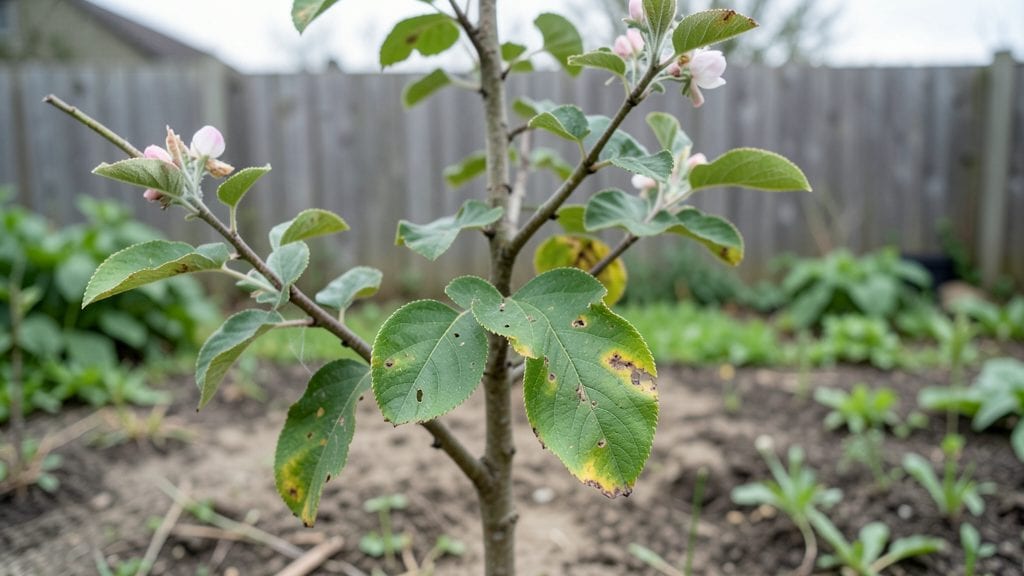
Identifying apple tree diseases on leaves becomes much easier with these apple tree diseases leaves pictures—see how apple scab turns leaves into twisted, blackened messes and powdery mildew coats them in ghostly white. needs help.
The first step is matching the symptoms to the disease, because treatment depends entirely on what's actually wrong.
Most of these problems start with moisture—too much rain or overhead watering creates the perfect conditions for fungal spores to take hold. My garden journal shows that apple scab thrives when spring stays damp, while fire blight strikes after wet, warm nights.
The good news? Once you recognize the patterns, prevention becomes straightforward: better airflow, proper pruning, and timing sprays for wet seasons.
You'll learn to identify the telltale spots, streaks, and discoloration that give each disease away. Apple scab shows olive-brown patches with yellow borders, powdery mildew leaves a chalky residue, and fire blight creates blackened, wilted branches.
With these visual clues, you can act fast—whether that means cleaning up fallen leaves, applying copper fungicide, or calling in an arborist for stubborn cases.
This works for backyard orchards, community gardens, or even container-grown apple trees. The key is catching problems early, before they spread to fruit or weaken the whole tree. Let's get those leaves looking healthy again—starting with what's wrong now.
Root Causes Of Leaf Damage
Apple trees are resilient, but their leaves can develop unsightly—and often harmful—patterns due to a mix of biological, environmental, and human factors. Understanding why these issues arise is the first step to prevention and treatment.
Below, we break down the science behind the most common culprits, from fungal invaders to weather-related stress.
Fungi are the #1 cause of leaf spot diseases in apple trees, thriving in warm, humid conditions. These microscopic organisms release spores that latch onto leaves, disrupting photosynthesis and causing discoloration, spots, or even premature leaf drop.
- Pathogen spread: Fungal spores (like those from Venturia inaequalis, the apple scab pathogen) are airborne or splash onto leaves via rain. Once they land on a susceptible leaf, they germinate and penetrate the surface, feeding on nutrients.
- Moisture dependency: High humidity (above 75%) and prolonged leaf wetness (over 9 hours) create the perfect breeding ground. Wet foliage allows spores to germinate rapidly, while dry conditions slow their growth.
- Weakened tree defense: Stressed trees (from drought, poor soil, or nutrient deficiencies) have thinner cuticles, making them easier targets for fungal entry.
💡 Pro Tip: Early morning watering (before 10 AM) reduces leaf wetness, while proper spacing between trees improves airflow—both key to fungal prevention.
Extreme or inconsistent weather conditions can weaken apple trees, making them vulnerable to diseases. While weather itself doesn’t cause fungal infections, it sets the stage for them.
- Temperature swings: Sudden cold snaps followed by warm, rainy spells shock trees into rapid growth. New leaves are tender and less resistant to pathogens like powdery mildew (Podosphaera leucotricha).
- Drought stress: Dry soil forces trees to conserve water, reducing their ability to produce protective compounds. Once rain returns, the tree’s weakened state invites fungal colonization.
- Poor air circulation: Dense foliage or overcrowded orchards trap moisture, creating microclimates where fungal spores flourish. This is why apple black rot often appears in shaded, humid pockets.
✨ Actionable Fix: Prune trees to open the canopy (aim for 6–12 inches between branches) and mulch to regulate soil moisture. Drought-tolerant varieties like ‘Liberty’ or ‘Enterprise’ are also less prone to stress-related diseases.
While pests like aphids, mites, or borers don’t directly cause leaf spots, their feeding weakens trees, making them more susceptible to infections. For example:
- Aphids excrete honeydew, a sugary residue that promotes sooty mold—a black fungal growth on leaves.
- Spider mites puncture leaf cells, creating entry points for secondary pathogens like Alternaria leaf spot.
- Canker bacteria (e.g., Pseudomonas syringae) enter through wounds caused by hail, pruning cuts, or pest damage, leading to sunken, oily spots.
🔥 Prevention Tip: Monitor trees weekly for pests (especially undersides of leaves) and treat infestations early with horticultural oil or neem oil. Avoid broad-spectrum pesticides that kill beneficial insects.
Imbalances in soil nutrients—particularly nitrogen (N), phosphorus (P), or micronutrients like zinc or magnesium—can manifest as leaf discoloration that mimics disease symptoms.
- Nitrogen deficiency: Leaves turn yellow (chlorosis) between veins, weakening the tree’s immune response. Fungi like Marssonina coronaria (a cause of apple leaf blotch) exploit this weakness.
- Magnesium deficiency: Interveinal yellowing (starting on older leaves) reduces chlorophyll, making leaves more prone to sunburn and fungal invasion.
- Excessive fertilizer: Over-application of nitrogen can lead to rapid, weak growth with thin cell walls—an open invitation for pathogens.
📊 Soil Test Savvy: Conduct a soil test every 2–3 years to check pH (ideal: 6.0–7.0 for apples) and nutrient levels. Adjust with organic matter (compost) or targeted amendments (e.g., Epsom salt for magnesium).
By addressing these root causes—whether through cultural practices, targeted treatments, or environmental management—you can protect your apple tree’s leaves and keep diseases at bay. Next up: How to identify specific leaf spot patterns with our visual guide and treatment options.
Fixing Apple Tree Leaf Problems
Reviving your apple tree’s health starts with identifying the right treatment for its leaf issues. Below are practical, step-by-step solutions for the most common diseases, along with prevention tips to keep your tree thriving. Let’s get your tree back to its vibrant best! 🌿🍏
Apple scab is one of the most destructive fungal diseases, causing dark, olive-green spots on leaves that eventually turn crusty. Here’s how to eliminate it and prevent recurrence:
🔥 Treat the Infection
- Prune Infected Branches 🪓 - Remove and destroy (do not compost) severely infected leaves and twigs.
Focus on cross-hatched branches where airflow is poor. - Sterilize pruning tools with 70% rubbing alcohol or a bleach solution (1 part bleach to 9 parts water) to avoid spreading spores.
- Apply Fungicide 🛡️
- Use copper-based fungicides (like Bordeaux mixture) or sulfur sprays during early spring (before buds swell) and after rain.
- For organic options, try neem oil or baking soda spray (1 tbsp baking soda + 1 tsp oil + 1 gallon water + a drop of dish soap).
- Reapply every 7–14 days during wet seasons or after heavy rain.
- Improve Air Circulation 🌬️
- Thin out dense foliage to reduce humidity near the tree. Aim for 6–8 feet of space between trees.
- Avoid overhead watering—use drip irrigation or soaker hoses to keep leaves dry.
💡 Prevention Tips
- Plant resistant varieties like ‘Liberty’ or ‘Enterprise’ if scab is recurrent in your area.
- Clean up fallen leaves in autumn—bag and discard them (don’t mulch).
- Apply mulch (2–3 inches deep) to suppress fungal spores in the soil.
Powdery mildew coats leaves in a white, powdery film, stunting growth and causing premature leaf drop. Here’s how to banish it fast:
🍳 DIY Spray Solutions
- Horticultural Oil Spray 🛢️
- Mix 1–2% horticultural oil with water and spray early in the morning (avoid direct sun to prevent leaf burn).
- Repeat every 7–10 days until symptoms disappear.
- Milk Spray (Yes, Really!) 🥛
- Combine 1 part milk (skim or whole) with 9 parts water and add a drop of dish soap.
- Spray directly on both leaf sides—milk contains natural fungicidal properties.
- Reapply every 5–7 days for severe cases.
- Baking Soda Remedy 🧂
- Mix 1 tbsp baking soda + 1 tsp oil + 1 gallon water + a dash of soap.
- Spray weekly during humid conditions.
🌡️ Long-Term Fixes
- Space trees properly (12–15 feet apart) to enhance airflow.
- Water at the base (not overhead) and avoid late-season nitrogen fertilizers, which promote lush, mildew-loving growth.
- Plant companion plants like garlic or chives nearby—they repel mildew-causing spores.
Black rot causes V-shaped lesions on leaves and cankers on branches. If untreated, it can kill the tree in 2–3 years. Act fast with these steps:
👨🍳 Emergency Treatment
- Remove All Infected Fruit & Leaves 🍎❌
- Pick every infected apple (even small ones) and burn or trash them—do not compost.
- Rake up and destroy fallen leaves to eliminate spores.
- Prune Dead Wood ⏰
- Cut out cankered branches (black, sunken areas) 6 inches below the damage.
- Dispose of prunings—do not leave them in the yard.
- Apply Fungicide Early ⚔️
- Use copper fungicide or fixed copper spray before bud break in spring.
- For organic growers, potassium bicarbonate (like TreeHelp) works well—spray every 10–14 days.
🎯 Prevention for Next Year
- Plant black rot-resistant varieties like ‘Jonagold’ or ‘Honeycrisp’ if the disease persists.
- Avoid overhead irrigation—use drip systems to keep leaves dry.
- Monitor nearby crabapple trees—they’re common carriers of black rot.
This disease alternates between apple trees and cedar trees, causing orange pustules on leaves. To stop the spread:
🔪 Two-Step Solution
- Remove Cedar Hosts 🌲✂️
- If possible, prune or remove nearby Eastern red cedar trees (the rust’s alternate host).
- If cedars are too large, spray them with fungicide (like propiconazole) in late spring to kill spores before they infect apples.
- Treat Apple Trees 🍏🛡️
- Apply fungicide (copper or myclobutanil-based) as soon as orange pustules appear (usually May–June).
- Reapply every 10–14 days during wet periods.
✨ Pro Tips
- Plant apple trees away from cedars (at least 50 feet) if rust is a recurring issue.
- Encourage natural predators like ladybugs—they help control rust spores.
No matter the disease, strong trees fight off infections better. Follow these year-round habits:
- 💪 Fertilize Right: Use a balanced 10-10-10 fertilizer in early spring and potassium-rich (like 0-0-50) in late summer to boost immunity.
- 🥗 Mulch Properly: Apply 3 inches of organic mulch (wood chips, straw) to suppress weeds and retain moisture.
- 🌧️ Water Deeply: 1–2 inches per week (deep watering encourages strong roots).
- 🔍 Inspect Regularly: Check leaves weekly for early signs of disease—catch it early, treat it fast!
Final Reminder: Patience is key! Some treatments take 2–3 seasons to fully eradicate diseases. Stay consistent, and your apple tree will bounce back stronger than ever. 🍏💪
Frequently asked questions about apple tree leaf diseases
How can I tell if my apple tree leaves have apple scab vs. powdery mildew?
Apple scab shows olive-brown, velvety spots with yellow borders that eventually crack and turn black. Powdery mildew, however, leaves a white, powdery coating on both leaf surfaces, often starting on the undersides. Scab spots are usually raised and crusty while mildew feels like dust when rubbed between fingers.
Why do my apple tree leaves turn yellow between the veins?
This is often a sign of magnesium deficiency (chlorosis), but it can also indicate fungal infections like apple scab or environmental stress. Test your soil—low magnesium requires Epsom salt (1 tbsp per gallon of water) applied to the soil. If fungal, treat with copper fungicide and improve airflow around the tree.
Can I use the same fungicide for all apple tree diseases?
No—different diseases require specific treatments. Copper-based fungicides work for scab and black rot, while sulfur or horticultural oil targets powdery mildew. Cedar apple rust needs myclobutanil-based sprays. Always check the label for the exact pathogen and follow application timing (e.g., before bud break for best results).
What’s the best time of year to prune diseased branches?
Prune during dormancy (late winter/early spring) to remove infected wood before new growth starts. If you spot active infections in summer, prune immediately but sterilize tools with 70% rubbing alcohol to prevent spreading spores. Avoid heavy pruning in fall—it stresses the tree and invites further disease.
Will my apple tree recover if I treat the diseases now?
Yes, but recovery depends on how early you act. Mild cases (like early powdery mildew) can clear up in 2–3 weeks with proper treatment. Severe infections (e.g., black rot or fire blight) may take 1–2 seasons to fully resolve. Focus on removing infected parts, improving airflow, and applying fungicides consistently for best results.