
Watering
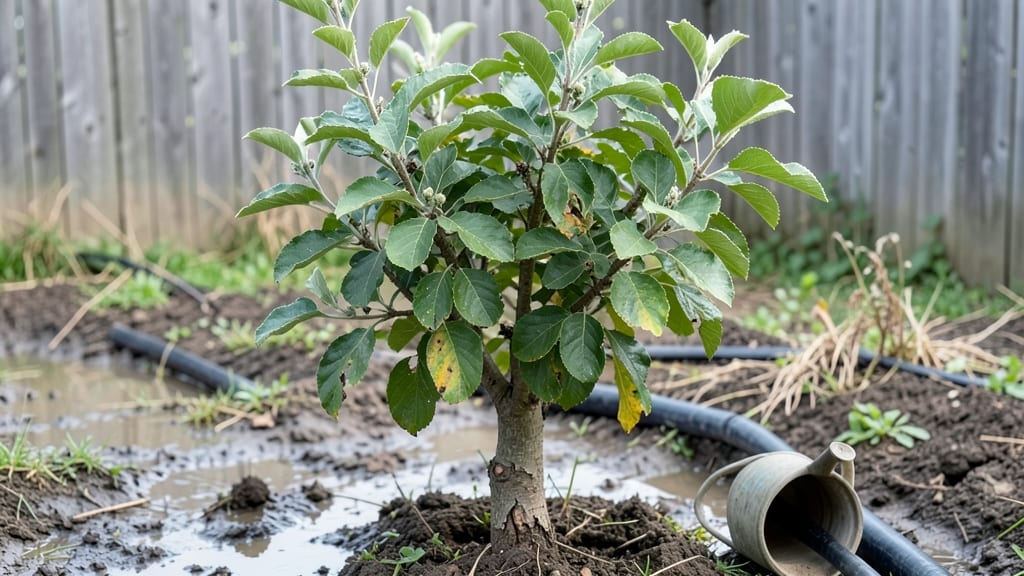
When your apple tree’s leaves turn yellow and the soil stays soggy for weeks, it’s not a drought—it’s too much water. 🌱 I’ve watched overwatered apple trees go from thriving to struggling in just a few weeks, and the fix starts with understanding how waterlogged roots strangle growth.
The good news? Most trees bounce back with the right adjustments, and you don’t need fancy tools to turn things around.
Root rot and compacted soil are the real villains here, not just the watering schedule. I check soil moisture with my finger first thing in the morning—if it’s still damp 2 inches down, that’s your warning sign.
The solution combines smarter watering (deep but infrequent), aerating the soil, and sometimes pruning affected roots. It’s not quick, but it works—my neighbor’s apple tree went from wilting to producing bushels of fruit in one season after we fixed drainage.
What you’ll end up with is a tree that drinks water like it’s supposed to: roots breathing properly, leaves a deep green instead of yellow, and branches strong enough to hold next year’s harvest.
The best part? Once you adjust the soil, you’ll spot the difference within weeks—new growth, firmer trunk, and even better flavor in those apples. Let’s get your tree back on track.
Works for backyard orchards, raised beds, or even container-grown apple trees—just scale the fixes to your space. The key is patience and observation, not guesswork. Here’s how to make it happen without losing another season.
Root Problems From Overwatering
When your apple tree gets too much water, it’s not just a minor inconvenience—it’s a silent threat that can suffocate roots, invite pests, and weaken the tree’s defenses. Understanding the why behind this issue is the first step to fixing it.
Below, we break down the key causes, backed by science, so you can take action before it’s too late.
Apple trees thrive in well-draining soil, but if your soil is clay-heavy, compacted, or lacks organic matter, water pools around the roots instead of draining away. This creates a waterlogged environment where:
- Oxygen depletion: Roots need oxygen to respire and absorb nutrients. In waterlogged soil, oxygen levels drop, suffocating roots and triggering stress responses like leaf yellowing or wilting. Studies show roots can die within 24–48 hours of complete oxygen deprivation.
- Root rot: Fungal pathogens like Phytophthora and Pythium thrive in soggy conditions, attacking root tissues. These fungi block water and nutrient uptake, leading to stunted growth or tree collapse.
- Nutrient leaching: Excess water washes away essential nutrients (e.g., nitrogen, potassium) that roots need to produce fruit and sustain growth. Over time, this weakens the tree’s immune system.
💡 Pro Tip: Test your soil’s drainage by digging a 12-inch hole, filling it with water, and timing how long it takes to drain. If it takes more than 6 hours, your soil is too dense. Amend it with compost or sand to improve aeration.
Even if your soil drains okay, watering too frequently or in large volumes can drown roots. Common mistakes include:
- Automatic sprinklers: These often deliver 1–2 inches of water per session, far more than an apple tree needs (typically 1 inch per week, including rainfall). Overwatering mimics a monsoon, leaving roots saturated.
- Ignoring weather: Watering on rainy days or after storms doubles moisture levels, overwhelming the tree’s ability to process excess water.
- Shallow root zones: Young apple trees have roots concentrated in the top 6–12 inches of soil. If you water only the surface (e.g., with a hose), water pools there instead of penetrating deeper.
🌡️ Science Note: Apple trees absorb water through osmosis, but their roots can only handle so much at once. When soil stays soggy, roots stop absorbing water and start rotting—a condition called hydraulic lift failure.
If your tree sits in a low-lying area or lacks mulch, water has nowhere to go but toward the roots. Key issues:
- Improper grading: Soil sloping toward the tree (instead of away) causes water to pool at the base. This is especially critical after heavy rains or irrigation.
- Missing mulch: Mulch (wood chips, straw) acts like a sponge, absorbing excess water and releasing it slowly. Without it, rainwater hits bare soil, compacting it and reducing drainage.
- Compacted soil from foot traffic: Walking near the tree compresses soil, reducing pore spaces where water and air should circulate.
🎯 Fix It Fast: Rake mulch away from the trunk (keep it 6 inches back) to prevent rot. For grading, create a 6-inch slope away from the tree’s drip line using amended soil.
Now that you know why overwatering harms your apple tree, the next step is diagnosing the damage and implementing fixes. Stay tuned for signs of stress and actionable drainage solutions!
Fixing Overwatered Apple Trees
If your apple tree is drowning in too much water, don’t panic—there are practical ways to rescue it. The key is acting fast to improve drainage, reduce moisture stress, and restore balance. Below, we’ll match common causes of overwatering to actionable fixes, plus tips to keep your tree thriving long-term.
If water pools around the base of your tree or sits for hours after rain, your soil is likely compacted or lacks organic matter. Here’s how to fix it:
- 🔥 Aerate the Soil Use a garden fork or an manual soil aerator to poke holes 6–12 inches deep around the tree’s drip line (the area where branches extend). This breaks up compacted soil and lets excess water escape.
- 🍳 Add Organic Amendments Mix in compost, peat moss, or coconut coir to improve soil structure. For heavy clay soil, blend in sand or perlite (but avoid pure sand—it can compact over time). Work the amendments into the top 6–8 inches of soil.
- 👨🍳 Build a Swale or Berm Create a shallow trench (6–8 inches deep) away from the tree’s trunk and fill it with gravel or wood chips. This redirects water flow, preventing it from pooling near roots.
- ⏰ Monitor Soil Moisture Stick your finger 2–3 inches deep into the soil. If it’s soggy, hold off on watering. A moisture meter (like this affordable option) takes the guesswork out.
💡 Pro Tip: If your tree is in a raised bed or container, ensure it has drainage holes and a layer of gravel or broken pottery at the bottom to prevent waterlogging.
Even with good soil, frequent or heavy watering can suffocate roots. Reset your watering schedule with these steps:
- 🔥 Water Deeply, Less Often Instead of daily light watering, give your tree a slow, deep soak (1–2 inches of water) once a week (adjust for rain). Use a soaker hose or drip irrigation to deliver water directly to the root zone.
- 🍳 Check the Weather Skip watering if 1 inch of rain has fallen in the past 5–7 days. A simple rain gauge (or a tuna can buried in the soil) helps track moisture.
- 👨🍳 Mulch Properly Apply 2–4 inches of organic mulch (wood chips, straw, or shredded leaves) around the tree’s base—but keep it 6 inches away from the trunk to prevent rot. Mulch slows evaporation and improves soil structure over time.
- ⏰ Prune Problem Areas If water pools in low spots near the tree, prune back any suckers or low-hanging branches that might block airflow or trap moisture.
🔥 Warning: Never let water sit in the root flare (the swollen area at the base of the trunk). This is a common spot for rot.
If your tree shows signs of yellowing leaves, wilting, or blackened roots, root rot may have set in. Act quickly:
- 🔥 Trim Affected Roots Carefully dig around the tree (avoid damaging healthy roots) and cut away any black, mushy roots with sterilized pruners. Dispose of them in the trash—do not compost.
- 🍳 Apply Fungicide Treat the soil with a copper-based fungicide (like Bordeaux mixture) to prevent further spread. Follow label instructions carefully.
- 👨🍳 Improve Airflow Thin out dense branches to increase airflow around the tree. Good circulation helps roots dry out faster.
- ⏰ Avoid Watering Until Soil Dries Let the soil completely dry out before resuming watering. If the tree is severely affected, consult an arborist for professional advice.
💡 Pro Tip: If your tree is in a container, empty excess water from the saucer immediately and ensure the pot has drainage holes.
Once your tree is back on track, keep these habits to avoid future waterlogging:
- 🌡️ Test Your Soil A simple soil test kit (like this DIY version) checks pH and drainage. Aim for slightly acidic (6.0–7.0 pH) and well-draining soil.
- 🎯 Choose the Right Location Plant apple trees in sloped or elevated areas where water naturally drains away. Avoid low spots where water collects.
- ✨ Plant Companion Crops Interplant shallow-rooted companions like clover or thyme around the tree’s drip line. Their roots help break up compacted soil over time.
- 🔄 Rotate Watering Zones If you have multiple trees, rotate watering spots each time to prevent soil compaction in one area.
With these fixes, your apple tree should bounce back—just give it time to recover. Patience and proper drainage are your best tools for a healthy, fruit-bearing tree!
Frequently asked questions
How do I know if my apple tree has too much water?
Check for yellowing leaves (especially lower ones), soggy soil that stays damp for days, or roots that smell foul. Wilting despite wet soil is another red flag—roots can’t absorb water when they’re waterlogged.
Can I fix an apple tree with root rot from overwatering?
Yes, but act fast! Prune away black, mushy roots, improve drainage with compost or sand, and let the soil dry completely. Copper fungicide can help prevent spread. Severe cases may need an arborist’s help.
What’s the best way to water an apple tree to avoid overdoing it?
Water deeply but infrequently—1–2 inches per week (including rain)—using a soaker hose. Check soil moisture 2 inches down with your finger. Mulch helps retain moisture without drowning roots.
Will my apple tree recover if I stop watering it?
Not necessarily. Stopping watering alone won’t fix compacted soil or root damage. You must improve drainage first—amend soil, aerate roots, and redirect water flow. Recovery takes weeks to months.
Can I use a fan to help dry out waterlogged soil?
Yes! Place a small fan near the tree’s base to improve airflow and speed up evaporation. Combine this with aerating the soil and reducing watering. Just avoid blowing directly on leaves.