
Plants
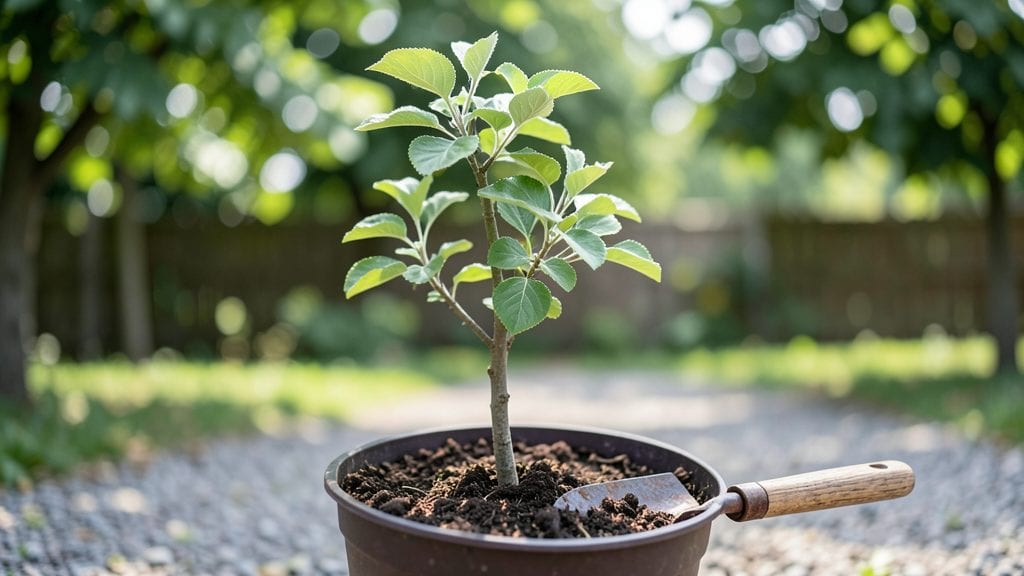
You can plant an apple tree from an apple, but the fruit it produces will likely be inedible. Save the seeds, dry them thoroughly, then plant in well-draining soil during fall or early spring. Germination may take months, and the tree could take years to bear fruit—or never produce edible apples at all.
Apple seeds require a process called stratification—a cold period—to break dormancy, mimicking natural winter conditions. 🌱 This explains why planting in fall works best: the seeds experience natural chilling before spring warmth triggers growth.
Most homegrown apple trees fail to produce commercial-quality fruit due to genetic unpredictability, but the experiment offers fascinating insights into orchard biology and patience testing.
For better results, consider grafting store-bought apple varieties onto your seedling's rootstock—a technique used by professional growers. This combines the hardiness of your homegrown tree with the proven genetics of named apple cultivars.
Even if your seedling never bears fruit, it makes an excellent ornamental tree with distinctive foliage and spring blossoms.
💡 In This Article
- How Apple Seeds Germinate and Grow Into Trees
- Best Practices for Growing an Apple Tree From Seed
How apple seeds germinate and grow into trees
The journey from apple seed to tree begins with dormancy, a survival mechanism that prevents seeds from sprouting in unfavorable conditions. Apple seeds contain cyanogenic glycosides, compounds that release cyanide when crushed—a natural defense against predators.
To break dormancy, seeds require a process called stratification, where they experience 40-60 days of cold temperatures (34-41°F), mimicking winter's chill. This cold period softens the seed coat and triggers internal hormonal changes that prepare the embryo for growth.
Once stratified, seeds need moisture and warmth to germinate. The seed coat absorbs water through tiny pores, swelling until it cracks open—a process called imbibition. Inside, the radicle (embryonic root) emerges first, growing downward into the soil while the shoot (plumule) pushes upward.
This root system develops a taproot that can grow 12-18 inches deep within the first year, anchoring the seedling while absorbing water and nutrients from the soil's lower layers.
Here's what most people don't realize: apple seeds are highly variable genetically. Unlike grafted trees, which produce identical fruit to the parent, seed-grown trees inherit a mix of traits from both parents—including bitter, seedy, or inedible fruit.
This genetic lottery explains why your homegrown apple might taste nothing like the store-bought variety. Even if the tree bears fruit, it may require cross-pollination from another apple tree to produce viable seeds, adding another layer of unpredictability.
The root system's development follows a fascinating pattern. Primary roots grow rapidly, while secondary roots branch out horizontally to create a fibrous network that stabilizes the tree and maximizes water absorption.
In ideal conditions, a seedling can develop a root system 3-5 times deeper than its above-ground height within its first growing season. This underground growth is crucial for drought resistance—a trait that makes seed-grown apple trees surprisingly hardy once established.
Temperature plays a critical role in early growth. Seedlings thrive in 60-75°F soil temperatures, with daytime air temperatures between 70-80°F promoting rapid shoot growth. However, sudden temperature swings can stress young plants, causing stunted growth or even death.
The first true leaves that emerge are typically simple and oval-shaped, evolving into the compound leaves characteristic of mature apple trees over time. These early leaves perform photosynthesis to fuel the tree's development, but they're also vulnerable to pests like aphids.
Why do most seed-grown apple trees fail to produce quality fruit? The answer lies in genetic instability and pollination challenges. Apple trees are self-incompatible, meaning they require pollen from a different genetic line to produce fruit.
Even if your tree flowers beautifully, the lack of compatible pollinators in your area can result in poor fruit set. Additionally, the fruit from seed-grown trees often contains high levels of tannins, giving them a bitter, astringent taste that makes them unpalatable. 🌱
The entire process from seed to potential fruiting takes 5-10 years, with many trees never producing edible fruit at all. However, this experiment offers valuable lessons in plant biology and the importance of genetic consistency in agriculture.
For those interested in edible apples, grafting remains the gold standard—combining the hardiness of seed-grown rootstock with the proven genetics of cultivated varieties.