
Diseases
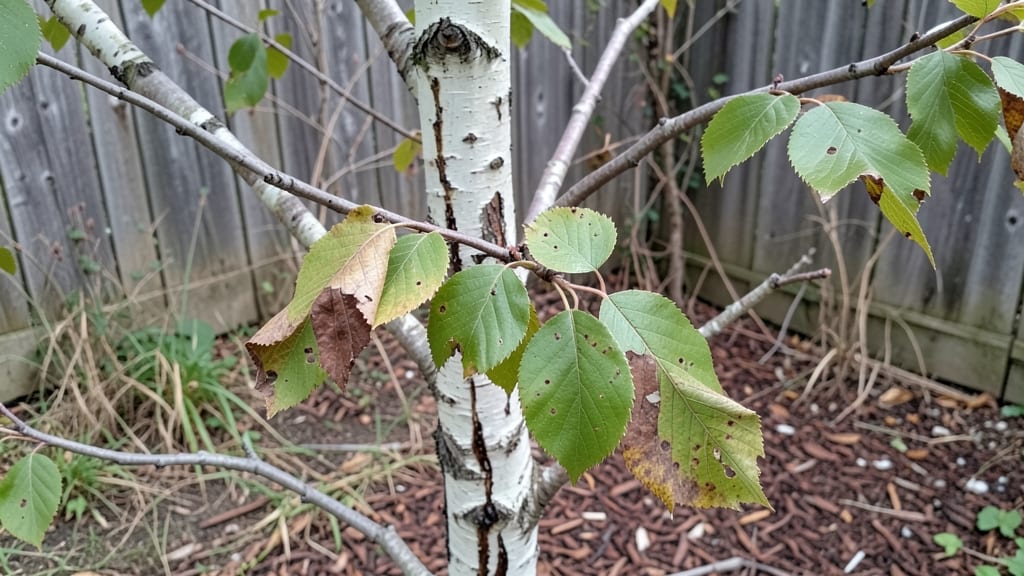
Birch tree diseases pictures provide essential visual references to spot common problems like birch leaf rust, powdery mildew, and bronze birch borer damage through distinct symptoms such as yellowing foliage, black spots, or peeling bark. These images help you diagnose issues early so you can treat them effectively with targeted fungicides or proper pruning techniques.
Visual aids are especially valuable because many birch diseases share subtle symptoms that can be hard to distinguish without comparison.
For example, powdery mildew appears as a white, dusty coating on leaves, while leaf rust creates orange pustules on the undersides of foliage. 🌿 I always recommend keeping a reference guide handy during seasonal inspections—this lets you catch problems before they spread, saving both your tree's health and your time in the long run.
What's interesting is how certain birch species react differently to these issues. Paper birches often show more dramatic bark peeling with bronze birch borer infestations, while yellow birches may display slower but more persistent leaf discoloration.
Understanding these patterns helps you tailor your approach whether you're treating a young sapling or a mature specimen in your landscape.
💡 In This Article
- Common Birch Tree Fungal and Pest Diseases Explained
- How to Use Disease Identification Pictures for Treatment
Common birch tree fungal and pest diseases explained
Fungal pathogens like Puccinia (the cause of birch leaf rust) and Neonectria (responsible for canker diseases) exploit birch trees through specialized infection cycles. Puccinia requires two hosts—birch trees and members of the barberry family—to complete its life cycle, which is why you'll often see rust pustules forming in clusters on the undersides of leaves during late spring to early summer.
The fungus overwinters in barberry leaves, then releases spores that infect birch foliage, creating those telltale orange-red pustules that rupture leaf surfaces. 🌱
Canker diseases caused by Neonectria work differently by entering through wounds or natural openings in the bark. These pathogens produce toxins that kill cambium cells (the tree's growth layer), creating sunken, discolored areas that can girdle branches if left untreated.
Yellow birches are particularly vulnerable because their thinner bark provides less natural protection against these infections. The disease progresses in concentric rings—first as a small lesion, then expanding into larger cankers with black, crusty edges over 1-2 years.
Powdery mildew (Erysiphe spp.) takes another approach by forming superficial white mycelial mats on leaf surfaces. Unlike rust or canker, it thrives in high humidity (70-90%) and poor air circulation, creating that characteristic "dusty" appearance.
The fungus doesn't penetrate deeply but blocks sunlight and clogs stomata, causing yellowing between leaf veins. Paper birches often show mildew symptoms earlier than yellow birches due to their smoother leaf surfaces that trap moisture better. 🍂
Pest-related diseases like bronze birch borer (Agrilus anxius) follow an entirely different mechanism. The adult beetles lay eggs in bark crevices, and the larvae bore into the phloem layer, disrupting nutrient transport.
Infested trees show D-shaped exit holes in the bark and wilted foliage that resembles drought stress—even when soil moisture is adequate. The borer's life cycle spans 1-2 years, with each generation causing progressive decline in tree health.
What makes these diseases particularly challenging is how symptoms overlap. For instance, both leaf rust and mildew can cause yellowing, but rust pustules appear orange-brown while mildew looks white and powdery. The key difference lies in the leaf surface: rust infects both sides, while mildew stays superficial.
Understanding these distinctions helps you select the right treatment—copper fungicides for rust, sulfur sprays for mildew, or systemic insecticides for borer control. 🔍
Species susceptibility plays a critical role too. Paper birches (Betula papyrifera) often show more dramatic bark peeling with borer infestations, while yellow birches (Betula alleghaniensis) may display slower but more persistent leaf discoloration from canker diseases.
This variation occurs because paper birches have thinner bark that peels naturally, making them more vulnerable to pest entry points. 🌳