
Pests and Diseases
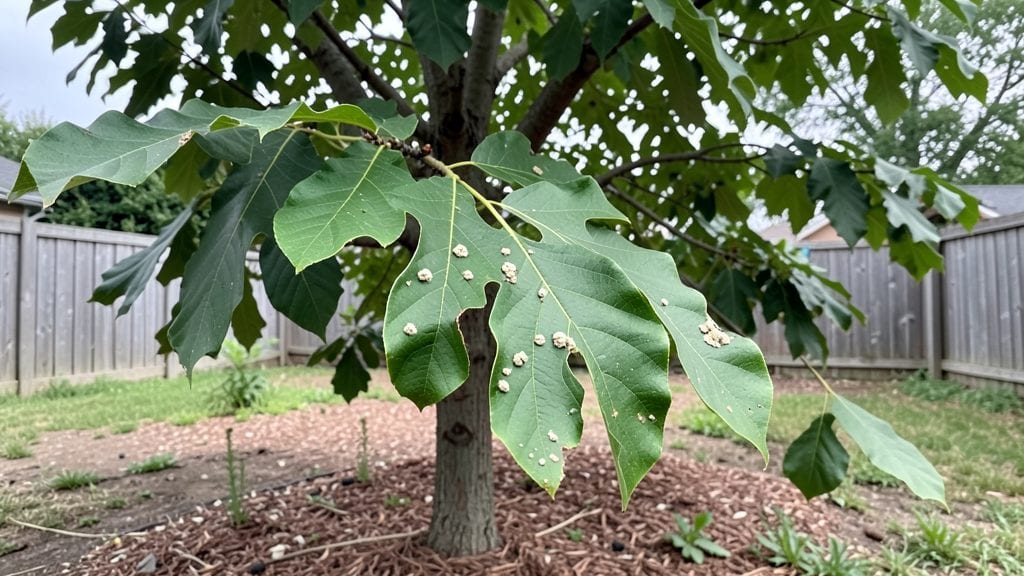
Bumps on pecan tree leaves are never a good sign—but they’re rarely a death sentence either. 🌿 I’ve seen everything from tiny mites to fungal scabs turn leaves into a bumpy mess, and the good news is most issues respond to targeted action.
The first step is figuring out what’s causing those bumps: are they raised, crusty, or moving? That tells you whether you’re dealing with an insect invasion, a fungal infection, or just environmental stress.
Most home gardeners panic when they spot these bumps, but the truth is simple: early identification saves your tree. Pecan scab creates dark, velvety bumps that spread fast, while mites leave behind tiny, stippled marks that look like sandpaper.
Nut casebearers? They turn leaves into a chewed-up disaster. I’ve treated all three—here’s how to tell them apart and what actually works to stop them.
By the time you finish reading, you’ll know exactly how to inspect your tree, what sprays or sprays-to-avoid work best, and when to call in a pro.
(Spoiler: some bumps need copper fungicide, others just a strong spray of water and patience.) The key is acting fast—before those bumps turn into a full-blown crisis.
We’ll also cover the preventive moves that keep your pecan tree looking healthy year-round, like proper pruning and timing for fungicide applications. Trust me, once you spot the pattern, those bumps become a lot less scary—and a lot easier to handle.
Understanding Leaf Bump Triggers
When your pecan tree’s leaves develop unsightly bumps, it’s usually a sign of stress—whether from tiny invaders, fungal invaders, or environmental factors. Below, we break down the key culprits behind these irregularities, explaining why they happen and how they disrupt your tree’s health.
Pecan trees often fall victim to sap-sucking insects or leaf-feeding larvae, which leave behind telltale bumps as they feed or lay eggs. Here’s how they do it:
- Pecan Nut Casebearer (Acrobasis nuxvorella) - Why it happens: Female moths lay eggs on leaves in spring, and the larvae (caterpillars) chew into leaf tissue, creating raised, blister-like bumps filled with frass (waste).
These bumps later turn brown and drop out, leaving shot-hole damage. - Science behind it: The larvae inject saliva into the leaf, causing cell necrosis (tissue death) around their feeding sites, which the tree attempts to "wall off" with a bump.
- Spider Mites (Tetranychus spp.) - Why it happens: These microscopic pests pierce leaf cells to suck out sap, triggering stippling (tiny white/yellow dots) that can develop into hard, crusty bumps as the leaf reacts to damage. - Science behind it: Their feeding disrupts chloroplast function, leading to oxidative stress in the leaf.
The tree’s defense mechanism is to thicken cell walls at damaged spots, forming bumps.
- Scale Insects (e.g., Pecan Scale, Aspidiotus spp.) - Why it happens: These stationary bugs attach to leaves and secrete a waxy coating, creating rounded, waxy bumps.
Their feeding weakens the leaf, causing yellowing and premature drop. - Science behind it: Scale insects alter nutrient flow by tapping into phloem (sap vessels), forcing the tree to redirect resources to damaged areas, which manifest as bumps.
Fungi thrive in humid, warm conditions and can infect pecan leaves, causing gall-like bumps as they manipulate plant growth hormones.
- Anthracnose (Gloeodes pomigena) - Why it happens: This fungus infects through wounds or rain splashes, causing dark, raised bumps with yellow halos.
It thrives in wet springs, when leaves are still tender. - Science behind it: The fungus releases toxins and enzymes that disrupt cell division, leading to abnormal growth (galls). The tree’s immune response further thickens tissue around the infection.
- Powdery Mildew (Erysiphe spp.)
- Why it happens: While powdery mildew typically causes white, powdery coatings, severe infections can lead to small, puffy bumps on leaf surfaces, especially on young, succulent growth.
- Science behind it: The fungus hyphae (root-like structures) penetrate leaf cells, triggering hyperplasia (excessive cell growth) as the tree tries to contain the spread.
- Leaf Galls (e.g., Cynipid Wasps)
- Why it happens: Though less common, wasps lay eggs in leaf tissue, causing hard, woody bumps (galls) as the tree reacts to larval feeding and hormone disruption.
- Science behind it: The wasp larvae secrete chemicals that induce gall formation, forcing the tree to grow extra vascular tissue to "feed" the developing insect.
Not all bumps are caused by pests or disease—extreme weather, nutrient imbalances, or physical damage can also trigger abnormal growth.
- Hail or Wind Damage
- Why it happens: Physical trauma from storms can crush leaf cells, causing the tree to seal off damaged areas with calloused, bump-like tissue.
- Science behind it: The tree’s abscisic acid (a stress hormone) signals cell wall thickening to prevent further damage, leading to scab-like bumps.
- Nutrient Deficiencies (e.g., Zinc, Magnesium)
- Why it happens: Micronutrient shortages (like zinc) can cause interveinal chlorosis (yellowing between veins) and stunted, deformed growth, including small, puckered bumps.
- Science behind it: Without enough zinc, the tree can’t synthesize auxin (a growth hormone), leading to aberrant cell development.
- Herbicide Drift or Chemical Burn
- Why it happens: Residual herbicides or over-application of fungicides can damage leaf cells, causing irregular, blistered bumps as the leaf tries to recover.
- Science behind it: Chemicals disrupt cellular membranes, leading to oxidative damage and uncontrolled cell proliferation in affected areas.
Pro Tip: 💡 If bumps appear suddenly after a rainstorm or chemical treatment, environmental stress is likely the culprit. Inspect nearby plants—if they’re also affected, drift or weather damage is probable.
Quick Fixes for Leaf Bumps
Now that you’ve identified the culprit behind those pesky bumps on your pecan tree leaves, it’s time to take action! Whether it’s fungal infections, insect infestations, or environmental stressors, each issue requires a targeted approach.
Below, we’ll break down practical, step-by-step solutions for the most common causes—plus tips to keep your tree thriving long-term.
If powdery mildew, anthracnose, or rust are to blame, your first move is removal and prevention.
🔪 Remove Infected Leaves & Branches
- Trim the trouble spots 🌿: Use sterilized pruning shears (wipe with rubbing alcohol between cuts) to remove heavily infected leaves, twigs, or branches. Dispose of them in a sealed trash bag—do not compost!
- Thin the canopy 🌳: Improve airflow by pruning dense areas. Aim for 10–20% of the tree’s foliage to reduce humidity buildup.
💦 Apply Fungicides Strategically
- For powdery mildew: Spray with a sulfur-based fungicide (like Liqui-Cop) or a baking soda mix (1 tbsp baking soda + 1 tsp dish soap + 1 gallon water).
Apply early morning or late evening to avoid burning leaves. - For anthracnose/rust: Use a copper fungicide (e.g., Copper Soap) or a neem oil solution (1 tbsp neem oil + 1 tsp mild soap per quart of water). Reapply every 7–14 days until new growth appears.
🌡️ Prevent Future Outbreaks
- Water at the base 💧: Avoid overhead sprinkling to keep leaves dry.
- Space trees properly 📏: Ensure 6–10 feet of clearance between pecan trees for better airflow.
- Clean up fallen debris 🧹: Rake and remove leaf litter where fungi love to hide.
If mites, aphids, or scale insects are causing those bumps, early intervention is key.
🕵️♂️ Inspect and Isolate
- Shake leaves over a white sheet 📄: Look for tiny moving dots (mites) or sticky residue (aphids). If you spot them, act fast.
- Targeted spraying 💦: - For mites: Use horticultural oil (like SafeGuard) or neem oil.
Spray both sides of leaves and repeat every 5–7 days. - For aphids/scale: Blast off with a strong stream of water first, then apply insecticidal soap or pyrethrin spray.
🕸️ Set Up Barriers
- Sticky traps 🎣: Place yellow sticky cards near the tree to monitor and catch flying insects.
- Beneficial predators 🐞: Release ladybugs or lacewings (available at garden centers) to eat aphids naturally.
🌿 Long-Term Defense
- Encourage natural predators 🐝: Plant dill, fennel, or marigolds nearby to attract wasps and beetles that feast on pests.
- Avoid broad-spectrum pesticides 🚫: They kill helpful insects too—stick to targeted treatments.
If bumps are due to heat stress, nutrient deficiency, or poor drainage, tweak your tree’s environment.
💧 Hydration and Mulching
- Deep watering 💦: Water slowly and deeply (1–2 inches per week) to encourage strong root growth. Use a soaker hose to avoid wetting leaves.
- Mulch like a pro 🌾: Apply 2–3 inches of organic mulch (wood chips or pine straw) around the base (but not touching the trunk). This retains moisture and regulates soil temperature.
🌱 Fertilize Smartly
- Test your soil 📊: A $20 soil test kit (from local extensions) will tell you if your tree needs nitrogen, zinc, or magnesium.
- Use slow-release fertilizer 🌱: Apply a balanced pecan-specific fertilizer (like 10-10-10) in early spring and late summer.
🌳 Shield from Harsh Conditions
- Provide afternoon shade ☀️: If your tree is in a hot, dry climate, install shade cloth (30–50% coverage) during peak sun hours.
- Avoid compacted soil 🚜: If your yard has heavy foot traffic, aerate the soil with a garden fork to improve drainage.
No matter the cause, consistent care keeps pecan trees resilient:
- Prune annually ✂️: Remove dead, crossing, or weak branches in late winter (before buds swell).
- Monitor regularly 👀: Check leaves weekly during growing season for early signs of trouble.
- Rotate treatments 🔄: If using chemicals, switch types every few weeks to prevent resistance.
Pro Tip: 💡 For organic solutions, mix 1 tbsp of canola oil + 1 tsp dish soap + 1 quart of water—this DIY spray works for both fungi and insects!
By following these targeted fixes, your pecan tree should bounce back with smooth, healthy leaves in no time. Stay vigilant, and your tree will reward you with plenty of delicious nuts come harvest season! 🌰🌿
Frequently asked questions
What do the bumps on my pecan tree leaves look like if they're caused by mites?
Spider mites create tiny, stippled bumps that resemble sandpaper when rubbed between your fingers. These bumps start as white or yellow dots and develop into hard, crusty spots as the leaf reacts to their feeding. Check the undersides of leaves first—they’re a favorite hiding spot for mites.
How can I tell if the bumps are from a fungal infection like pecan scab?
Fungal scab bumps appear as dark, velvety spots with yellow halos around them. Unlike insect bumps, these are smooth and crusty, not raised like blisters. They often start on young leaves and spread quickly in wet springs. Scrape a bump gently—if it leaves a powdery residue, it’s likely fungal.
Will pruning help if my pecan tree has bumps from pests or disease?
Yes, but prune strategically. Remove only the most heavily infected branches (up to 20% of the canopy) to improve airflow and reduce humidity. Use sterilized shears and dispose of infected leaves in a sealed bag. Avoid over-pruning—your tree needs enough leaves to photosynthesize and recover.
Can I use neem oil for both fungal infections and insect bumps?
Neem oil is a versatile organic treatment that works against mites, aphids, and fungi. Mix 1 tablespoon of neem oil + 1 teaspoon mild soap per quart of water, then spray both sides of leaves in the early morning or evening. Reapply every 5–7 days until the bumps disappear. It’s safe for pecan trees when used correctly.
How long does it take to see improvement after treating pecan leaf bumps?
For insect-related bumps, you might see results in 3–7 days with consistent spraying. Fungal bumps take 2–4 weeks to clear up completely, as the tree needs time to regrow healthy tissue. Monitor your tree weekly and reapply treatments as needed—patience is key! If bumps persist after 4 weeks, consult an arborist for a professional diagnosis.