
Companion Plants
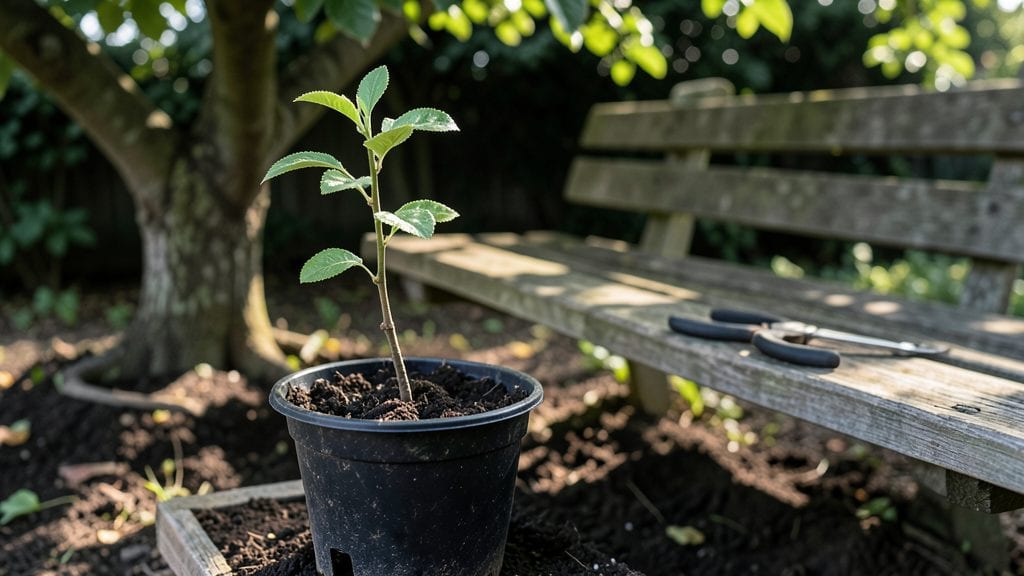
You can plant an apple seed to grow a tree, but the resulting tree will likely produce inedible fruit due to genetic inconsistency, and germination can take months—or fail entirely. Patience and proper seed preparation are key for success.
Growing an apple tree from seed is more of a scientific experiment than a guaranteed fruit harvest. 🌱 The seeds come from cross-pollinated apples, meaning each seed carries unique genetic traits that often result in trees bearing small, bitter fruit—or none at all.
Even if it does fruit, it may take 10-15 years to mature, compared to grafted trees that produce in 3-5 years. I've tried this myself, and while it's fascinating to watch the seedling grow, the payoff is rarely worth the wait for most gardeners.
For those who still want to try, the process involves stratification—a cold treatment to break seed dormancy—followed by planting in well-draining soil. The key is consistency: keep the soil moist but not soggy, and provide bright indirect light.
If you're patient and lucky, you might end up with a hardy tree, but don't expect store-bought apple flavors. Many gardeners opt for grafting instead, as it guarantees fruit quality and faster results.
💡 In This Article
- Why Apple Seeds Rarely Yield True Fruit Trees
- Step-by-Step Guide to Germinating Apple Seeds
Why apple seeds rarely yield true fruit trees
Here's what's actually happening with those apple seeds: commercial apple varieties are highly heterozygous, meaning they carry two different sets of genes for nearly every trait. When you plant a seed from a store-bought apple, you're essentially starting with a genetic lottery.
The seedling inherits a random mix of traits from both parent trees—often resulting in trees that produce small, tart, or even inedible fruit. This genetic variability is why seed-grown apples rarely match their parent's flavor or size. 🌟
The cross-pollination process plays a huge role. Most commercial apple trees are cross-pollinated between different varieties, creating seeds with unpredictable combinations.
For example, a seed from a Granny Smith (tart, green) might grow into a tree producing fruit that's more like a crabapple—small, hard, and bitter—rather than a true eating apple.
Even if the tree does fruit, the apples might take 10-15 years to mature, compared to 3-5 years for grafted trees. The science behind this involves recombinant genetics, where offspring express traits neither parent exhibited.
What most people don't realize is how this compares to grafting. When nurseries grow apple trees commercially, they use a technique called grafting, where a scion (a cutting from the desired apple variety) is attached to a rootstock.
This guarantees the new tree will produce fruit identical to the parent plant. The key factor here is genetic consistency—grafting preserves the exact traits of the parent tree, while seeds introduce unpredictable variations. For home gardeners, this means if you want reliable apples, grafting is the way to go. 🌱
Consider these key factors when evaluating your seed-grown tree's potential:
- Fruit size: Seedlings often produce apples half the size of commercial varieties, sometimes as small as 1 inch in diameter
- Flavor profile: Expect tartness with minimal sweetness—think more like a crabapple than a Honeycrisp
- Tree vigor: Seedlings may grow wild, sprawling branches that require heavy pruning
- Pollination needs: Even if it fruits, you'll need multiple trees for cross-pollination
The bitter compounds in many seed-grown apples come from phloridzin and other polyphenols, which develop as a defense mechanism against pests. These compounds give the fruit that characteristic astringent taste.
Interestingly, some seed-grown apples can be used for jams, ciders, or preserves where bitterness is less noticeable, but they rarely make good fresh-eating apples. The texture is often firmer and mealier than commercial varieties too. 🍏
One exception worth noting: certain heirloom apple varieties maintain more consistent traits when grown from seed. For example, seeds from wild crabapple trees or some old-fashioned varieties may produce fruit that's more uniform. However, even these often require 3-4 years just to flower, let alone bear fruit.
The takeaway? If you're planting apple seeds purely for the experiment or ornamental value, it can be rewarding. But if you're hoping for a productive fruit tree, grafting remains the gold standard.