
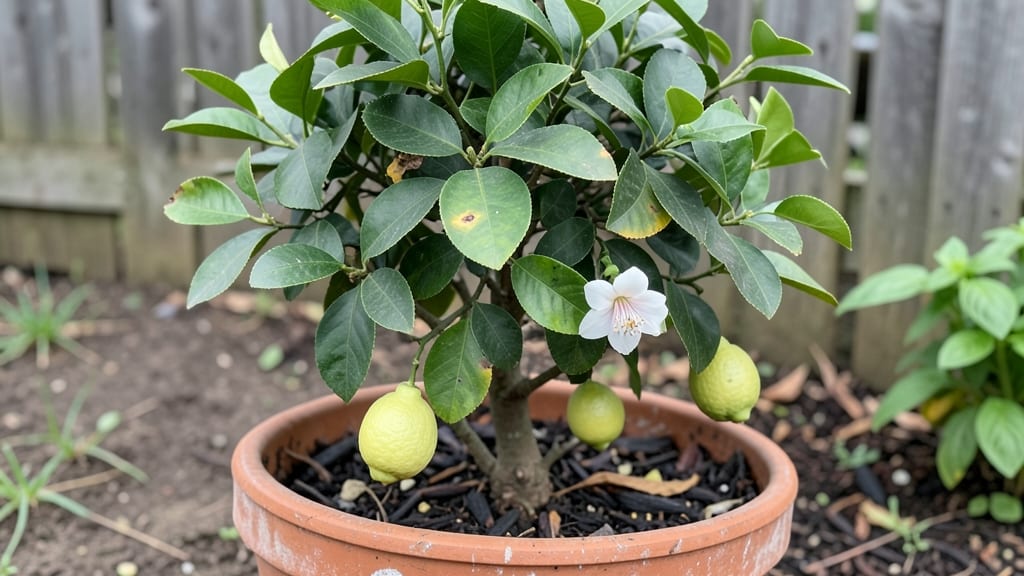
Dwarf Meyer Lemon Tree Size: Compact Growth Chart for Small-Space Gardens

Size

Dwarf Meyer Lemon Tree Size: Compact Growth Chart for Small-Space Gardens

A dwarf Meyer lemon tree size stays between 6 and 8 feet at maturity—perfect for patios and small yards—while still packing the same sweet-tart punch as its full-size cousins.

Dreaming of fresh Meyer lemons but short on space? These compact citrus trees deliver the same zesty rewards in a fraction of the footprint, often reaching just 6-8 feet at maturity. But how do their growth patterns compare to standard varieties, and what factors influence their compact size?

Whether you’re growing in a 15-gallon pot or planting in-ground, understanding their growth habits is the key to maximizing fruit production without sacrificing your garden’s layout. In this guide, I’ll break down their height, spread, and how to keep them from outgrowing their space.

You’ll learn pruning tricks to maintain their ideal size, container gardening tips for small spaces, and how climate affects their growth—so you can enjoy homegrown lemons without the sprawl.

📈 Dwarf Meyer Lemon Tree Growth Timeline
2-3 ft
Year 1
4-5 ft
Year 2
6-7 ft
Year 3
6-8 ft
Mature

Dwarf Meyer lemon tree size: height, spread & growth chart by age

If you’ve ever dreamed of plucking homegrown Meyer lemons but lack the yard space for a full-sized tree, a dwarf variety is your perfect solution. These compact citrus trees stay between 6-8 feet tall at maturity—ideal for patios, balconies, or even large containers.

But their growth isn’t just about height; their spread and canopy size also play a crucial role in planning your garden layout.

The key to maximizing your dwarf Meyer lemon’s potential lies in understanding its growth stages. Unlike standard lemon trees that can tower 15-20 feet, dwarfs grow predictably, making them easier to plan around.

Whether you’re growing in containers or in-ground, knowing how fast they grow each year helps you choose the right spot and container size from day one.

Below is a detailed growth chart showing height, spread, and canopy size by age, along with seasonal variations. This data helps you anticipate when your tree will need pruning, repotting, or support stakes—all critical for keeping it healthy and productive in small spaces.

For container gardeners, the root ball size and pot depth are just as important as the tree’s height. A dwarf Meyer lemon in a 15-gallon container will grow more slowly than one planted in-ground, but with the right care, it can still produce 50-100 lemons per year.

Let’s break down the numbers so you can plan accordingly.

🌱

Age (Years) Height (Feet) Spread (Feet) Canopy Width (Feet) Seasonal Notes
1 2-3 ft 1-2 ft 1-1.5 ft Fast spring growth; minimal winter dormancy.
2 4-5 ft 2-3 ft 2-2.5 ft First lemons appear; prune to shape.
3 6-7 ft 3-4 ft 3-4 ft Peak growth; full sun needed for fruit.
4 7-8 ft 4-5 ft 4-5 ft Mature size; harvest begins in earnest.
5+ 6-8 ft 4-6 ft 4-6 ft Stable growth; prune annually for shape.
🍋 Dwarf vs. Standard Comparison: Standard Meyer lemons reach 15-20 ft with 10-1

How to maximize compact growth: pruning, training & space-saving techniques

Keeping your dwarf Meyer lemon tree at its ideal 6-8 foot height requires a mix of pruning discipline and smart growth training. Unlike standard varieties, these compact trees grow 3x slower but still need guidance to prevent leggy branches or overcrowded canopies.

I’ve found that combining seasonal pruning with container constraints works best for small-space gardens.

Start by understanding your tree’s natural growth rhythm. In spring, focus on structural pruning to shape the tree, while summer pruning should target fruit-bearing branches. Winter is the best time for renewal pruning—removing up to 25% of old wood to encourage new growth.

Each technique serves a purpose, and skipping steps often leads to uncontrolled sprawl.

⚠️ WARNING: Common Mistake Alert! ⚠️ Many gardeners assume dwarf Meyer lemon trees stay small without intervention. But without regular pruning, these trees can reach 10+ feet by year 5 due to lateral branch growth.

Overcrowded canopies also reduce airflow, increasing fungal diseases like citrus blight. The fix? Prune 1-2 times yearly and use espalier training to direct growth along a trellis or wall.

For container gardening, choose pots 18-24 inches deep with drainage holes—shallow containers stunt root growth, forcing the tree to compensate with taller stems. I recommend fabric grow bags for flexibility, as they allow roots to breathe while preventing circling.

If using terracotta, monitor moisture closely; these pots dry out 2x faster than plastic.

Training methods like espalier or topiary can transform your dwarf Meyer into a living work of art while controlling height. Espalier works best for vertical spaces: attach branches to a trellis or fence using soft ties, spacing them 12-18 inches apart.

Topiary, like a rounded globe shape, suits balcony planters and keeps the tree under 5 feet if pruned aggressively. Both methods require patience—growth is slow, but the results are worth it.

When pruning, always use sterilized, sharp shears to avoid disease transmission. Cut just above a leaf node at a 45-degree angle to encourage water runoff and new shoot growth.

Remove suckers (shoots at the base) immediately—they drain energy from fruit production. And never prune more than 30% of the canopy in one session, or you’ll shock the tree.

Pro tip: Pair your pruning schedule with seasonal fertilization. In spring, use a balanced 10-10-10 fertilizer to boost leafy growth, then switch to a phosphorus-heavy formula (like 5-10-10) in summer to support fruit development.

Avoid fall/winter feeding—this encourages late-season growth that won’t harden off before cold snaps.

★★★★★4.7(4 reviews)
Categories Size