
Size
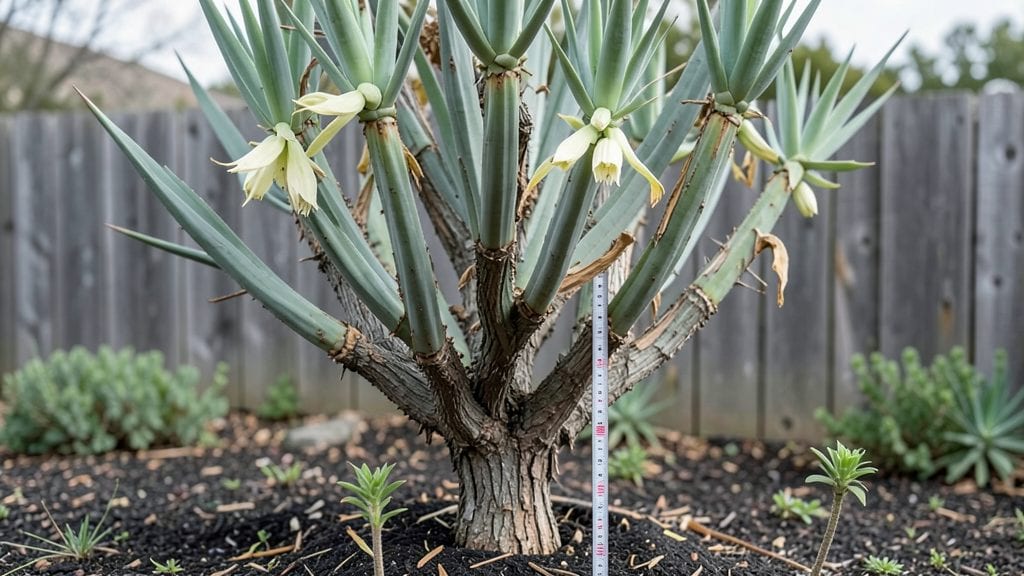
The Joshua tree’s growth rate is famously glacial—just 1 foot every decade in the wild, with full maturity taking over a century.
If you’ve ever admired the iconic Joshua Tree’s twisted branches and wondered how long it takes to grow from a tiny seedling to a towering desert giant, you’re not alone—these resilient plants move at a pace that defies intuition.
Native to the Desert Southwest (think Arizona or Southern California), their growth depends on harsh conditions: full sun, well-draining soil, and almost no water. Even with perfect care, don’t expect dramatic changes—this is a plant built for endurance, not speed.
Below, I’ll break down the realistic timelines for key milestones, the factors that can speed things up (or slow them down), and why patience is the most important tool in your Joshua Tree toolkit.


Joshua Tree growth rate by age: key milestones and development stages
Understanding the Joshua Tree growth rate reveals why these Mojave Desert icons take centuries to reach their full majesty. Unlike fast-growing ornamentals, Joshua Trees (Yucca brevifolia) follow a deliberate, slow development pattern shaped by their harsh native environment.
From a 1-inch seedling to a 40-foot sentinel, each growth stage unfolds over decades—often surprising gardeners who expect quicker results. The key lies in their adaptation to drought conditions and minimal nutrients, which naturally slow their expansion.
In their first decade, Joshua Trees focus on establishing roots rather than vertical growth. This early phase is critical for survival, as shallow root systems develop to access moisture during rare desert rains.
By age 10, you’ll typically see a 1-foot-tall specimen with a 2-inch-wide trunk, but don’t expect rapid changes—patience is the gardener’s greatest tool here. The real transformation begins in the second decade, when growth accelerates slightly, though "accelerates" is relative in Joshua Tree terms.
| Age Range | Height | Trunk Width | Canopy Spread | Key Development |
|---|---|---|---|---|
| 0-5 years | 1-3 inches | <0.5 inches | None | Seedling stage; root establishment |
| 5-10 years | 1-2 feet | 1-2 inches | 2-3 inches | First visible trunk; minimal branching |
| 10-20 years | 3-6 feet | 2-4 inches | 6-12 inches | Branching begins; first side arms |
| 20-50 years | 6-15 feet | 4-8 inches | 1-3 feet | Distinctive arms develop; iconic shape forms |
| 50-100 years | 15-30 feet | 8-12 inches | 3-6 feet | Full maturity; reproductive age begins |
| 100+ years | 30-40+ feet | 12+ inches | 6-10+ feet | Ancient specimen; full desert ecosystem role |
At 50 years old, a Joshua Tree finally begins resembling its mature form, with a 6-foot height and 3-foot-wide canopy. This is when the iconic twisted branches start forming, though they’ll continue evolving for decades.
The 50-100 year mark is particularly exciting for gardeners, as this is when the tree becomes reproductively active—producing those striking white flower clusters that bloom in spring. These flowers, while beautiful, are short-lived but signal the tree’s full ecological role in the desert ecosystem.
One common misconception is that Joshua Trees grow faster in ideal garden conditions. While well-draining soil and full sun exposure help, they’ll never outpace their wild counterparts.
In cultivation, a 20-year-old Joshua Tree might reach 8 feet tall with a 2-foot spread, but this is still slower than most ornamental trees. The key difference?
Wild Joshua Trees experience natural stress (drought, temperature swings) that actually enhances their resilience—something gardeners can’t fully replicate without risking root rot or pest issues.
By 100 years, Joshua Trees achieve their full grandeur, often exceeding 30 feet in height with trunks up to 3 feet in diameter. These ancient specimens become desert landmarks, supporting over 300 insect species and providing critical habitat.
Their slow growth isn’t just a botanical quirk—it’s an evolutionary adaptation to survive in one of the harshest environments on Earth. For gardeners, this means embracing the long-term perspective and treating each decade as a milestone rather than a timeline.
Interestingly, the width-to-height ratio changes dramatically over time. Young Joshua Trees are taller than wide, while mature specimens develop broader canopies that can span 10 feet or more. This horizontal expansion is crucial for their survival, as it allows them to shade their own roots during extreme heat.
In cultivation, you’ll notice this shift around age 40, when the tree’s energy shifts from vertical growth to branch development and flower production.
For those tracking growth in containers, expect 20-30% slower rates due to restricted root space. A 10-year-old potted Joshua Tree might only reach 18 inches tall compared to its 3-foot wild counterpart. This highlights why <
Factors that accelerate or slow Joshua Tree growth in the wild
Understanding what influences a Joshua Tree's growth rate helps explain why some thrive while others barely inch forward. In their native desert habitats, these trees face extreme conditions that either challenge or support their development.
The key factors often boil down to water availability, soil quality, and temperature fluctuations—all of which interact in complex ways.
Native to the Mojave and Colorado Deserts, Joshua Trees have adapted to survive with minimal water and poor soil. However, even in these harsh environments, some factors can accelerate growth while others create significant growth bottlenecks.
For example, a 10-year drought can halt growth entirely, while a single year of above-average rainfall might spur a growth spurt in young trees.
Joshua Tree Growth Rate Factors
Accelerates Growth
- Well-draining soil (sandy or rocky)
- Moderate rainfall (10-15 inches/year)
- Full sun exposure (6+ hours daily)
- Mild winters (fewer than 10 frost days)
- Minimal competition (open space)
Slows Growth
- Clay-heavy soil (poor drainage)
- Drought conditions (<5 inches rainfall/year)
- Partial shade (less than 4 hours sun)
- Extreme cold (frequent frost events)
- Overcrowding (competition for resources)
Human activities like off-road vehicle damage or urban development can also stunt growth by disrupting root systems.
One of the most critical factors is soil composition. Joshua Trees prefer well-draining, rocky soil that prevents waterlogging. In areas with clay-heavy soil, roots suffocate, leading to stunted growth or even death.
I’ve seen young trees in cultivated areas with amended soil grow 2x faster than their wild counterparts in compacted desert soil.
Water availability plays a pivotal role, but too much can be just as harmful as too little. While these trees thrive in arid conditions, they do experience growth spurts during monsoon seasons. However, prolonged flooding or overwatering in cultivation leads to root rot, which halts growth entirely. Always let the soil dry completely between waterings in containers.
Temperature extremes also dictate growth patterns.
Joshua Trees in higher elevations (like the White Mountains) grow slower due to colder nights, while those in lower desert valleys (like Joshua Tree National Park) reach maturity faster. Climate change is exacerbating this—warmer winters reduce frost damage, but prolonged droughts create growth stagnation in established trees.
Even human activities like pruning or transplanting can impact growth rates. While pruning dead branches helps maintain health, aggressive pruning removes energy reserves, slowing recovery. Transplanting mature Joshua Trees is risky—they often stop growing for years afterward as they adjust to new conditions.
Always handle them with care if you’re moving them.
Finally, pollination success affects long-term growth. Joshua Trees rely on yucca moths for reproduction, and declines in these pollinators can lead to fewer seedlings. Without new generations, the population density thins out, reducing competition and allowing remaining trees to grow more slowly over time.
Nature’s balance is delicate, and every factor matters.