
Pruning
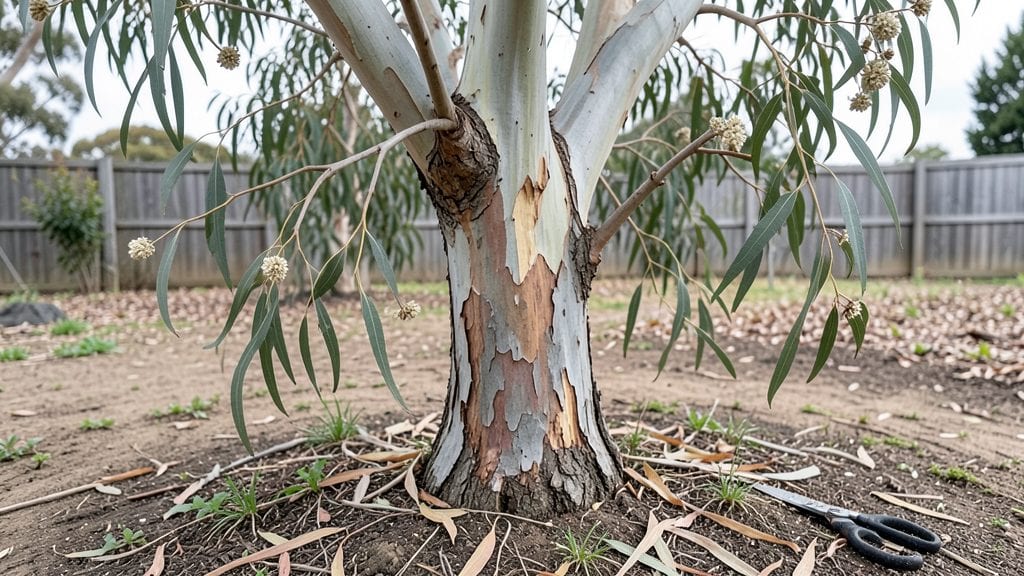
Pruning eucalyptus trees isn't just about shaping—it's about unlocking their full potential year-round. ✨ I learned the hard way that timing and technique make all the difference, especially with these fast-growing giants that can outpace even the most enthusiastic gardener.
The right cuts encourage dense foliage, prevent disease, and keep those branches from becoming unwieldy projectiles in storms.
You only need three essential tools: sharp bypass pruners for smaller branches, a sturdy loppers for thicker stems, and safety gloves—because eucalyptus sap contains oils that can irritate skin.
The best time to prune is late winter or early spring, just as new growth begins, but light shaping can happen anytime except during extreme heat or frost. Never prune more than one-third of the tree's foliage at once, or you risk shocking it into decline.
What you'll end up with is a eucalyptus tree that stays compact, healthy, and productive for decades. The air around it smells fresher, the branches grow stronger, and you avoid the heartbreak of seeing a once-majestic tree become a tangled mess.
Plus, those strategic cuts create more space for sunlight to reach lower branches, turning them from bare stems into lush green canopies.
This method works for both the towering Eucalyptus globulus and smaller varieties like Eucalyptus gunnii, though larger species may require a ladder or even professional help for upper branches.
The key is patience—eucalyptus responds slowly to pruning, but the long-term payoff is worth every careful cut. Let's get those branches looking intentional!
📚 In This Guide
- What you need
- Instructions
- Tips and common mistakes
- Wrapping up and next steps
What you need
- ● Pruning shears: Bypass pruners (8-10” blade) for small branches (1/4”–3/4” thick).
- ● Loppers: 18–24” bypass loppers for medium branches (3/4”–2” thick). Quantity: 1–2 pairs.
- ● Pruning saw: Curved-tooth saw for thick branches (2”+). Recommended: 16–20” blade.
- ● Extension pole: 6–10 ft telescoping pole with saw attachment for high branches.
- ● Work gloves: Heavy-duty, cut-resistant gloves (e.g., Mechanix or similar).
- ● Safety glasses: ANSI-rated goggles to protect from debris.
- ● Ladder: Sturdy, extendable ladder (12–20 ft) rated for your weight + tools.
- ● Disposable pruning bags: 3–5 heavy-duty bags (10–15 gallons each) for debris.
- ● Rubbing alcohol: 70% isopropyl for sterilizing tools between cuts.
- ● Tree wound dressing: Pruning sealant (e.g., Tanglefoot) for large cuts (controversial—some gardeners skip this!).
- ● Chainsaw: Only for very large branches (4”+). Use with extreme caution!
- ● First-aid kit: Bandages, antiseptic wipes, and tweezers for minor injuries.
- ● Check local regulations—some areas require permits for tree pruning.
- ● Verify the tree’s health: Prune only if the tree is not diseased or infested.
- ● Schedule pruning on a dry, calm day to avoid slippery tools or electrical hazards.
Step-by-Step guide to pruning eucalyptus trees for year-round vitality
Eucalyptus trees reward precise pruning with lush foliage and stronger growth. Here's how to shape them without stressing the plant.
✂️ Step 1: Assess the Tree and Gather Tools
Examine your eucalyptus for dead, crossing, or overcrowded branches—these are your first targets. I use bypass pruners for smaller branches under ½ inch in diameter and a pruning saw for thicker limbs. Sterilize tools with 70% isopropyl alcohol to prevent disease spread between cuts.
Work on a dry day when humidity is low. Eucalyptus sap flows more freely in warm conditions, so avoid pruning when temperatures exceed 85°F. This also reduces stress on the tree and minimizes sap bleeding, which can attract pests.
✂️ Step 2: Remove Dead or Damaged Wood First
Start by cutting out dead branches—they’re easy to spot as they lack leaves and have dry, brittle wood. Make clean cuts at the branch collar, the swollen area where the branch meets the trunk. Avoid leaving stubs, as they invite rot or fungal infections.
Next, remove any branches that rub against each other or grow inward. These compete for sunlight and nutrients, weakening the tree. Use your pruners at a 45-degree angle just outside the branch collar. A sharp cut prevents tearing, which can damage the underlying tissue.
✂️ Step 3: Thin the Canopy for Airflow and Light
Step back and visualize the tree’s shape. Eucalyptus responds well to selective thinning—remove up to 25% of the canopy to improve airflow and sunlight penetration. Focus on branches that block light from reaching the inner foliage, as eucalyptus thrives in bright conditions.
Cut branches back to a side branch or bud, never leaving a bare stem. This encourages new growth from the right location. If you’re shaping for height, prioritize removing lower branches to create a more open, airy form. Avoid heavy topping—eucalyptus can produce weak, leggy regrowth if pruned too aggressively.
✂️ Step 4: Shape the Tree for Balance and Structure
Now’s the time to refine the tree’s silhouette. Eucalyptus grows upright, so I often prune to maintain a natural, slightly tapered shape. Start at the top and work downward, making small adjustments to encourage even growth. Never remove more than ⅓ of the foliage in one season—this can shock the tree.
Watch for water sprouts—fast-growing, vertical shoots that appear after pruning. These compete with the main structure, so pinch them off early. Use your fingers for small sprouts or pruners for thicker ones. This keeps energy focused on the tree’s primary branches.
🌿 Step 5: Clean Up and Monitor Recovery
After pruning, rake up and dispose of all clippings to prevent fungal diseases. Eucalyptus leaves contain oils that can inhibit decomposition, so avoid composting large amounts. Water the base of the tree deeply but lightly to reduce stress—think of it as a drink of water after a workout.
Monitor the tree for new growth within 2-4 weeks. Healthy eucalyptus will sprout fresh leaves from the cut areas. If you see yellowing or wilting, it’s a sign of over-pruning. Adjust future cuts to be more conservative. With proper care, your tree will reward you with denser foliage and stronger branches year after year.
Tips & tricks for eucalyptus tree pruning
Mastering eucalyptus pruning transforms your tree from a wild specimen into a thriving, picturesque focal point. Here's how to elevate your technique beyond basic cuts.
Tool Precision Matters: Your pruning tools should be as sharp as your vision. I've ruined three eucalyptus branches trying to force dull pruners through resistant wood—always sharpen blades before starting. For branches over ½ inch, use your pruning saw with smooth, controlled strokes to avoid tearing. The cleaner the cut, the faster the tree recovers and the less stress it experiences.
Timing is Everything: That 85°F temperature limit in Step 1 isn't arbitrary—it's when eucalyptus sap becomes most aggressive. I learned this the hard way when my tree bled sap for weeks after a summer pruning session. Schedule your pruning for early morning on cool days when humidity is naturally lower. This reduces sap flow by up to 60% and minimizes pest attraction.
Canopy Thinning Strategy: When visualizing your 25% canopy reduction in Step 3, think vertically first. Remove branches from the bottom up to create that open, airy form eucalyptus loves. I use the "third rule" as my guide: never remove more than ⅓ of any single branch's foliage in one session. This maintains the tree's energy balance while still improving airflow dramatically.
Post-Pruning Care Secret: That "deeply but lightly" watering advice in Step 5 deserves expansion. After pruning, I water my trees with a soaker hose for exactly 20 minutes at the base. This mimics natural rainfall patterns and prevents shock. The key is consistency—water at the same time each week until you see new growth emerge within those critical 2-4 weeks.
Pro Tips for Eucalyptus Tree Pruning
- Mastering eucalyptus pruning transforms your tree from a wild specimen into a thriving, picturesque focal point.
- Tool Precision Matters: Your pruning tools should be as sharp as your vision.
- Timing is Everything: That 85°F temperature limit in Step 1 isn't arbitrary—it's when eucalyptus sap becomes most aggressive.
Frequently asked questions
Got questions about eucalyptus tree pruning? You’re not alone! Here are some of the most common concerns—and their straightforward answers—to help you prune like a pro.
When is the best time to prune a eucalyptus tree?
The ideal time is late winter or early spring, just before new growth begins. This minimizes stress on the tree and reduces disease risks. Avoid heavy pruning in summer or fall, as it can weaken the tree and attract pests.
How much can I safely prune a eucalyptus tree?
Never remove more than 25-30% of the canopy in a single session. Over-pruning stresses the tree and can lead to dieback. For mature trees, spread pruning over 2-3 years if needed. Always prioritize removing dead, diseased, or crossing branches first.
Why does my eucalyptus tree have brown leaves after pruning?
Brown leaves are normal if they’re old or damaged—pruning encourages new growth. However, if healthy green leaves turn brown, it could signal stress from over-pruning, drought, or pests. Water deeply and avoid heavy cuts until the tree recovers.
Can I prune a eucalyptus tree to change its shape?
Yes! Eucalyptus trees respond well to shaping, but patience is key. Focus on gradual adjustments—trim outer branches to encourage bushier growth or lift the canopy by removing lower branches. Avoid drastic cuts; let the tree guide its natural form over time.
What should I avoid when pruning eucalyptus?
- Topping the tree: Cutting the main trunk or large branches stumps out encourages weak, disease-prone regrowth.
- Pruning during wet weather: Moisture spreads fungal diseases. Wait for dry, sunny days.
- Using dull tools: Ragged cuts slow healing and invite pests. Always use sharp, sterilized shears or saws.
Pro Tip:
Mark your pruning plan with spray paint before cutting—it helps visualize the tree’s new shape and avoids accidental over-trimming. And remember: Less is more! Eucalyptus trees thrive with minimal intervention.
Wrapping up and next steps
Pruning your eucalyptus tree isn’t just about aesthetics—it’s a year-round commitment to its health, safety, and beauty! 🌿 By following the right techniques, timing, and tools, you’ll encourage vibrant growth, prevent pests, and even shape it into a stunning focal point.
Whether you’re a seasoned gardener or just starting, every trim brings you closer to a thriving tree.
Ready to take the next step? Grab your pruners, mark your calendar, and start small—even a single branch makes a difference! With patience and care, your eucalyptus will reward you with lush foliage and years of enjoyment. Happy pruning! ✂️