
Flowers
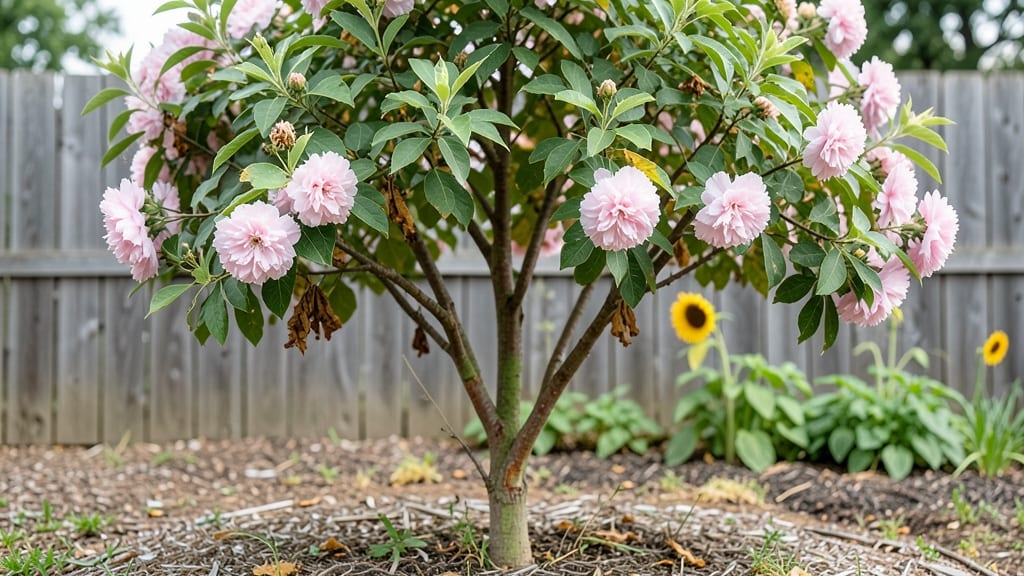
A flowering tree with large pink flowers can turn your yard into a breathtaking seasonal showstopper. 🌸 I planted my first one after years of admiring neighbors' dramatic canopies—now I know why they never sell their homes.
The right tree doesn't just add color; it creates a focal point that makes every walk through your garden feel like a stroll through a masterpiece.
These trees thrive in full sun but adapt surprisingly well to partial shade, making them perfect for everything from city lots to country estates.
My bridal wreath spirea blooms from spring to fall, while a crape myrtle in my friend's yard puts on a summer spectacle that rivals any cherry blossom. The key is matching the tree to your climate zone and soil type—once you do, the payoff is years of effortless beauty.
Imagine your front yard bursting with rosy-pink clouds that attract hummingbirds and make your neighbors pause mid-step. These trees pair beautifully with deep green shrubs or climbing roses, creating layers of texture that catch the light.
The best part? They grow over time, so each spring brings bigger blooms and a more dramatic statement.
Whether you want a single statement tree or a mixed border, placement matters most. Near patios or walkways maximizes impact, while pairing with evergreens ensures year-round interest. Let's pick the perfect pink powerhouse for your space—your future self will thank you.
What Triggers These Stunning Blooms
If you’ve ever admired a flowering tree adorned with large, showy pink blossoms and wondered why it bursts into color at certain times—or why some trees seem to struggle while others thrive—you’re not alone.
The answer lies in a mix of genetic, environmental, and seasonal factors that work together like a well-choreographed dance. Let’s break down the science behind why these trees produce their breathtaking displays.
Not all trees are created equal when it comes to flowering. Some species, like the Japanese cherry (Prunus serrulata), Bradford pear (Pyrus calleryana), or crape myrtle (Lagerstroemia), are hardwired to produce large pink blooms due to their genetics.
These trees evolved to rely on vibrant flowers to attract pollinators—think bees, butterflies, and even hummingbirds—ensuring their survival.
Here’s the catch: cultivar selection matters. Some varieties within a species may bloom more prolifically than others. For example, the ‘Royal Purple’ crape myrtle is bred to produce denser, darker pink flowers compared to its wild relatives.
If your tree isn’t living up to its potential, it might simply be the wrong cultivar for your climate or care conditions.
Actionable tip: Research the specific species and cultivar before planting. Look for terms like “prolific bloomer” or “reliable flowering” in descriptions.
Flowering trees are photoperiod-sensitive, meaning they rely on daylight length and temperature shifts to trigger blooming. Most large-pink-flowered trees (like dogwoods or magnolias) need a period of cool weather followed by warmth to break dormancy and initiate flower buds.
Here’s how it works:
- Winter chill hours: Many trees require 200–1,000 hours below 45°F (7°C) to “reset” their biological clocks. Without enough cold, buds may fail to form.
- Spring warmth: Once temperatures rise, the tree shifts into active growth mode, using stored energy to push out flowers.
- Daylight exposure: Longer days in spring signal the tree to flower, but too much shade can delay or reduce blooms.
Problem? If your tree is in a microclimate (like near a heat-retaining wall or in an urban heat island), it might not get the chill it needs. Or, if winters are too mild (like in Zone 9+), some trees may skip flowering altogether.
Actionable tip: Plant in a spot with 6+ hours of sunlight and avoid areas with extreme temperature swings (e.g., next to a south-facing window that overheats in winter).
A tree can’t produce lush pink blooms if it’s malnourished or dehydrated. Flowering is an energy-intensive process, and trees pull nutrients from the soil to fuel it. Here’s what’s critical:
| Nutrient | Role in Flowering | Signs of Deficiency |
|---|---|---|
| Nitrogen (N) | Supports leaf and bud development—foundation for flowers. | Yellowing leaves, stunted growth. |
| Phosphorus (P) | Boosts root and flower development; critical for bud formation. | Purple-tinged leaves, weak stems. |
| Potassium (K) | Regulates water uptake and disease resistance, helping flowers thrive. | Brown leaf edges, poor bloom quality. |
| Micronutrients (Zinc, Magnesium, Boron) | Zinc aids chlorophyll production; boron prevents bud drop. | Yellowing between leaf veins (magnesium), deformed flowers (boron). |
Water stress is another major culprit. Drought or overwatering (which causes root suffocation) can lead to:
- Smaller, fewer flowers.
- Early leaf drop before blooming.
- Weak stems that can’t support heavy flower clusters.
Actionable tip: Test your soil’s pH (aim for 6.0–7.0) and conduct a soil test for nutrient levels. Amend with compost or a balanced 10-10-10 fertilizer in early spring. Water deeply but infrequently—aim for 1–1.5 inches per week.
Even the healthiest tree can have its flowering hijacked by pests or pathogens. Here’s how:
- Borers or beetles: These insects tunnel into branches, disrupting nutrient flow to flower buds. Look for sawdust-like frass or exit holes.
- Fungal infections (e.g., powdery mildew): Fungi like Erysiphe coat leaves and flowers, blocking sunlight and stunting growth. Pink flowers may appear dull or distorted.
- Scale or aphids: These sap-sucking pests weaken the tree, causing buds to abort before opening.
- Bacterial blight: Causes blackened, oozing buds that never bloom.
Actionable tip: Inspect your tree in early spring for signs of pests (e.g., sticky residue = aphids). Apply neem oil or horticultural oil as a preventive spray. Prune infected branches immediately and sterilize tools with rubbing alcohol.
Did you know that aggressive pruning at the wrong time can delay or prevent flowering? Trees form flower buds in late summer to early fall for the following spring. If you prune then, you’re cutting off next year’s blooms.
Additionally, young trees (under 3–5 years old) often focus energy on root and trunk growth rather than flowers. Older trees (10+ years) may bloom less vigorously due to declining vigor.
Actionable tip: Prune only in late winter or early spring (just before buds swell). Avoid heavy pruning in summer or fall. For mature trees, consider rejuvenation pruning to encourage new growth and flowering.
Revive & Restore Your Stunning Tree
Your flowering tree with large pink blooms is a showstopper—but when it starts struggling, it can feel like a heartbreaking loss. The good news? Most issues have simple, effective fixes.
Below, we break down the most common problems and provide step-by-step solutions to bring your tree back to its vibrant, blossoming glory. Prevention tips are included to keep your tree thriving long-term!
Cause: Compacted, nutrient-poor soil or improper pH levels can stunt growth and reduce flowering.
Solution: 🔥 🌿 Test Your Soil First
- Grab a soil test kit (available at garden centers) or send a sample to a local extension office. This will reveal pH levels and nutrient deficiencies.
- Pro tip: 💡 Ideal pH for most flowering trees is 6.0–7.0. If it’s too acidic or alkaline, amend it gradually.
🍳 👨🍳 Amend the Soil - For clay or compacted soil: Mix in 3–4 inches of compost or aged manure into the top 12 inches of soil.
Avoid digging too deep—this can damage roots. - For sandy or poor soil: Add peat moss or coconut coir to retain moisture and nutrients. - For pH adjustment: - Lower pH (more acidic): Sprinkle sulfur or pine needles. - Raise pH (less acidic): Work in lime or wood ash.
🥘 🌱 Feed for Blooms
- In early spring, apply a balanced, slow-release fertilizer (10-10-10 or 20-20-20) around the drip line (the edge of the tree’s canopy).
- For extra pink perfection, switch to a phosphorus-rich fertilizer (like 5-10-10) in late winter to encourage flowering.
- Warning: ⚠️ Avoid high-nitrogen fertilizers in summer—they promote leafy growth but stunt blooms.
⏰ 🌡️ Timing Matters
- Fertilize before new growth starts (early spring) and again after flowering (late summer) for next year’s blooms.
Cause: Overwatering or underwatering can lead to yellowing leaves, weak stems, and fewer flowers.
Solution: 🔥 💧 Check the Soil Moisture
- Stick your finger 2–3 inches into the soil. If it’s dry, it’s time to water. If it’s soggy, hold off!
🍳 👨🍳 Water Deeply & Infrequently
- Young trees (under 3 years): Water 2–3 times per week (1–2 inches per session).
- Mature trees: Water once every 1–2 weeks (3–4 inches per session), depending on rainfall.
- Best time to water: Early morning or late afternoon to reduce evaporation.
🥘 🌧️ Improve Drainage
- If your tree sits in a low spot where water pools, create a slight mound of soil around the base to encourage runoff.
- For container-grown trees, ensure pots have drainage holes and use a well-draining potting mix.
✨ 🎯 Mulch Like a Pro
- Apply 2–4 inches of mulch (wood chips, bark, or straw) around the base, keeping it 6 inches away from the trunk to prevent rot.
- Mulch retains moisture and regulates soil temperature—critical for root health!
Cause: Improper pruning (or none at all) can lead to overcrowded branches, disease, and fewer blooms.
Solution: 🔥 🌿 Know When & How to Prune
- Best time: Late winter or early spring (just before new growth starts).
- Avoid pruning in fall—it can stimulate tender new growth that won’t survive winter.
🍳 👨🍳 Step-by-Step Pruning Guide
- Remove Dead or Diseased Branches 🔪 – Use sterilized pruners to cut back to healthy wood.
- Thin Out Crowded Branches – Look for branches rubbing against each other or growing inward.
Cut these at the branch collar (the swollen area where the branch meets the trunk). 3. Shape for Airflow – Open up the center of the tree to allow sunlight and air circulation, which reduces disease risk.
- Encourage Blooms – If your tree flowers on old wood (last year’s growth), avoid heavy pruning. If it flowers on new wood, light pruning in spring promotes more blooms.
🥘 🌱 Post-Pruning Care
- Apply a wound sealant (optional) to large cuts to prevent disease.
- Water deeply after pruning to help the tree recover.
⚠️ ❌ Pruning Mistakes to Avoid
- Topping the tree (cutting the top flat)—this leads to weak regrowth and fewer flowers.
- Pruning in wet or freezing conditions—this stresses the tree.
- Removing too many branches at once—stick to no more than 25% of the canopy in one season.
Cause: Aphids, spider mites, fungal infections, or bacterial spots can weaken your tree and reduce flowering.
Solution: 🔥 🐜 Identify the Problem First
- Aphids/spider mites: Sticky residue (honeydew) on leaves, yellowing, or tiny webs.
- Fungal diseases (powdery mildew, leaf spot): White powdery patches or brown spots on leaves.
- Bacterial infections: Water-soaked spots that ooze or have a foul smell.
🍳 👨🍳 Natural & Chemical Fixes - For pests: - Neem oil spray (mix 1 tbsp neem oil + 1 tsp mild soap + 1 quart water).
Spray every 7–10 days until pests are gone. - Horticultural oil (for mites and scale insects). - Blast off aphids with a strong water spray (early morning). - For fungal diseases: - Baking soda spray (1 tsp baking soda + 1 quart water + a few drops of soap).
Spray weekly until symptoms improve. - Copper fungicide for severe infections (follow label instructions). - For bacterial issues: - Remove infected leaves/branches immediately and dispose of them. - Use a copper-based bactericide if needed.
🥘 🌱 Prevent Future Infestations
- Encourage beneficial insects (ladybugs, lacewings) by planting marigolds or dill nearby.
- Avoid overhead watering—water at the base to keep foliage dry.
- Clean up fallen leaves/debris to reduce hiding spots for pests.
✨ 🎯 Early Detection Saves Your Tree
- Inspect your tree weekly during growing season. Catch problems early for easier fixes!
Cause: Too much shade or harsh sunlight can stress your tree, leading to sparse blooms or leaf burn.
Solution: 🔥 🌿 Find the Perfect Spot
- Most flowering trees with large pink blooms thrive in full sun (6+ hours of direct sunlight daily).
- If your tree is in too much shade, gradually move it to a sunnier location over 2–3 years to avoid shock.
🍳 👨🍳 Protect from Harsh Conditions
- Morning sun + afternoon shade is ideal in hot climates.
- Use shade cloth (30–50%) if transplanting in summer to ease the transition.
- Avoid windy spots—young trees need shelter to establish roots.
🥘 🌱 Adjust
Frequently asked questions
Which flowering trees produce the most dramatic pink blooms?
The crape myrtle and Japanese cherry are top picks for showstopping pink flowers. Crape myrtles offer long summer blooms in shades from pale blush to deep magenta, while cherry blossoms create ephemeral spring clouds that transform entire neighborhoods. For extended color, consider bridal wreath spirea or ornamental pear trees, both of which bloom prolifically.
How do I choose the right tree for my climate zone?
Most pink-blooming trees thrive in USDA Zones 5-9, but specific varieties vary. For cooler climates (Zones 3-5), opt for Korean lilac or serviceberry, while Zones 7-10 can handle royal poinciana or tropical hibiscus trees. Always check the mature height—some like Bradford pears grow 30+ feet, while dwarf varieties stay under 10 feet for smaller yards.
Can I plant these trees near my house or driveway?
Yes, but choose wisely! Non-invasive roots are key—avoid Bradford pears (aggressive roots) near foundations. Crape myrtles and ornamental cherries work well 15-20 feet from structures. For driveways, select smaller varieties like dwarf Japanese maples or miniature roses on thornless stems to prevent damage from cars or lawn equipment.
Why did my pink-flowering tree stop blooming?
Common culprits include over-pruning (cutting flower buds in late winter), nutrient deficiencies (especially phosphorus), or improper sunlight. Most pink-blooming trees need 6+ hours of sun and balanced fertilization in early spring. If your tree is over 10 years old, it may need rejuvenation pruning to encourage new growth and blooms.
What’s the best way to extend the blooming season?
Plant a mixed border with trees that bloom at different times. For example, pair early-spring bloomers like ornamental cherries with summer crape myrtles and fall-blooming viburnums. Deadhead spent flowers (remove faded blooms) to encourage new growth. In cooler climates, mulch heavily to protect roots and promote vigorous spring blooms.