
Blooming
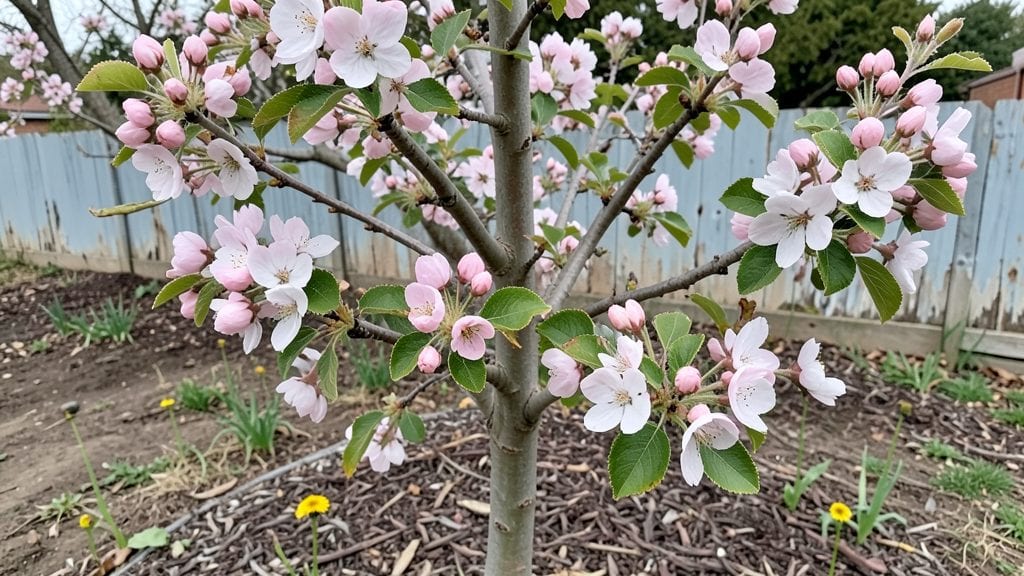
Fuji apple trees bloom with shockingly lush pink-white clusters every spring, but only if they’ve had enough winter chill hours. I learned this the hard way—my first Fuji tree sat stubbornly bare for years until I cracked the chill requirement code.
The timing isn’t just about spring; it’s about the layered chill those trees need to wake up from dormancy and set buds properly.
Here’s the thing—Fuji trees typically bloom in late April to early May, but that window shifts with your climate zone. In colder regions, they might wait until frost risk has passed; in warmer zones, they can bloom earlier.
Pruning in late winter (before buds swell) and supporting pollinators like bees will make all the difference. Without proper chill hours or pollination, those buds turn into nothing but empty branches.
Once the flowers appear, you’ll see thousands of tiny pink blossoms that fill the air with a sweet, honey-like scent. Protect them from late frosts with row covers, and fertilize lightly after bloom to fuel fruit development.
The payoff? A harvest of crisp, sweet Fuji apples by late summer—if you’ve given the tree everything it needs to bloom right.
This works best in zones 5-8, but even in warmer climates, you can extend chill hours with strategic pruning. The key is patience: Fuji trees take 3-5 years to produce reliable blooms, but once they do, they reward you with neighbor-jealousy levels of fruit. Let’s get those buds setting right!
📚 In This Guide
- What you need
- Instructions
- Tips and common mistakes
- Wrapping up and next steps
What you need
- ● Fuji apple tree sapling or mature tree (ensure it’s disease-resistant and suited to your USDA hardiness zone—typically 5-8 for optimal blooms).
- ● Chill hours tracker (a thermometer or digital logging device to monitor 300–1,000+ hours below 45°F during dormancy).
- ● Well-draining soil mix (60% topsoil, 30% compost, 10% perlite/sand for mature trees; sterilized potting mix for containers).
- ● Organic mulch (4–6 inches of wood chips or straw to insulate roots and retain moisture).
- ● Drip irrigation system or soaker hose (for consistent moisture without wetting foliage).
- ● Pruning tools: Bypass pruners (for cuts ½-inch thick).
- ● Loppers (for branches 1–2 inches thick).
- ● Saw (for thick branches 2+ inches).
- ● Fungicide spray (copper-based or neem oil to prevent apple scab or powdery mildew).
- ● Slow-release fertilizer (10-10-10 or balanced organic like alfalfa meal, applied in early spring).
- ● Tree wrap (to protect bark from sunscald in winter).
- ● Pollination aids (bee-friendly flowers nearby or a hand pollinator for container trees).
- ● Soil pH test kit (aim for 6.0–6.5; amend with lime or sulfur if needed).
- ● Grafting tools (if propagating from cuttings or budding).
- ● Shade cloth (30–50% coverage for young trees in hot climates).
How to ensure Fuji apple trees bloom reliably
Fuji apple trees need precise winter chill to produce vibrant spring blooms. Here's how to meet their needs for a bountiful harvest.
Understand Fuji Apple Tree Chill Requirements
Fuji apple trees require 200-500 hours of chill between 32°F and 45°F to trigger blooming. This is called "chill hours," and without it, buds won't open properly. If your region gets fewer than 200 chill hours, you'll need to extend cold exposure or choose a different apple variety better suited to your climate.
Track your local chill hours using a weather station or online records. Fuji trees planted in warmer zones often struggle to bloom without intervention. If your area typically falls short, consider planting in a cooler microclimate or using protective techniques to extend cold exposure.
Plant in the Right Location for Natural Chill
Choose a spot with full sun exposure (at least 6-8 hours daily) and good air circulation to prevent disease. Fuji apple trees thrive in USDA zones 5-8, where natural chill hours are sufficient. If you're in a warmer zone, plant near a north-facing wall or in a slightly elevated area to maximize cold exposure.
Soil should drain well—Fuji trees hate soggy roots. Amend heavy clay with compost or organic matter to improve drainage. The root zone should stay cool but not waterlogged during winter. Avoid low-lying areas where cold air pools, as this can cause frost damage to buds.
Extend Chill Hours in Warmer Climates
If your region lacks natural chill, use artificial methods to supplement. One effective technique is winter pruning to expose more branches to cold air. Thin out dense growth to improve airflow and chill penetration. Another option is delayed planting—set young trees in late fall to ensure they experience more winter chill before bud break.
For established trees, winter watering can help regulate soil temperature. Keep the ground moist but not saturated, as this prevents extreme temperature fluctuations. In extreme cases, consider chill chamber storage for young trees, where they’re exposed to controlled cold periods before planting.
Monitor Bud Development in Early Spring
Start checking for bud swell in late winter, around 4-6 weeks before your last frost date. Healthy buds will plump up and turn pinkish before blooming. If buds remain dormant past this time, they may not open, leading to poor fruit set. Apply a balanced fertilizer (like 10-10-10) in early spring to support bloom development.
Watch for frost warnings during bloom time—Fuji flowers are sensitive to late frosts. Cover trees with frost cloth if temperatures dip below 28°F during flowering. A single frost can kill blossoms, reducing your harvest. If buds open unevenly, it may signal inconsistent chill exposure, and you’ll need to adjust next year’s strategy.
Maintain Post-Bloom Care for Fruit Development
After blooms fade, thin fruit to 6-8 inches apart to ensure larger, higher-quality apples. Overcrowded fruit weakens the tree and reduces size. Remove misshapen or damaged apples early to redirect energy to healthy growth. Water deeply once a week during dry spells, keeping soil 2-3 inches moist but not soggy.
Continue fertilizing with low-nitrogen, high-potassium fertilizer (like 5-10-10) to support fruit maturation. Prune lightly in summer to remove suckers and water sprouts, which drain energy from fruit production. By mid-summer, you’ll see color development in Fuji apples, signaling they’re on track for harvest.
Tips & tricks for perfect Fuji apple tree bloom
Meeting those exact chill hour requirements can feel tricky, but these insights will help you navigate the nuances of Fuji apple tree blooming with confidence.
Chill Hour Precision: The 200-500 hour range between 32°F and 45°F is non-negotiable for Fuji trees. I recommend using a dedicated weather station to track these hours accurately—some free smartphone apps can help too. If you're in a borderline zone, aim for the higher end of the range (closer to 500 hours) to ensure reliable blooming. Remember, every hour counts, and even small variations can affect bud development.
Location Strategy: When selecting your planting spot, pay special attention to microclimates. I've found that north-facing slopes or areas near water features can provide that extra chill your Fuji tree needs. The 6-8 hours of daily sunlight is essential, but don't overlook how these microclimates can extend your effective chill hours naturally. In my experience, planting near a north-facing wall adds about 50-100 extra chill hours annually.
Pruning for Chill: The winter pruning technique mentioned is particularly effective for extending chill exposure. When you thin out dense growth, you're not just improving airflow—you're creating more surface area for cold air to penetrate the tree's structure. I recommend pruning in late winter after the worst cold has passed but before bud swell begins. This timing gives you the best balance of chill exposure and spring growth preparation.
Frost Protection: That 28°F threshold during bloom time is critical. I've seen entire blossoms wiped out by a single night below this temperature. My go-to solution is lightweight frost cloth that allows sunlight while providing protection. You can also set up a simple sprinkler system—when water freezes on the blossoms, it releases heat and raises the temperature slightly. Just make sure to turn it on before temperatures drop below 32°F to be effective.
Pro Tips for Fuji Apple Tree Bloom
- Meeting those exact chill hour requirements can feel tricky, but these insights will help you navigate the nuances of Fuji apple tree blooming with confidence.
- Chill Hour Precision: The 200-500 hour range between 32°F and 45°F is non-negotiable for Fuji trees.
- Location Strategy: When selecting your planting spot, pay special attention to microclimates.
Frequently asked questions
Got questions about timing, care, or troubleshooting your Fuji apple tree bloom? You’re not alone! Here are the answers to the most common queries—so you can enjoy that showstopping spring display without stress.
When do Fuji apple trees typically bloom?
Fuji apple trees usually bloom in late April to early May in most U.S. growing zones (5-8), but timing depends on chill hours and local climate. Trees need 800-1,200 hours below 45°F (7°C) to trigger buds. Check your region’s frost dates—late blooms risk frost damage!
How do I ensure my Fuji tree gets enough chill hours?
If your area lacks natural chill, use artificial chilling methods like:
- Moving potted trees to a garage or cold frame during winter.
- Using anti-transpirant sprays to reduce heat stress.
- Planting in a north-facing location to delay bud break.
What should I do if frost threatens during bloom?
Frost can destroy blossoms and fruit set. Act fast:
- Cover trees with frost cloth at dusk.
- Run a hose trickle system to raise humidity.
- Avoid wind machines—they spread cold air.
Can I prune my Fuji tree during bloom?
No! Prune only in late winter (dormant season) to avoid:
- Removing next year’s flower buds (hidden in leaf axils).
- Stressing the tree during critical growth phases.
What are good Fuji apple tree alternatives for warmer climates?
If chill hours are scarce, try these low-chill varieties (300-600 hours):
- Anna (red blush, sweet-tart).
- Ein Shemer (disease-resistant, crisp).
- Dorsett Golden (yellow, early ripening).
Wrapping up and next steps
The Fuji apple tree bloom is a breathtaking spectacle that rewards patience and precision—especially when you master the layered chill method! By understanding your region’s chill hours, preparing the right tools, and following a step-by-step approach, you’ll unlock vibrant spring blossoms year after year. 🌸
Now that you’re armed with the know-how, take the next step: mark your calendar for post-bloom care (like thinning fruit!) and share your progress with fellow gardeners. Your orchard’s future starts with this season’s foundation—so get growing!