
Pests and Diseases
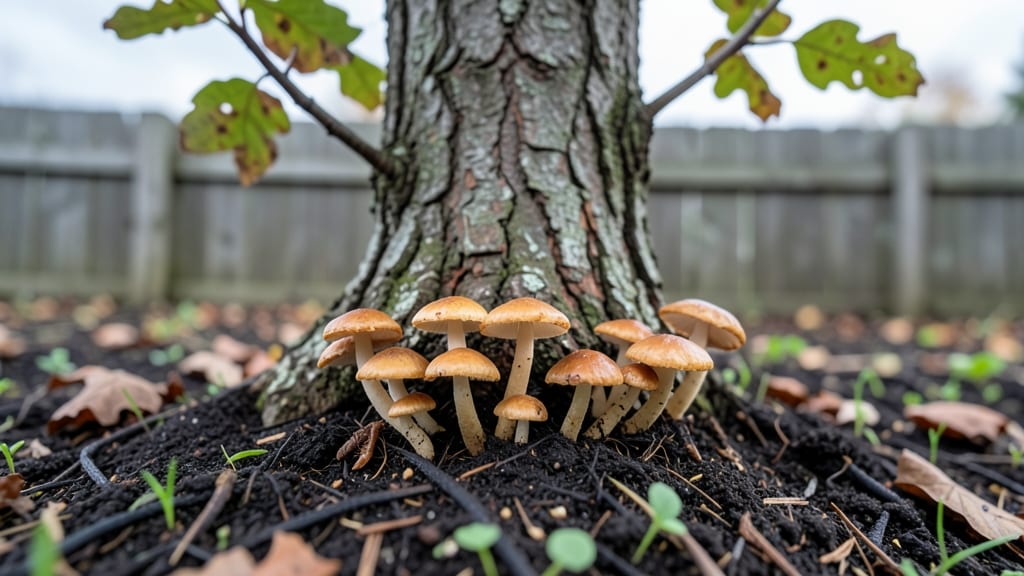
Fungal growth at the base of your tree isn’t just unsightly—it’s a warning sign that could weaken or even kill your tree if ignored. 🌿 I’ve seen shelf fungi, honey-colored mushrooms, and that dreaded honey fungus creeping up from the roots, and each one tells a different story about what’s wrong beneath the soil.
The problem usually starts with compacted soil, old wounds, or too much moisture trapping roots in a damp, dark environment. Some fungi, like shelf fungi, are mostly cosmetic but can still spread and stress the tree.
Others, like armillaria root rot, are silent killers that move through roots and girdle the trunk from the inside out. The key is catching it early—before you notice yellowing leaves or sudden dieback.
You can tackle this with organic copper fungicides, proper pruning to improve airflow, and replacing problematic mulch with wood chips or gravel. The goal is to dry out the base, remove infected wood, and give your tree’s roots a fighting chance.
With the right approach, even heavily infected trees can bounce back—though some cases require professional help.
Prevention is all about healthy soil, good drainage, and keeping the base of the tree dry. A little maintenance now saves you from losing a mature tree later. Let’s get your tree back on track before the problem spreads further.
Root Causes Of Tree Base Fungi
Fungal growth at the base of a tree isn’t just an eyesore—it’s often a sign of deeper issues affecting your tree’s health. Understanding why these fungi appear helps you address the root cause (pun intended) and prevent further damage.
Below, we break down the most common reasons fungi take hold, from environmental factors to tree stress signals.
Fungi thrive in damp, oxygen-deprived conditions, making excess moisture the #1 trigger for growth at a tree’s base. Here’s how it happens:
- Compacted or Waterlogged Soil: Heavy clay soils or poorly draining areas trap moisture, creating a fungal-friendly environment. Example: After a storm, if water pools around the base for days, fungal spores germinate rapidly.
- Overwatering or Irrigation Issues: Drip irrigation systems, sprinklers, or even a leaky hose can saturate the soil, giving fungi like Armillaria (honey fungus) or Phytophthora the perfect conditions to spread.
- Mulch That Traps Moisture: While mulch is great for soil health, too much (especially thick layers or impermeable types like plastic) suffocates the root zone, trapping humidity against the trunk.
💡 Pro Tip: Test your soil’s drainage by digging a 12-inch hole near the tree. If water doesn’t seep in within 30 minutes, amending with compost or sand may help. Keep mulch 3–4 inches deep and 6 inches away from the trunk.
Healthy trees resist fungal invasion, but stress—from wounds, pests, or illness—weakens defenses. Fungi often exploit these openings:
- Physical Damage: Broken branches, girdling roots (roots that wrap around the trunk), or even lawnmower wounds create entry points for pathogens like Polyporus (shelf fungi).
- Root Rot or Root-Knot Nematodes: These pests/diseases damage roots, reducing the tree’s ability to absorb water and nutrients. Weak roots = easier fungal takeover.
- Crown Rot or Cankers: Fungal infections like Cytospora or Nectria can spread from the canopy down to the base, leaving behind dark, oozing lesions that attract more fungi.
🔍 Watch For: Wilting leaves, dieback in branches, or mushrooms sprouting near the trunk—these are red flags your tree is compromised.
Fungal spores are everywhere, but they need a host to colonize. If nearby trees (or even stumps) are infected, spores hitchhike to your tree via:
- Wind or Rain Splash: Spores from decaying logs or infected trees land on your tree’s base, especially after wet weather.
- Animals or Tools: Deer, squirrels, or even your pruning shears can transfer spores from one tree to another.
- Shared Root Systems: Trees with interconnected roots (common in forests or urban plantings) can spread fungal diseases like Armillaria through underground networks.
🌳 Prevention: Remove infected trees or stumps within 100 feet of your tree, and sterilize tools with 70% isopropyl alcohol after use.
Fungi love warmth and humidity—think of them as tropical invaders in your yard. These conditions accelerate growth:
- Southern or Western Tree Exposures: Trees facing south or west bake in afternoon sun, then cool rapidly at night, creating condensation on the bark—a fungal buffet.
- Dense Shrubbery or Fences: These block airflow, trapping heat and moisture against the trunk. Example: A privet hedge pressed against a tree’s base creates a greenhouse effect.
- Urban Heat Islands: Pavement and buildings radiate heat, raising soil temperatures and stressing tree roots, making them more susceptible to fungal attack.
✨ Solution: Prune nearby vegetation to improve airflow, and consider light-colored mulch (like pine straw) to reflect heat away from the trunk.
Not all trees are created equal—some species are naturally more resistant to fungal diseases in your region. Planting the wrong tree in the wrong spot sets it up for failure:
- Trees Unsuited to Wet Soils: Species like Oak or Maple are prone to Phytophthora root rot if planted in boggy areas.
- Shallow-Rooted Trees in Compacted Soil: Trees like Willows or Poplars struggle in dense, oxygen-poor soil, inviting fungal invaders.
- Non-Native Trees in Local Ecosystems: Exotic species often lack natural defenses against local fungal pathogens.
📊 Research First: Check your USDA Plant Hardiness Zone and local nursery recommendations before planting. Native species are usually the safest bet!
Fixing Tree Base Fungus Naturally
Fungal growth at the base of your tree isn’t just unsightly—it can weaken roots and threaten your tree’s health. But with the right approach, you can remove existing fungus and prevent future outbreaks without harsh chemicals.
Below, we break down solutions by cause, so you can tackle the problem head-on with practical, eco-friendly fixes.
Fungus thrives in soggy, compacted soil where water pools. If your tree’s base stays damp for long periods, it’s an open invitation for fungal spores.
How to Fix It:
- ✂️ Prune nearby plants to improve airflow around the base.
- 🪓 Loosen soil 6–12 inches deep with a garden fork to break up compaction and encourage drainage.
- 💧 Adjust watering—water deeply but less frequently (1–2 times per week, depending on climate). Avoid overhead sprinklers that soak the trunk.
- 🪵 Install a French drain if water consistently pools around the base. A sloped trench filled with gravel and covered with landscape fabric can redirect excess water.
💡 Prevention Tip: Add 2–3 inches of organic mulch (wood chips, bark) 3–6 inches away from the trunk to regulate moisture and block fungal spores from splashing up.
Leaves, bark, and old mulch create a cozy home for fungal spores. If your tree’s base is buried under organic debris, it’s a breeding ground for rot-causing fungi like Armillaria (honey fungus) or root rot.
How to Fix It:
- 🧹 Remove all debris within 2–3 feet of the trunk, including fallen leaves, branches, and old mulch.
- 🔥 Sterilize tools (pruners, rakes) with 70% isopropyl alcohol or a 10% bleach solution (1 part bleach to 9 parts water) to prevent spreading spores.
- 🌿 Replace mulch with fresh, disease-free wood chips, keeping it 2–4 inches thick and away from the trunk.
🔥 Pro Tip: If you spot mushrooms or shelf-like growths, do not disturb them—this can spread spores. Instead, remove the entire fungal mass with a shovel and dispose of it in a sealed bag.
Injuries from lawnmowers, string trimmers, or animal gnawing create entry points for fungi like canker diseases or polypore fungi. If the bark is cracked or peeling, seal it to block fungal invasion.
How to Fix It:
- 🛡️ Clean the wound with a 50/50 water-vinegar solution or hydrogen peroxide (3%) to kill existing spores.
- 🎨 Apply a fungicidal sealant (like copper-based fungicide or tree wound dressing) to protect exposed areas. Avoid thick coatings—they can trap moisture.
- 🚫 Avoid over-pruning—only remove dead or diseased branches with sterilized tools.
🌡️ Prevention Tip: Install a tree guard (metal or plastic) around the trunk to shield it from lawn equipment damage.
A tree under stress (from drought, poor soil, or pests) is more susceptible to fungal infections. If your tree is struggling, strengthen its immune system to fight off invaders.
How to Fix It:
- 🌱 Test soil pH (ideal range: 6.0–7.0 for most trees). Amend with lime (to raise pH) or sulfur (to lower pH) if needed.
- 💧 Fertilize with slow-release, organic fertilizer (like compost, worm castings, or mycorrhizal fungi) to improve root health.
- 🚰 Water deeply during droughts—trees need 1–1.5 inches of water per week, especially in hot months.
- 🐞 Monitor for pests (aphids, borers, beetles). Treat infestations early with neem oil or insecticidal soap.
✨ Pro Tip: Plant fungus-resistant tree species (like oak, maple, or hickory) if your current tree is repeatedly infected. Consult a local arborist for species suited to your climate.
If the fungus has spread to the roots, caused large mushrooms, or the tree shows wilting, yellowing leaves, or oozing sap, it may need professional intervention.
A certified arborist can: - 🌳 Assess root health with a soil probe or resistograph. - 💊 Apply systemic fungicides (like propiconazole or phosphite-based treatments) for deep-root infections. - 🪓 Remove severely infected trees if they pose a safety risk.
🎯 Final Prevention Checklist: ✅ Inspect the base monthly for new growth. ✅ Keep mulch fresh and aerated. ✅ Water at the roots, not the leaves. ✅ Avoid compacting soil with heavy foot traffic or machinery.
With these steps, you can restore your tree’s health and keep fungal growth at bay—naturally and effectively! 🌳💪
Frequently asked questions about tree base fungal growth
Are mushrooms growing at my tree’s base always a sign of serious disease?
Not necessarily! Some fungi, like shelf fungi (Polyporus), are mostly cosmetic and harmless to healthy trees. However, others—such as Armillaria (honey fungus) or Phytophthora—can weaken roots and kill trees over time. Look for yellowing leaves, dieback, or mushrooms appearing in clusters as warning signs of a serious infection.
Can I safely remove fungal growth myself, or should I call a professional?
You can remove small, isolated fungal growths yourself by carefully digging out the affected soil and disposing of it in a sealed bag. Avoid disturbing larger clusters, as this can spread spores. For deep-root infections (like Armillaria) or if your tree shows signs of stress, consult a certified arborist to assess the damage and recommend treatment.
How do I know if my tree’s fungal issue is caused by overwatering or poor drainage?
Check for these clues: soil that stays soggy for days after rain, water pooling around the base, or mushrooms appearing after heavy watering. Conduct a simple drainage test—dig a 12-inch hole near the tree and fill it with water. If it doesn’t drain within 30 minutes, your soil is likely compacted or waterlogged. Improve drainage by amending soil with compost or installing a French drain.
Will copper fungicides harm my tree or surrounding plants?
When used correctly, copper-based fungicides (like copper sulfate) are safe for trees and won’t harm beneficial soil organisms. However, avoid overapplying—follow label instructions carefully. These fungicides work by creating a protective barrier against spores, but they’re most effective when combined with fixing underlying issues like poor drainage or mulch buildup.
Can I prevent fungal growth by changing my mulch type?
Use organic mulch like wood chips or pine straw (2–4 inches deep) and keep it 6 inches away from the trunk to improve airflow. Avoid thick layers of bark or leaves, which trap moisture. For extra protection, opt for gravel or rubber mulch in high-humidity areas, though these won’t improve soil health like organic options.