
Size
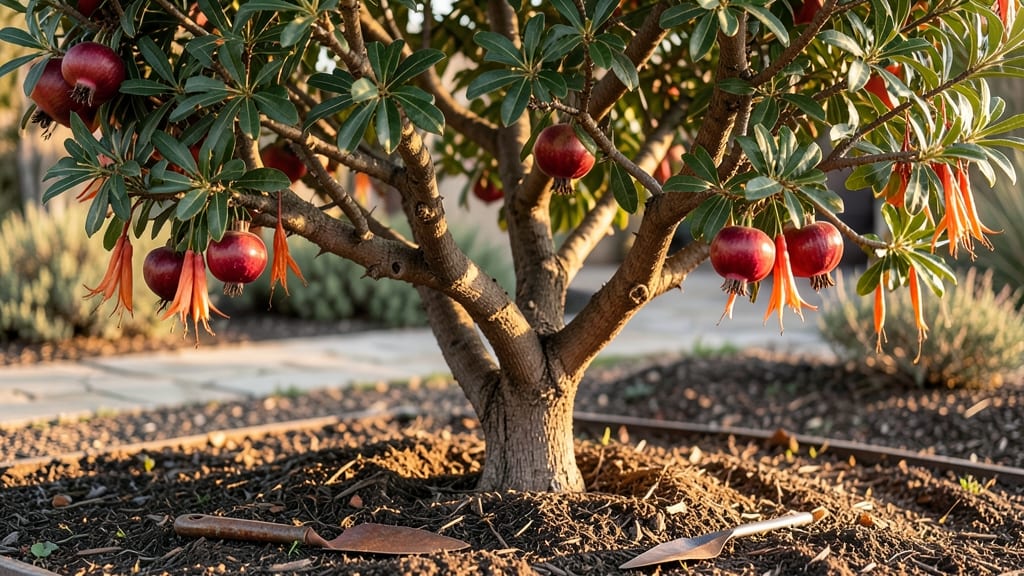
A pomegranate tree can grow anywhere from 15 to 30 feet tall at maturity, turning even a small yard into a striking focal point.
If you’re dreaming of growing your own 🍇 but worried about space, understanding its mature size is the first step to planning your perfect garden spot—or even a stunning container setup.
Most varieties, like the popular 'Wonderful,' reach 20 feet with a spread of 15 feet, making them perfect for larger gardens in USDA Zone 6a or warmer. But don’t let that scare you off—dwarf varieties stay under 10 feet, ideal for smaller spaces or urban balconies.
Below, I’ll break down how to manage its size, whether you’re working with a sprawling backyard or a cozy patio, so you can enjoy those juicy fruits without the space struggles.
Pomegranate tree size by variety: height and spread guide
Choosing a pomegranate tree often comes down to one key question: how big will it grow? The answer depends entirely on the variety you select, as some mature into towering 20-foot giants while others stay compact enough for containers.
Understanding these differences helps you plan your garden layout or container setup with confidence.
Pomegranate trees thrive in full sun conditions (6+ hours daily), but their growth rate and final size can vary based on sunlight exposure, pruning habits, and soil quality.
In partial shade, expect slightly slower growth and reduced fruit production, but the tree’s mature dimensions may still align with the variety’s typical range.
Below, I’ve broken down the most popular pomegranate varieties—from the classic 'Wonderful' to the cold-hardy 'Eversweet'—so you can visualize their mature height and spread before planting. Whether you’re working with a backyard plot or a balcony container, this guide ensures you pick the perfect fit.
🍇
If you’re growing 'Wonderful' pomegranates—the most widely cultivated variety—expect a 15–25-foot tree with a 12–18-foot spread at maturity. This makes it a statement plant for large gardens or orchards, but it’s not ideal for urban yards unless you’re committed to regular pruning to control its size.
For small-space gardeners, the 'Candy' variety is a game-changer. Mature trees reach only 10–15 feet tall with an 8–12-foot spread, making them perfect for containers or patio plantings. Their adaptability to partial shade also gives you flexibility in placement.
🌱
One common misconception is that pomegranate trees grow uniformly in all climates. In reality, trees in hot, arid regions (like the Southwest U.S.) may grow taller and bushier due to stress-induced vigor, while those in cooler climates (like Zone 7) might stay slightly smaller without proper winter protection.
Always check your USDA hardiness zone compatibility when selecting a variety.
Pruning plays a crucial role in managing size. For 'Granada', which can reach 30 feet, I recommend structural pruning in early spring to maintain a manageable shape. Remove suckers at the base and thin out overcrowded branches to improve airflow and fruit production.
🪴
For container growing, stick to dwarf varieties like 'Sweetheart' or 'Candy'. Use a 24-inch diameter pot with drainage holes and a well-draining
How to manage pomegranate tree size in small gardens or containers
Even though standard pomegranate trees can reach 15-30 feet tall, you can absolutely grow them in small spaces with the right techniques. The key is choosing the right variety and using smart pruning strategies to control growth while still enjoying plentiful fruit.
Many gardeners successfully grow pomegranates in containers or compact garden beds with minimal sacrifice in harvest.
For small gardens, dwarf varieties like 'Wonderful' or 'Eversweet' are excellent choices, typically staying between 6-10 feet tall. Even standard varieties can be kept manageable with regular structural pruning and annual maintenance.
The secret lies in understanding how and when to prune to encourage horizontal growth rather than vertical expansion.
A pomegranate tree in a 15-gallon container can produce 50+ fruits annually with proper care! Dwarf varieties like 'Nana' stay under 6 feet tall while still yielding sweet, juicy pomegranates.
When selecting a container, opt for a wide, shallow pot (at least 24 inches in diameter) to accommodate the tree's spreading roots. Pomegranates have a shallow root system, so depth matters less than width.
Use a well-draining potting mix with added perlite or sand to prevent root rot, and always include drainage holes.
To keep your pomegranate tree compact, focus on heading back (cutting back new growth) during late winter or early spring. Remove suckers (shoots growing from the base) and water sprouts (vertical shoots) to redirect energy toward fruit production.
Aim to prune 1/3 of the tree's growth annually to maintain its shape and size.
Fertilizing plays a crucial role in managing size. Use a balanced fertilizer (like 10-10-10) in early spring and avoid heavy applications in summer. Over-fertilizing can lead to excessive foliage growth at the expense of fruit production. Instead, focus on root-feeding fertilizers to encourage strong, compact growth.
With these techniques, you can enjoy homegrown pomegranates even in a small patio or balcony garden. The key is consistency—regular pruning, proper container size, and balanced care will keep your tree fruitful and manageable for years to come. 🍇