
Blooming
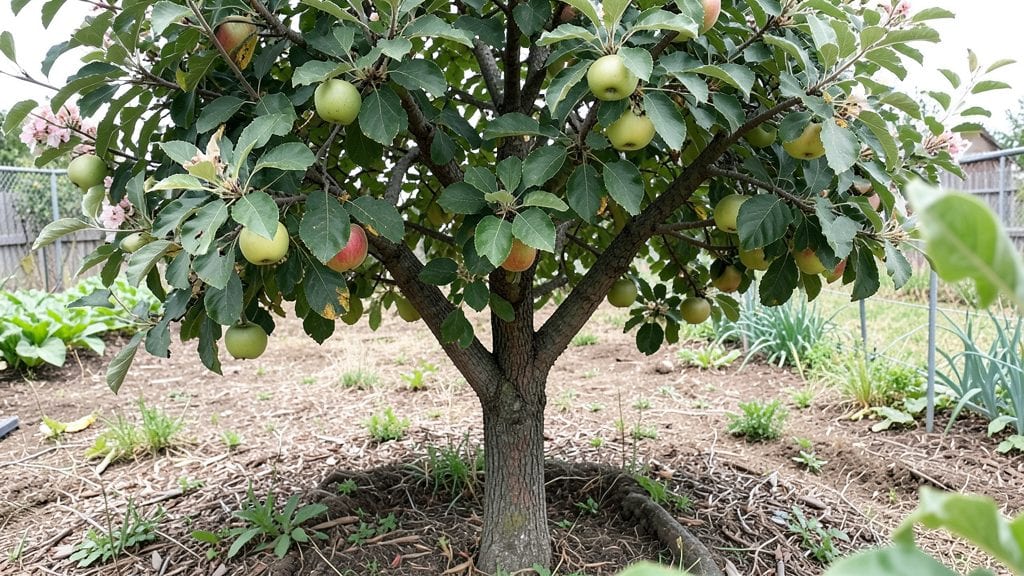
How long it takes an apple tree to mature depends on its variety, rootstock, and growing conditions, with most trees taking 4 to 8 years before producing fruit. Dwarf varieties can bear fruit in as little as 2–3 years, while standard trees may take a decade or longer for full maturity and peak production.
Apple trees don't rush into fruiting—they prioritize root and branch development first. 🌱 Young trees focus on building a strong structure, which is why dwarf varieties fruit faster; their smaller size means less energy devoted to trunk growth.
I’ve seen Granny Smith trees start producing in just 3 years when grafted onto dwarf rootstock, while heirloom varieties like Arkansas Black can take 10+ years. Climate plays a huge role too: colder regions often delay maturity, while warmer climates with consistent sunlight can accelerate the process.
What’s fascinating is how pruning and pollination impact this timeline.
Over-pruning can stress a tree and push back fruiting by years, while proper thinning encourages earlier and heavier yields. 🍎 For example, a Honeycrisp tree on a semi-dwarf rootstock might fruit in 5–6 years with optimal care, but neglect could stretch that to a decade.
The key is patience—even fast-maturing varieties need 2–3 years of establishment before they’re ready to bear consistently.
💡 In This Article
- Apple Tree Growth Stages: From Seedling to Fruit-Bearing
- Factors That Speed Up or Slow Down Apple Tree Maturity
Apple tree growth stages: from seedling to fruit-bearing
An apple tree's journey to maturity unfolds in three distinct phases, each governed by biological and environmental factors. The first stage begins as a seedling, where the tree focuses on developing its root system and primary structure.
During this phase, which lasts 1-2 years, the tree's energy is directed toward establishing a strong foundation capable of supporting future growth. 🌱 This is why young trees often appear leggy—they're prioritizing height to reach sunlight over fruit production.
The juvenile stage is where most of the confusion lies about maturity timelines. This phase can last 2-5 years depending on the variety, during which the tree builds its woody framework and develops the necessary hormonal balance to produce flowers.
What's fascinating is how different apple varieties handle this stage: Granny Smith trees, for example, often transition to fruiting in just 3 years when grafted onto dwarfing rootstock, while heirloom varieties like Arkansas Black may take 7-10 years to reach this point.
The tree's ability to store carbohydrates in its roots during this stage determines how quickly it can shift to reproductive growth.
Climate plays a crucial role in accelerating or delaying these stages. Trees in USDA Zone 5-6 (colder regions) often require 2-3 additional years of establishment compared to those in Zone 7-8 due to shorter growing seasons.
The chill hours requirement—typically 500-1,000 hours below 45°F—must be met annually for proper flowering. 🍂 For instance, a Honeycrisp tree in Minnesota might take 6 years to fruit, while the same variety in California could produce in 4 years with ideal conditions.
Pruning practices during these early stages can dramatically alter the timeline. Aggressive pruning to remove too many branches stresses the tree and diverts energy away from root development, potentially extending the juvenile phase by 1-2 years.
Conversely, strategic pruning that opens the canopy to sunlight while maintaining branch structure can encourage earlier fruiting. The key is understanding that each cut removes both leaves (which produce food) and buds (which could become fruit), creating a delicate balance that experienced growers master over time.
Soil quality emerges as another critical factor in these growth stages. Trees planted in well-draining loam soil with a pH of 6.0-7.0 establish more quickly than those in clay or sandy soils.
The root system's ability to access water and nutrients directly impacts how efficiently the tree can transition from vegetative to reproductive growth.
For example, a Fuji tree on a semi-dwarf rootstock in optimal soil might reach fruiting age in 4-5 years, while the same tree in poor soil conditions could take 7 years or longer to produce meaningful yields.
The final stage—maturity—typically begins when the tree reaches 60-70% of its potential height and has developed a strong branch structure. This is when you'll see consistent fruit production, though peak yields often occur 2-3 years after the first harvest.
What's particularly interesting is how different varieties handle this transition: Dwarf varieties like Red Delicious on M.9 rootstock may reach maturity in 3-4 years, while standard-sized trees like Jonathan might take 8-10 years to reach their full productive capacity.