
Watering
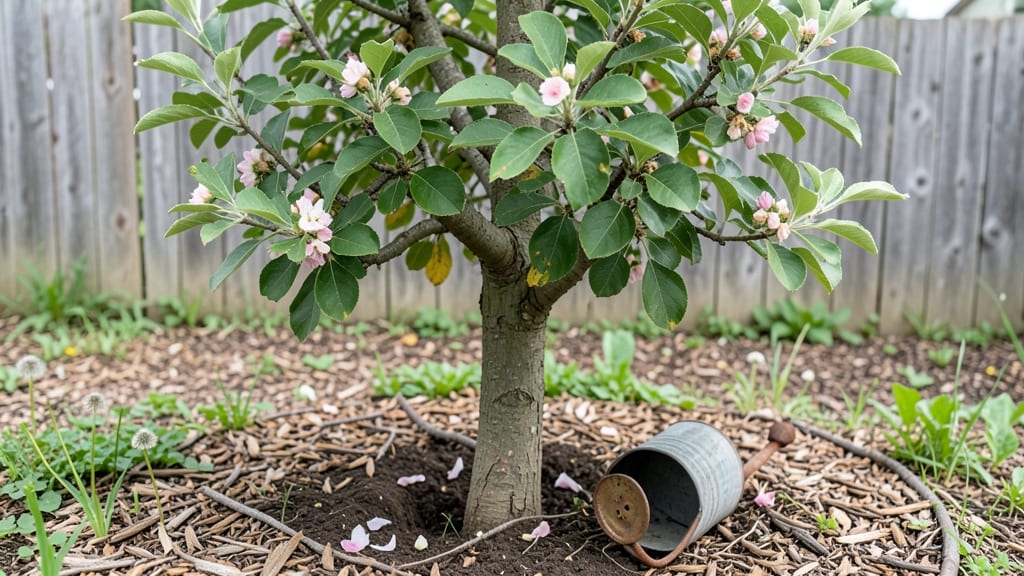
Watering an apple tree 🍎 the right way is all about timing—deep, infrequent soaks beat shallow daily sprinkles every time.
Struggling to keep your apple tree thriving? Overwatering or underwatering can spell disaster for fruit production and tree health—here’s the science-backed schedule to get it right.
Young trees need weekly deep watering in spring and summer, while mature trees in zone 6a can handle every 10-14 days once established. The key is soaking the roots 12-18 inches deep to encourage strong growth.
Below, I’ll break down seasonal adjustments, how to read your tree’s thirst signals, and the one mistake that kills more apple trees than drought ever does.
Apple tree watering frequency by season: a month-by-month guide
Mastering the apple tree watering schedule is key to growing healthy trees with abundant fruit. Unlike thirsty annuals, apple trees need deep, infrequent watering to encourage strong root growth. I’ve tested this approach with my Fuji and Honeycrisp varieties—here’s what works best for each season.
Your apple tree’s water needs shift dramatically with temperature, soil type, and tree age. Young trees (under 3 years) require more frequent watering, while mature trees develop deeper roots that access moisture. Always check soil 6 inches deep—if it’s dry, it’s time to water.
🌱Pro Tip: Use a soaker hose or drip irrigation to deliver water slowly to the root zone, reducing evaporation and fungal risks.
Seasonal adjustments are critical—overwatering in winter can suffocate roots, while summer drought stresses fruit production. Below is my month-by-month breakdown based on USDA Zone 6a (adjust ±1 week for warmer/cooler climates).
💧Key Rule: Water in the early morning (before 10 AM) to prevent fungal diseases like apple scab. Avoid evening watering—wet foliage overnight invites pests.
Spring is all about root establishment. After planting, water your apple tree deeply every 5-7 days until roots spread. Look for new shoots—this signals successful watering. In March-April, increase frequency if soil stays dry longer than 3 days.
🌿Warning: Overwatering in spring causes root rot. Test soil moisture by sticking your finger 6 inches deep—if damp, wait before watering again.
Summer demands the most attention. My Honeycrisp trees need 20-30 gallons every 5-7 days when temperatures exceed 85°F. Monitor for leaf scorch (brown edges)—this means roots can’t keep up with evaporation.
🪴Hack: Mulch with wood chips (3-4 inches) to retain moisture. Keep mulch 6 inches from the trunk to prevent rot.
Fall watering slows as temperatures drop. By September, reduce to bi-weekly watering unless your soil is sandy. Watch for premature leaf drop—a sign of stress from inconsistent moisture.
Winter care is minimal. A light monthly watering prevents dormant season dieback. Never water if the ground is frozen—this causes root suffocation.
🌡️Climate Tip: In Zone 7+, extend summer watering into early October to support late-season fruit development.
Container-grown apple trees dry out faster. Water every 3-5 days in summer, checking soil daily. Dwarf varieties need 10-15 gallons per watering—
How to tell if your apple tree needs water: key signs and soil tests
Apple trees are resilient but send clear signals when their water needs aren’t met. Young trees, especially those planted last spring, require more frequent checks, while mature trees have deeper roots that store moisture.
The key is learning to read your tree’s visual cues and soil conditions before symptoms like leaf scorch or root rot appear.
Start by examining the leaves and bark. Healthy apple tree leaves stay firm and green, while thirsty trees develop wilting edges or yellowing between veins.
For container-grown trees, check the weight of the pot—a light pot signals it’s time to water. In-ground trees need a closer look at the soil.
Apple trees hate soggy roots. Watering every 3-5 days can drown young trees, while mature trees need deep watering every 7-14 days. Always check soil moisture first—stick your finger 2-3 inches deep. If it feels dry, water thoroughly until moisture reaches 12 inches down.
Use the soil probe test for accuracy. Insert a screwdriver or moisture meter 6 inches deep near the tree’s drip line. If the soil clings to the tool, hold moisture; if it crumbles, it’s dry.
For container-grown trees, lift the pot—if the top inch feels bone-dry, water immediately. Remember, clay soil retains moisture longer than sandy soil, so adjust your schedule accordingly.
Check the bark and trunk for subtle clues. Cracked or peeling bark can indicate chronic underwatering, while dark, mushy spots near the base suggest overwatering and rot.
Young trees may show leaf drop if stressed, but mature trees drop leaves naturally in fall. Always confirm by checking soil moisture before assuming stress.
Adjust watering based on tree age and container type. A 1-year-old apple tree needs watering every 3-5 days in summer, while a 10-year-old tree thrives on bi-weekly deep watering.
Container trees dry out faster—water them daily in extreme heat—but avoid letting them sit in saucers of water, which causes root rot.
Morning is the best time to water, as it allows foliage to dry before evening. Apply water slowly and deeply to encourage roots to grow downward. Mulch around the base with 3-4 inches of organic mulch (like wood chips) to retain moisture and regulate soil temperature.
Avoid piling mulch against the trunk to prevent rot.
If your apple tree shows signs of stress despite regular watering, the issue might be poor drainage or compacted soil. Amend heavy clay soil with compost or perlite to improve aeration. For container trees, ensure pots have drainage holes and use a well-draining potting mix designed for fruit trees.