
How To
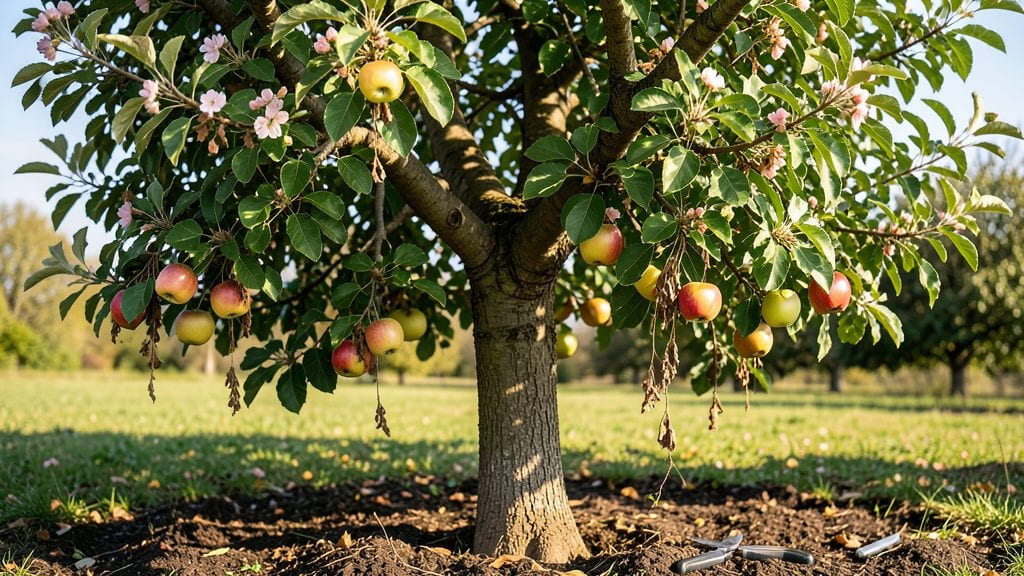
Wondering how tall does an apple tree grow will shape your orchard’s future, from effortless harvests to pruning headaches—and picking the wrong size could turn your dream into a chore.
Wondering if your backyard can handle a 🍎? A standard variety might tower over your fence, while dwarf trees stay compact enough for containers. The difference comes down to rootstock, and knowing your space’s limits before planting saves years of frustration.
Most home gardeners choose between dwarf (6-12 ft), semi-dwarf (12-18 ft), or standard (20-30+ ft) trees, each with trade-offs for yield, space, and care. Below, I break down how height affects your harvest, pruning needs, and even which varieties thrive in USDA Zone 6a.
You’ll learn how to match tree size to your yard, spot growth red flags early, and pick the perfect variety for spring planting—so you can enjoy apples by September without the headache.


Apple tree height by variety: dwarf, semi-dwarf, and standard sizes compared
Choosing the right apple tree size starts with understanding how rootstock determines mature height. The rootstock is the underground part of the tree that supports the scion (the fruiting variety). Different rootstocks create dwarf, semi-dwarf, or standard trees, each with distinct space needs and care requirements.
If you have limited space, a dwarf apple tree might be your best bet—but it won’t produce as much as a standard apple tree.
Your yard’s size and your willingness to prune will dictate which variety thrives best. For example, a standard apple tree can reach 20-30 feet tall, requiring plenty of room and professional pruning. Meanwhile, dwarf apple trees stay compact at 6-12 feet, making them perfect for containers or small backyards.
Let’s break down the key differences so you can make an informed choice for your garden.
The rootstock you choose isn’t just about height—it also affects fruit production and lifespan. For instance, dwarf rootstocks like M.9 produce fruit faster but may have shorter lifespans (around 15-20 years).
In contrast, standard rootstocks like seedling can live 50+ years but take longer to bear fruit. If you’re planning for long-term harvests, consider balancing your space constraints with productivity goals.
Another critical factor is pruning requirements. Dwarf apple trees need regular pruning to maintain their shape and encourage fruit production, while standard trees require more aggressive pruning to keep them manageable.
If you’re not comfortable with a pruning saw and ladder, a semi-dwarf might be the sweet spot—it offers a balance between manageable size and higher yields.
Your climate zone also plays a role in tree size. In colder regions (USDA zones 3-5), apple trees may grow more slowly due to shorter growing seasons, while warmer climates (zones 6-9) can encourage faster growth.
For example, a dwarf apple tree in zone 7 might reach 10 feet in 5 years, whereas in zone 4, it could take 7-8 years to reach the same height. Always check your local frost dates when selecting a variety.
For small gardens, consider columnar apple trees, a specialized type of dwarf that grows just 8-12 feet tall but stays narrow (under 3 feet wide).
These are perfect for urban homesteading or balcony gardens with limited horizontal space. Varieties like ‘Columnar Red Delicious’ or ‘Columnar Granny Smith’ are excellent choices for tight spaces.
If you’re planting near a fence or patio, leave at least 8 feet of clearance for a dwarf tree and 15 feet for a semi-dwarf. For standard trees, aim for 25+ feet of space to avoid shading out other plants or blocking sunlight.
Always measure your space before purchasing—you’ll thank yourself later when your tree has room to thrive without crowding.
One common mistake is assuming all apple trees grow at the same rate. In reality, dwarf trees can produce fruit in as little as 2-3 years, while standard trees may take 5-7 years to bear fruit.
If you’re eager for harvests, prioritize dwarf or semi-dwarf varieties like ‘Fuji’ on M.9 rootstock or ‘Gala’ on <
How to choose the right apple tree height for your space
Selecting the right apple tree height starts with measuring your space—and your patience. A dwarf apple tree might fit neatly in a small urban garden, while a standard variety needs room to stretch toward the sky.
Your choice affects everything from harvesting ease to pruning complexity, so let’s break down how to match tree size to your yard’s reality.
First, consider your yard dimensions. If you’re working with limited space—like a backyard patio or balcony garden—dwarf varieties (6–12 feet) are your best bet. These trees thrive in containers or espaliered against fences, making them ideal for urban homesteading.
For larger properties, semi-dwarf (12–16 feet) or standard (20–30+ feet) trees offer more fruit and shade but require long-term planning for growth.
🌱 STYLED LIST: APPLE TREE HEIGHT BY VARIETY & SPACE NEEDS
-
🌿 Dwarf Trees (6–12 ft)
Best for: Containers, small yards, balconies -
🌳 Semi-Dwarf Trees (12–16 ft)
Best for: Medium yards, easy harvesting -
🌲 Standard Trees (20–30+ ft)
Best for: Large orchards, shade trees -
📏 Space Needs:
Dwarf: 6–8 ft radius | Semi-Dwarf: 10–12 ft | Standard: 15–20+ ft -
🍎 Fruit Yield:
Dwarf: Smaller harvests | Semi-Dwarf: Moderate | Standard: Abundant -
✂️ Pruning Effort:
Dwarf: Low | Semi-Dwarf: Medium | Standard: High
Next, factor in your climate zone. Trees in warmer climates (like USDA Zone 8+) may grow taller faster due to longer growing seasons, while cooler regions might see slower, more controlled growth.
For example, a dwarf apple tree in Zone 5 might max out at 8 feet, while the same variety in Zone 9 could reach 10 feet without extra effort.
Don’t overlook long-term growth projections. A standard apple tree planted today could cast shade over your patio or driveway in 10 years—plan accordingly! Use this rule of thumb: multiply the tree’s mature height by 1.5 to account for spreading branches.
For instance, a 20-foot standard tree needs at least 30 feet of clear space all around.
For small gardens, consider espaliered apple trees—these are trained flat against walls or fences, reducing their footprint by up to 70%. Even a standard variety can be pruned into a 2D shape, making it perfect for urban homesteading where space is tight.
Just be prepared for more pruning maintenance to keep the tree’s shape in check.
Finally, align your choice with your maintenance preferences. If you’re not keen on ladder pruning, avoid standard trees. Instead, opt for semi-dwarf varieties like ‘Liberty’ or ‘Enterprise’, which balance size and manageability.
For hands-off growing, columnar apple trees (like ‘Urban Apple’) grow just 6–8 feet tall but produce fruit along their entire length—ideal for narrow spaces.