
How To
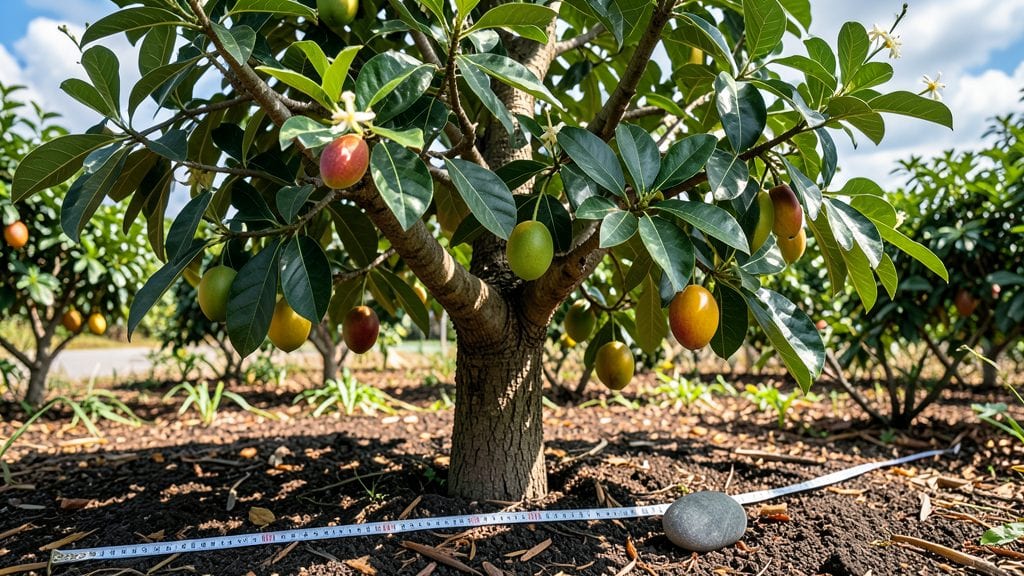
Wondering how tall a mango tree can grow? It can reach 100 feet or more in ideal conditions, but the height depends on the variety, climate, and how you care for it.
Picture this: You plant a sapling in your backyard, dreaming of juicy fruit just steps away—only to wake up one morning and realize it’s now taller than your house. That’s the reality for standard varieties like 'Alphonso' or 'Kent,' which can shoot up to three stories in a decade.
But dwarf types like 'Cogshall' stay under 20 feet, making them perfect for containers or small yards.
Climate plays a huge role, too. In tropical zones 10-11, mango trees thrive and reach their full height, while cooler areas (like 9b with winter protection) stunt their growth. Even the soil matters—well-draining, nutrient-rich earth keeps them strong and manageable.
Below, I’ll break down the height stages by variety, how to control growth if needed, and the care tips to keep your 🥭 tree happy—no matter how tall it gets.


Mature height of mango trees by popular varieties and growth habits
If you’re considering adding a mango tree to your landscape, one of your first questions is likely how tall mango trees grow. The answer varies widely—from compact varieties perfect for containers to towering giants that need acres of space.
Most standard mango trees reach 50–100 feet tall, but dwarf varieties stay under 20 feet, making them ideal for small yards or urban gardens.
The variety you choose is the biggest factor in a mango tree’s mature height. For example, the 'Alphonso' variety can soar to 100 feet, while 'Cogshall' stays under 15 feet.
Even within the same variety, rootstock plays a crucial role—grafting onto dwarfing rootstock can reduce height by 50% or more. Understanding these differences helps you pick the right tree for your space and climate.
| Variety | Mature Height (ft) | Growth Rate (Years to Maturity) | Rootstock Influence | Best For |
|---|---|---|---|---|
| 'Alphonso' | 80–100 ft | 10–15 years | Standard (no dwarfing) | Large estates, tropical climates |
| 'Keitt' | 50–70 ft | 8–12 years | Semi-dwarf with proper rootstock | Subtropical backyards, commercial orchards |
| 'Haden' | 40–60 ft | 7–10 years | Moderate (can be grafted dwarf) | Home gardens, urban landscapes |
| 'Valencia' | 60–80 ft | 9–12 years | Standard (fast-growing) | Tropical regions, large properties |
| 'Cogshall' | 10–15 ft | 5–7 years | Dwarfing rootstock | Containers, patios, small yards |
| 'Julie' | 12–18 ft | 6–8 years | Dwarfing rootstock | Urban gardens, balconies |
| 'Kent' | 70–90 ft | 10–14 years | Standard (tallest common variety) | Rural areas, large orchards |
Most mango trees take 5–10 years to reach their mature height, but their growth rate accelerates dramatically in the first 3–5 years. For example, a 'Haden' mango tree might grow 3–5 feet per year when young but slows to 1–2 feet annually once mature.
This growth pattern means you’ll see significant height increases in the early years, so plan accordingly if space is limited.
Another critical factor is the rootstock used during grafting. Dwarfing rootstock, like 'Grafton' or 'Swingle', can reduce a tree’s height by up to 70% compared to standard rootstock.
If you’re growing a 'Keitt' mango but want a smaller tree, grafting it onto dwarfing rootstock can cut its height from 70 feet to just 20–30 feet. This technique is commonly used in commercial orchards and home gardens alike.
Climate also plays a surprising role in a mango tree’s height. In tropical regions (USDA zones 10–11), mango trees grow faster and taller due to year-round warmth and humidity.
However, in cooler climates (like zone 9b with winter protection), growth slows, and trees may stay shorter unless given extra care. For instance, a 'Valencia' mango in Florida might reach 80 feet, while the same variety in Southern California could max out at 60 feet.
If you’re growing a mango tree in a container, height is far easier to manage. Dwarf varieties like 'Cogshall' or 'Julie' thrive in 15–25 gallon pots and rarely exceed 15 feet.
Even standard varieties can be pruned aggressively to keep them under 10 feet, though this may reduce fruit production slightly. Just ensure your container has drainage holes and you’re using a well-draining potting mix to prevent root rot.
Pruning is another tool to control height. Young mango trees benefit from structural pruning in their first few years to encourage a strong, compact form. For mature trees, heading back (cutting back new growth) can limit vertical expansion.
However, avoid over-pruning, as mango trees produce fruit on new wood, so heavy cuts can reduce yields. A good rule of thumb is to prune no more than 25% of the canopy in any single year.
For those in small spaces, consider espalier training, where the tree is grown flat against a wall or trellis. This method can keep a mango tree under 8 feet tall while still allowing it to produce fruit.
It’s a labor-intensive approach but ideal for urban gardeners or those with limited yard space. Just ensure the tree gets full sun exposure, as mangoes are light-loving and won’t thrive in shade.
In summary, the height of your mango tree depends on its variety, rootstock, climate, and how you manage its growth. Whether you’re aiming for a towering tropical giant or a compact container-friendly tree, there’s a mango variety and care strategy to fit your needs.
With the right choices, you can enjoy fresh mangoes without sacrificing your backyard space! 🌳
Climate and growing conditions that affect mango tree height
Your mango tree’s final height isn’t set in stone—it’s shaped by where you live and how you care for it. In USDA zones 10–11, mango trees thrive naturally, reaching heights of 50–100 feet with proper conditions.
But in cooler zones like 9b, winter chills can stunt growth, keeping trees shorter unless you provide protection. Even the same variety will grow taller in Florida than in California’s coastal fog belt.
Sunlight is the #1 growth accelerator for mango trees. They demand 6+ hours of direct sun daily, but 8+ hours fuels rapid vertical growth. In shadier spots, branches stretch upward to reach light, creating a leggy, weak structure.
Meanwhile, well-draining soil rich in organic matter ensures roots grow deep, supporting a sturdy trunk and stronger canopy. Sandy loam is ideal, but heavy clay can suffocate roots, slowing height gains.
🌡️ Temperature Zones vs. Mango Tree Height
If your goal is a manageable mango tree, pruning is your best tool. In tropical zones, I recommend structural pruning every 2–3 years to remove weak branches and open the canopy for sunlight.
For cooler climates, winter pruning is critical—cut back damaged growth in late winter to encourage new, resilient shoots. Just avoid heavy pruning in summer, as it stresses the tree when it’s already fighting heat.
Soil pH also plays a sneaky role in height. Mango trees prefer slightly acidic soil (pH 5.5–7.0). In alkaline soils, they struggle to absorb nutrients, leading to stunted growth. Test your soil and amend with peat moss or sulfur if needed.
I once saw a 10-year-old mango tree in alkaline soil grow only 8 feet tall—after adjusting the pH, it shot up 3 feet in a single season.
For container-grown mangoes, pot size matters. A 50-gallon container is the minimum for dwarf varieties, but standard types need 100+ gallons to reach even 20 feet tall. Root-bound trees grow slowly and develop weak trunks.
Repot every 2–3 years and prune roots gently to encourage bushier growth. With the right care, even a backyard mango tree can stay compact while still bearing fruit.
🌱 Ready to control your mango’s height? Start with the right zone, full sun, and smart pruning—your tree (and your neighbors!) will thank you.