
How To
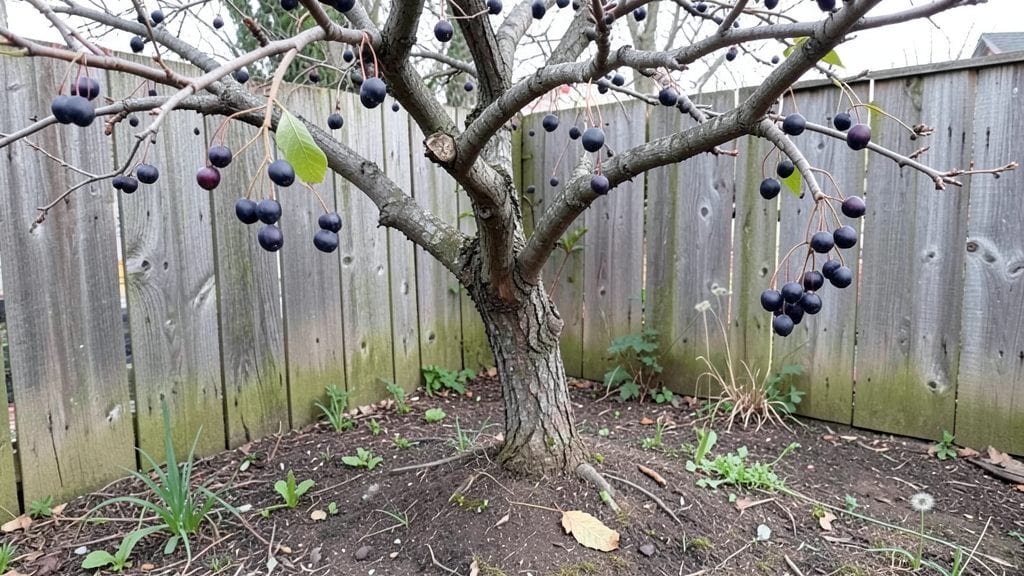
You can how to identify chokecherry tree easily by spotting their jagged, saw-toothed leaves—though I once confused one for a black cherry until I learned the trick. The bark on young trees is smooth and silvery-gray, while mature specimens develop dark, deeply furrowed ridges that feel rough to the touch.
These visual clues alone often separate chokecherries from look-alikes like black cherry, which has smoother bark even as it ages.
Pay attention to the small white flowers that appear in spring in drooping clusters, followed by the tree’s signature purple-black berries that turn into the namesake "choke" cherries. Unlike black cherry, these fruits stay on the tree well into winter, making them easier to spot year-round.
The habitat helps too—chokecherries thrive in wet soils and along streams, while black cherry prefers drier, upland areas.
Young trees can be tricky because their features aren’t as pronounced, but look for the leaf arrangement—alternate, not opposite—and the bitter almond scent when crushing the leaves (though some people smell nothing).
This scent test works best in spring or early summer when the leaves are fresh. Once you’ve spotted these markers, you’ll recognize chokecherries anywhere, even in mixed woodlands.
Confusing them with black cherry? Focus on the leaf undersides: chokecherry leaves have fine hairs, while black cherry leaves are smooth. And if you’re near water, that’s your biggest clue—chokecherries love the moisture. With these tricks, you’ll spot them instantly, no expert needed.
Understanding Chokecherry Confusion
Chokecherry trees (Prunus virginiana) are often mistaken for other trees—especially early in their growth or when viewed from a distance. But why does this happen so frequently?
The answer lies in their biological traits, environmental mimics, and even human perception quirks. Let’s break down the science behind the mix-ups.
Chokecherries share striking similarities with other trees in the Rosaceae family (like black cherries, plums, or even some willows), making them hard to distinguish at first glance. Here’s why:
- Leaf Shape and Arrangement: Chokecherry leaves are simple, oval, and serrated, but so are those of black cherries (Prunus serotina) and pin cherries (Prunus pensylvanica). The key difference? Chokecherry leaves often have a slightly hairy underside and a pointed tip, but these details are easy to miss in a quick glance.
- Bark Resemblance: Young chokecherry bark is smooth and grayish, while mature bark develops horizontal lenticels (pores) and shallow ridges. However, young black cherry trees can look nearly identical, and even birch or aspen bark might fool the untrained eye from afar.
- Branch Structure: Chokecherries have alternate branching (like most fruit trees), but so do many other species. Without flowers, fruit, or closer inspection, branches alone won’t cut it.
Pro Tip: 🔍 Look for bud scales—chokecherries have 4–5 overlapping scales (vs. 2–3 in black cherries), a dead giveaway if you’re up close!
Chokecherries are most often confused when they’re not in fruit or flower. Here’s how their reproductive parts play tricks:
- Flowers That Blend In: Chokecherry flowers are white, 5-petaled, and appear in dense clusters—but so do flowers from hawthorn, serviceberry, or even some apple varieties. The key? Chokecherry flowers lack the strong fragrance of many fruit trees, making them seem "invisible" to casual observers.
- Fruit That Looks Like Many Others: Ripe chokecherries are dark red to black, small (½ inch), and clustered—but they’re often mistaken for:
- Black cherries (larger, shinier, and sweeter when ripe)
- Wild grapes (which grow in different clusters and have a distinct grape-like shape)
- Elderberries (which grow in flat-topped clusters and have a unique floral scent when crushed)
- Timing Tricks: Chokecherries ripen late summer to early fall, overlapping with black cherry and elderberry seasons. If you’re not tracking ripening schedules, it’s easy to assume you’re looking at a different species.
Pro Tip: 🍓 Taste (carefully!)—chokecherries are extremely tart and astringent when raw, while black cherries are sweeter. Never eat wild berries without ID confirmation!
Chokecherries thrive in wet, disturbed soils—often near streams, ditches, or abandoned fields—which is also where other "weedy" trees sprout. Here’s how their environment fuels confusion:
- Fast Growth in Similar Zones: Chokecherries grow quickly in moist, poor soil, just like:
- Black willows (which have long, drooping branches)
- Speckled alder (which has conical seed clusters)
- Red-osier dogwood (with red stems and white flower bracts)
- Multi-Stemmed Growth: Young chokecherries often sprout in thickets, mimicking brambles, elderberry patches, or even young apple orchards. Without a clear trunk, they look like shrubs.
- Seasonal Disguises: In winter, leafless chokecherries can resemble birch or aspen due to their thin, flexible branches. In spring, their catkins (flower buds) might be mistaken for willow or poplar.
Pro Tip: 🌲 Check the root system—chokecherries have deep, taproots (unlike willows, which spread via suckers), but digging isn’t always practical. Instead, look for a single dominant trunk in mature trees.
Even with clear clues, our brains fill in gaps based on experience (or lack thereof). Here’s how psychology and perception play a role:
- Confirmation Bias: If you’re expecting to see a black cherry tree, you might overlook subtle chokecherry traits (like toothed leaves or horizontal bark lenticels) because your brain "locks in" on familiar features.
- Distance and Lighting: In low light or from a distance, chokecherry leaves can look darker and glossier than they are, mimicking black cherry foliage. Shadows can also distort bark texture.
- Seasonal Blind Spots: If you’re used to identifying trees in summer (when leaves are full), a winter or early spring chokecherry might seem foreign—leading to mistakes like confusing it for a young hickory.
- Cultural Knowledge Gaps: Chokecherries are less commonly planted than fruit or shade trees, so many people don’t recognize them at all until they’re up close.
Pro Tip: 🧠 Train your eye by comparing side by side—take photos of chokecherries in all seasons and contrast them with look-alikes. Over time, your brain will automatically notice differences.
Quick Fixes for Common Chokecherry ID Confusions
Confusing chokecherry trees with other species? Don’t worry—most mix-ups happen because of a few key details. Below, we’ll tackle the most common misidentifications and provide practical, foolproof solutions to spot chokecherries like a pro. Plus, we’ll share prevention tips to avoid future mistakes.
Cause: Both trees have similar-looking leaves and berries, but chokecherries have subtle (yet critical) differences.
Fix:
- Check the berries: Chokecherries are reddish-purple when ripe (not deep black like black cherries). Squeeze one—if it’s bitter and astringent, it’s a chokecherry.
- Look at the leaves: Chokecherry leaves are serrated with fine teeth (almost like a saw blade), while black cherry leaves have coarser, more rounded edges.
- Smell the bark: Crush a twig—chokecherry bark smells slightly bitter or medicinal, while black cherry bark has a sweeter, vanilla-like scent.
💡 Pro Tip: If the berries are too tart to eat raw, it’s definitely a chokecherry (they’re edible when cooked, but still bitter!).
Cause: These trees also have red berries and similar leaf shapes, but their growth habits differ.
Fix:
- Height & shape: Chokecherries grow 10–20 ft tall with a rounded, multi-stemmed form, while pin cherries are smaller (5–15 ft) and often single-trunked.
- Berry clusters: Chokecherries have long, drooping clusters (like grapes), while pin cherries have smaller, tighter bunches.
- Leaf undersides: Chokecherry leaves are smooth and hairless underneath; pin cherry leaves may have tiny downy fuzz.
🔥 Quick Test: If the tree is thorny, it’s not a chokecherry (pin cherries have thorns, chokecherries do not).
Cause: Many people skip checking the bark, missing a major ID clue.
Fix:
- Young bark: Smooth and grayish-brown with horizontal lenticels (tiny raised dots).
- Mature bark: Develops deep furrows and ridges, turning dark brown or blackish.
- Compare to others: Black cherry bark is smoother and more blocky; pin cherry bark is scaly and reddish.
✨ Prevention Tip: Always run your fingers along the bark—chokecherry bark feels rougher than similar trees.
Cause: Chokecherries have distinct seasonal features that change how you ID them.
Fix:
| Season | What to Look For | How to Use It |
|---|---|---|
| Spring | Pinkish-white flowers in drooping clusters | Flowers appear before leaves—key sign! |
| Summer | Green, serrated leaves; small green berries | Berries start peach-colored, then darken. |
| Fall | Bright red/orange leaves | Foliage turns earlier than black cherry. |
| Winter | Multi-stemmed shrub with dark bark | Look for buds in clusters of 3–5. |
🎯 Best Time to ID: Late spring (flowers) or early fall (berries + color change).
Still unsure? Do this one quick test:
- Pick a berry and taste a tiny bit.
- Spit it out immediately (they’re toxic raw!).
- If it’s bitter and makes your mouth pucker, you’ve found a chokecherry.
💡 Bonus: Rub a leaf between your fingers—chokecherry leaves release a mild almond-like scent (though not as strong as true almond trees).
- Carry a mini field guide (or save this article!) for quick reference.
- Note the location: Chokecherries love sunny, dry areas—black cherries prefer moist, shaded spots.
- Observe over time: Watch how the tree grows and changes seasons—this builds ID confidence.
- Ask locals: If you’re in a rural area, older residents often know exactly what grows nearby.
Now you’re armed with five foolproof ways to spot a chokecherry—no more guesswork! 🌳🔍 Whether it’s the berries, bark, or leaf shape, you’ll nail the ID every time.
Frequently asked questions about chokecherry trees
How do I tell a chokecherry tree apart from a black cherry tree?
Look at the berries—chokecherries are smaller (½ inch), reddish-purple, and bitter when raw, while black cherries are larger, glossy, and sweeter. Also check the leaf edges: chokecherry leaves have fine, sharp teeth, while black cherry leaves have coarser, rounded edges. The bark helps too—chokecherry bark develops deep furrows as it matures, while black cherry bark stays smoother.
Can I eat chokecherries raw?
No, chokecherries are not safe to eat raw—they’re extremely bitter and contain cyanogenic glycosides, which can be toxic in large quantities. However, they’re delicious when cooked down into jams, jellies, or wines. Always identify them properly before harvesting, and never eat wild berries without confirmation.
What’s the best season to identify chokecherry trees?
The easiest times are late spring (when flowers appear) or early fall (when berries ripen and leaves turn red-orange). In winter, look for dark, furrowed bark and multi-stemmed growth. Spring flowers are white, 5-petaled, and droop in clusters, while fall berries are clustered like grapes—both are dead giveaways.
Why do chokecherry trees grow in thickets?
Chokecherries often sprout from roots or stumps, creating multi-stemmed thickets—a survival strategy called suckering. This makes young trees look like shrubs. They thrive in disturbed, moist soils, like stream banks or abandoned fields, where they can spread rapidly. Unlike single-trunk trees, their clumping habit helps them outcompete other plants.
Are chokecherry leaves poisonous?
No, chokecherry leaves aren’t poisonous, but they do contain cyanogenic compounds in small amounts. Crushing fresh leaves releases a mild almond-like scent (though not as strong as true almond trees). While not deadly, avoid consuming large quantities—stick to cooked fruit or infusions for safe use.