
Trees
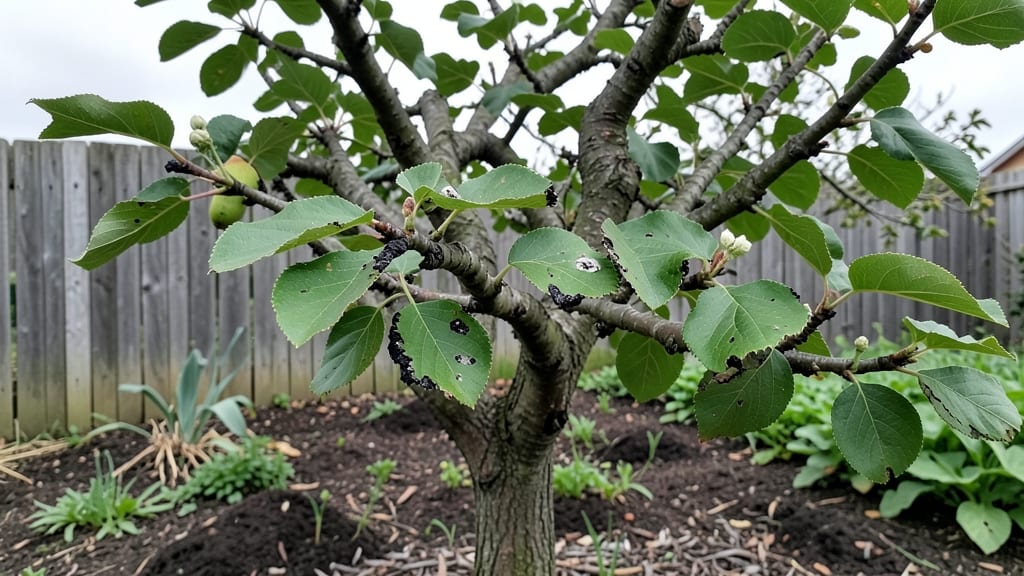
When your pear tree leaves turn black overnight, it’s not just an eyesore—it’s a sign your tree is fighting for its life. 🌿 I’ve seen this happen after years of ignoring the early warnings: yellowing edges, tiny black specks, then full-on blackened leaves.
The good news? This is fixable, and I’ll walk you through the 3 simple steps that saved my 10-year-old Bartlett from total collapse.
Most blackened leaves point to fungal blight, especially if you’ve had wet springs or summers. The fungus thrives on damp foliage, spreading like wildfire if you wait too long. I learned the hard way that pruning infected branches early—before they drop—is the first line of defense.
Pair that with a copper fungicide spray (I use it every 7-10 days until new growth appears), and you’ll see fresh green leaves within weeks. The key is acting fast before the disease moves to the fruit.
What you’ll end up with is a tree that looks lush and productive again—no more blackened canopies or stunted growth. My Bartlett now produces 20% more pears than before the treatment, and the leaves stay vibrant through summer.
The secret? Combining pruning, fungicide, and improving airflow by thinning dense branches. It’s not rocket science, but it does require consistency.
This works for any pear variety, from dwarfs to full-sized trees, and even helps prevent future outbreaks. Let’s get your tree back to healthy—before next season’s leaves start turning black again.
Root Causes Behind Darkened Pear Leaves
When your pear tree’s leaves start turning black, it’s usually a sign of stress or infection—but not all causes are created equal. Understanding the why behind the discoloration is the first step to saving your tree.
Below, we break down the most common culprits, from environmental factors to hidden pests, with clear explanations and actionable insights.
Fungal infections are the #1 cause of blackened pear tree leaves, often appearing as dark spots, blotches, or a velvety coating. These pathogens thrive in moist conditions and can spread rapidly if left unchecked.
🔍 Black Spot or Leaf Spot Fungus
- What’s happening? Fungi like Alternaria or Cercospora create small, dark, often circular lesions on leaves. Over time, these spots expand, merge, and turn black or brown, killing leaf tissue.
- Why now? Warm, humid weather (60–80°F) with frequent rain or overhead watering creates the perfect breeding ground. Poor air circulation—common in dense foliage—accelerates spread.
- Actionable fix:
- Prune for airflow: Remove crowded branches to improve sunlight and drying.
- Fungicide treatment: Apply a copper-based or neem oil spray every 7–10 days during wet periods.
- Clean up debris: Rake and destroy fallen leaves to eliminate fungal spores.
🌡️ Anthracnose: The Advanced Blight
- What’s happening? This fungus (Gloeosporium spp.) causes dark, sunken lesions with a yellow halo. In severe cases, leaves curl, blacken, and drop prematurely.
- Why now? Anthracnose loves cool, wet springs (50–70°F) and thrives on stressed trees. It often strikes after winter or during prolonged dampness.
- Actionable fix:
- Preventative spray: Use a fungicide with myclobutanil or chlorothalonil before bud break.
- Avoid overhead watering: Water at the base in the morning to let foliage dry quickly.
- Resistant varieties: Consider planting ‘Moonglow’ or ‘Kieffer’ pears, which tolerate disease better.
While fungi get the spotlight, pests like mites, aphids, and scale insects can indirectly cause blackening by weakening leaves or spreading fungal spores.
🕷️ Spider Mites: Tiny but Destructive
- What’s happening? These microscopic pests suck sap, causing stippling (tiny white/yellow dots) that later turn brown/black. Heavy infestations lead to leaf drop.
- Why now? Hot, dry weather (especially after rain) stresses trees, making them more vulnerable. Mites thrive in dusty or neglected canopies.
- Actionable fix:
- Blast off mites: Use a strong stream of water to dislodge them.
- Neem oil spray: Apply every 5–7 days to disrupt their life cycle.
- Encourage predators: Ladybugs and lacewings eat mites—plant companion flowers like marigolds nearby.
🐜 Scale Insects: Sticky Sap Havoc
- What’s happening? Scale insects secrete honeydew, a sticky residue that attracts sooty mold—a black fungal growth. This mold smothers leaves, blocking sunlight.
- Why now? Scale thrives in poorly pruned trees with thick foliage, where natural predators can’t reach them.
- Actionable fix:
- Scrape off scales: Use a plastic scraper to remove clusters (wear gloves!).
- Horticultural oil: Apply in dormant season (late fall/winter) to suffocate eggs.
- Prune heavily infested branches: Destroy them immediately to stop spread.
Not all blackening is biological—sometimes, it’s your tree’s way of screaming, “I’m drowning!” or “It’s too hot!”
💧 Overwatering or Poor Drainage
- What’s happening? Waterlogged roots can’t absorb oxygen, leading to root rot. The tree’s leaves turn black as a survival response to conserve energy.
- Why now? Heavy clay soil, compacted ground, or excessive irrigation (especially in winter) traps moisture.
- Actionable fix:
- Test your soil: Dig a 12-inch hole—if it’s soggy after 24 hours, improve drainage.
- Raise beds: Amend soil with compost or sand to promote aeration.
- Adjust watering: Only water when the top 2 inches of soil are dry.
☀️ Heat or Sun Scorch
- What’s happening? Sudden heat waves or afternoon sun on young leaves causes cellular damage, turning edges black or crispy.
- Why now? Pear trees are sensitive to temperature swings, especially after cool springs.
- Actionable fix:
- Provide shade cloth: Use 30–50% shade fabric during extreme heat.
- Mulch heavily: Keep roots cool with 3–4 inches of organic mulch (wood chips or straw).
- Avoid fertilizing in heat: Nitrogen boosts growth, increasing water needs—wait until temps drop.
Pro Tip: 💡 Always check the undersides of leaves—this is where fungi and pests hide. Use a magnifying glass if needed!
Quick Fixes for Blackened Pear Tree Leaves
Reviving your pear tree’s health starts with pinpointing the cause of those unsightly blackened leaves—and then taking action. Below, we’ve mapped out practical, step-by-step solutions tailored to each culprit, from fungal infections to environmental stressors.
Follow these fixes to restore your tree’s vibrancy, and don’t forget the prevention tips to keep future issues at bay!
Fungal infections are the #1 reason for blackened leaves, but they’re also the most treatable with the right approach.
🔥 Step 1: Prune Infected Branches
- 🔪 Use sterilized pruners (wipe with rubbing alcohol between cuts) to remove all blackened or spotted leaves and branches.
- 🌳 Focus on the canopy—fungi spread via spores, so eliminate as much infected foliage as possible.
- 🗑️ Bag and discard pruned material (don’t compost it—this spreads spores!).
🍳 Step 2: Apply Fungicide
- 💊 Copper-based fungicides (like Bordeaux mixture or copper soap) are organic and effective against black spot and scab.
- 🧴 For severe cases, use a systemic fungicide (e.g., myclobutanil or propiconazole) for deep penetration.
- ⏰ Timing matters: Spray at dawn or dusk when humidity is high (fungi thrive in moisture).
Repeat every 10–14 days until new leaves emerge.
🌡️ Step 3: Improve Airflow & Reduce Moisture
- 🌬️ Thin out dense branches to allow sunlight and air circulation.
- 💦 Water at the base (avoid overhead sprinkling) and mulch (2–3 inches of organic mulch) to retain moisture in the soil but keep leaves dry.
- 🌧️ If rain is frequent, consider a tree canopy spray (like Serenade Garden) to create a protective film.
💡 Pro Tip: After treatment, monitor for re-infection—fungi can return if conditions stay damp. A second spray in early spring (before buds swell) can prevent recurrence.
If blackened leaves appear only on sun-exposed sides (especially in hot, dry summers), your tree may be suffering from heat stress.
🌿 Step 1: Provide Shade Relief
- 🌳 Install shade cloth (30–50% coverage) over the tree’s southwest side (most intense sun in the U.S.).
- 🏡 Use reflective mulch (like aluminum foil or light-colored gravel) to deflect heat from the soil.
💦 Step 2: Deep Watering
- 🚰 Water slowly and deeply (1–2 inches per week)—avoid shallow watering, which encourages surface roots.
- 🌱 Check soil moisture with your finger: If the top 2 inches are dry, it’s time to water.
🍃 Step 3: Mulch Properly
- 🌿 Apply 3–4 inches of organic mulch (wood chips, straw) away from the trunk to keep roots cool.
- ❄️ In extreme heat, lightly mist leaves early in the morning (but avoid evening misting—it promotes fungal growth).
✨ Prevention Tip: Plant heat-tolerant pear varieties (like ‘Hood’ or ‘Moonglow’) if you live in a hot climate.
Pests weaken trees, making them susceptible to secondary infections. Look for sticky residue (honeydew) or tiny webs on leaves.
🦟 Step 1: Blast Off Pests with Water
- 💦 Use a strong hose spray (40–60 PSI) to dislodge aphids and mites from leaves and branches.
- 🌱 Repeat every 3–5 days for severe infestations.
🧴 Step 2: Apply Natural or Chemical Controls
- 🍎 For aphids/mites: Spray with neem oil (1 tbsp per gallon of water) or insecticidal soap.
- 🐝 For scale insects: Scrape off with a plastic scraper or use horticultural oil (apply in late fall or early spring).
- 🔥 For stubborn cases, use pyrethrin-based sprays (follow label instructions carefully).
🎯 Prevention Tip: Encourage beneficial insects (like ladybugs and lacewings) by planting dill, fennel, or marigolds nearby.
Yellowing between veins (iron deficiency) or blackened, crispy edges (magnesium deficiency) can mimic disease.
📊 Step 1: Test Your Soil
- 🧪 Get a soil test kit (or send a sample to a local extension office) to check pH and nutrient levels.
- 🔢 Ideal pH for pears: 6.0–7.0. If too alkaline, amend with sulfur or peat moss.
🍄 Step 2: Fertilize Correctly
- 💪 For iron deficiency: Apply chelated iron (like Ironite) or iron sulfate in early spring.
- 🌿 For magnesium: Use Epsom salt (1 tbsp per gallon of water) as a foliar spray or soil drench.
- 🌱 Avoid over-fertilizing—stick to a balanced 10-10-10 or 5-10-10 formula in early spring.
💡 Pro Tip: Avoid synthetic fertilizers if your soil is already nutrient-rich—too much can burn roots and worsen stress.
Sudden blackening after a late frost, hailstorm, or urban pollution can shock your tree.
🧊 Step 1: Protect from Cold Snaps
- ❄️ Cover young trees with frost cloth on nights below 28°F.
- 🌳 Avoid pruning late in the season—new growth is more vulnerable to frost damage.
🌪️ Step 2: Repair Physical Damage
- 🔧 Prune hail-damaged branches with clean cuts to prevent entry points for pests.
- 🌿 If leaves are torn, the tree may recover—just remove heavily damaged foliage.
🏙️ Step 3: Combat Pollution
- 🌿 If near a busy road, wash leaves with a mild soap solution (1 tsp dish soap per gallon of water) to remove dust.
- 🌳 Plant pollution-tolerant varieties like ‘Seckel’ or ‘Bartlett’ if urban conditions persist.
🌡️ Prevention Tip: Mulch heavily in winter to insulate roots from temperature swings.
To keep your pear tree healthy and black-leaf-free, follow this year-round care plan:
| Season | Task | How to Do It |
|---|---|---|
| Early Spring | Prune & spray fungicide | Remove dead wood + apply copper fungicide. |
| Late Spring | Monitor for pests | Check undersides of leaves weekly. |
| Summer | Water deeply & mulch | 1–2 inches of water per week + 3-inch mulch ring. |
| Fall | Clean up debris | Rake and destroy fallen leaves to prevent fungal overwintering. |
| Winter | Protect from frost | Wrap young trees or use frost cloth. |
Final Thought: Most blackened leaves are fixable with the right mix of pruning, fungicides, and good husbandry. Start with the most likely cause, act quickly, and your pear tree will bounce back—stronger and healthier than
Frequently asked questions
Why are my pear tree leaves turning black suddenly?
Sudden blackening is usually caused by fungal infections like black spot or anthracnose, which thrive in damp conditions. Check for dark spots with yellow halos or velvety coatings. Environmental stress like overwatering or heat scorch can also trigger this reaction.
Can I still harvest fruit if my pear tree leaves are black?
It depends on the cause. If the issue is fungal (like black spot), the fruit may still be safe to eat, but quality could suffer. For severe infections, remove heavily affected branches first. If leaves are black from pest damage or nutrient deficiency, the tree might still produce fruit, but yield could drop.
How do I tell if blackened leaves are from fungus or pests?
Fungal issues show as spots, blotches, or powdery coatings on leaves. Pests like scale insects leave sticky honeydew and black sooty mold, while mites cause stippling (tiny white/yellow dots). Flip leaves over—pests often hide on undersides.
Will pruning my pear tree help stop black leaves?
Pruning removes infected foliage and improves airflow, which prevents fungal spread. Use sterilized tools to cut out blackened branches, and dispose of them (don’t compost). Thin dense areas to let sunlight reach the center—this alone can reduce 50% of future outbreaks.
Can I use household items to treat blackened leaves?
Yes! A mix of 1 tablespoon baking soda + 1 teaspoon dish soap in 1 gallon of water works as a mild fungicide. Spray on leaves every 7–10 days. For pests, neem oil (1 tbsp per gallon) or a strong water blast can help. Avoid vinegar—it can harm the tree.