
How To
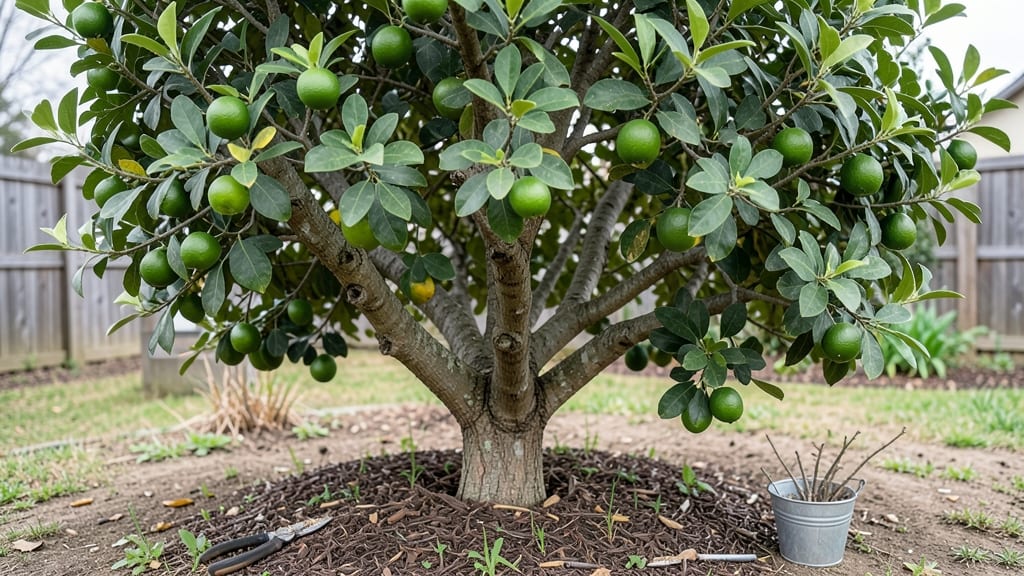
Pruning a lime tree transforms it from a tangled mess into a fruit-producing powerhouse. ✨ I’ve turned my once-overgrown patio lime into a neat, productive tree by learning just three key cuts—removing dead wood, thinning crowded branches, and shaping for airflow.
The right timing and technique mean more limes, fewer pests, and a tree that actually fits in your yard.
You’ll need sharp pruners, a ladder (for taller trees), and about 30 minutes of focused work. The best time to prune is late winter or early spring, when new growth is about to start—but you can also do light maintenance after harvest.
Dwarf varieties need less aggressive cuts, while standard trees benefit from opening up the center to let sunlight reach all branches.
📚 In This Guide
- What you need
- Instructions
- Tips and common mistakes
- Wrapping up and next steps
What you need
- ● Pruning shears (bypass pruners): Sharp, high-quality shears (e.g., Felco or Fiskars) with a 4- to 6-inch blade for clean cuts on small branches (under ½ inch thick).
- ● Loppers: A pair with a 6- to 8-inch blade for medium branches (½ to 1½ inches thick). Look for bypass-style loppers for precision.
- ● Pruning saw: A curved-tooth saw (like a bow saw) for thick branches (over 1½ inches). Avoid cheap saws—they can tear wood.
- ● Disinfectant (70% isopropyl alcohol or bleach solution): Clean tools between cuts to prevent disease spread (1 part bleach to 9 parts water).
- ● Garden gloves: Heavy-duty, cut-resistant gloves (e.g., Mechanix or Wolverine) to protect hands from thorns and sap.
- ○ Extension pole (optional but helpful): A 3- to 5-foot telescoping pole with a saw or shears attachment for high branches.
- ● 5-gallon bucket or tarp: To collect clippings and debris for composting or disposal.
- ● Handheld leaf blower or broom: For clearing debris from under the tree post-pruning.
- ● Tree wound dressing (controversial but some swear by it): A pruning sealant (like Tanglefoot Tree Wound Pruning Sealer) for larger cuts (though many experts argue it’s unnecessary).
- ● Ladder (if needed): A stable, 6- to 8-foot ladder with non-slip feet for taller trees.
- ● Permanent marker or tape: To mark branches for future reference or training.
Step-by-Step guide for pruning a lime tree
Here’s how to shape your lime tree for better fruit production and healthier growth.
✂️ Step 1: Choose the Right Time to Prune
Prune your lime tree in late winter or early spring, just before new growth begins. This timing avoids damaging new fruit set and gives the tree time to recover before summer heat. I always check for dormant buds—when they’re plump and ready to swell, that’s your cue. Avoid pruning during fall or summer, as it stresses the tree and invites pests.
If you must prune outside this window, do it after harvest to allow the tree to heal before winter. Never prune during frost or extreme heat—both shock the tree and slow recovery. A quick way to confirm timing: look for fresh, green leaves starting to form on branches. That’s your signal to start.
✂️ Step 2: Gather Tools and Sanitize
You’ll need sharp pruning shears, loppers for thicker branches, and a small pruning saw for any limbs over ½ inch thick. Sanitize all tools with rubbing alcohol or a 10% bleach solution to prevent spreading disease between cuts. I like to wipe tools down before and after each cut—it’s a small step that saves the tree from fungal infections.
Dull tools crush branches instead of cleanly cutting them, which invites rot and slows healing. Test your shears by making a clean cut through a small twig—if it tears instead of slicing, sharpen or replace them. Keep a bucket of water nearby to rinse off tools between cuts, especially if the tree has signs of disease like black spots or oozing sap.
☀️ Step 3: Remove Dead, Diseased, or Crossing Branches
Start by removing dead or diseased branches—they drain energy from the tree and can spread illness. Cut back to the collateral bud (a side bud just below the problem area) at a 45-degree angle, slanting away from the bud. This encourages new growth in the right direction. I always look for branches with no leaves, dark or hollow centers, or signs of pests like holes or webbing.
Next, trim crossing or rubbing branches—these create wounds and weak points. When two branches grow toward each other, remove the weaker of the two, cutting just above a bud that faces outward. This opens up the canopy for better airflow and sunlight penetration. If you’re unsure which branch to remove, pick the one growing at a sharper angle—it’s usually weaker.
✂️ Step 4: Thin Out the Canopy for Light and Airflow
Step back and assess the tree’s shape. Aim to remove 20-30% of the foliage to improve light penetration to the inner branches. Focus on suckers (shoots growing from the trunk or roots) and water sprouts (fast-growing vertical shoots). These compete with fruit-bearing branches for nutrients. I like to thin from the inside out, starting with branches blocking sunlight from reaching the center.
Cut back to a bud or lateral branch rather than leaving a stub—this prevents dead wood and encourages healthy regrowth. Avoid over-pruning; a well-shaped lime tree should still look full and lush after thinning. If you’re unsure, err on the side of caution and leave more foliage. The goal is to maintain the tree’s natural form while improving fruit production.
⏰ Step 5: Shape the Tree and Encourage Fruit Production
Now’s the time to shape the tree into an open-center form—this allows sunlight to reach the core where most fruit forms. Start by selecting 3-4 main scaffold branches (the thickest, sturdiest branches) and remove any competing branches growing below them. These scaffold branches should be spaced 6-12 inches apart and angled outward to form a natural vase shape.
To encourage fruiting, trim back last year’s growth by ⅓ to ½ on the scaffold branches. This stimulates new, fruiting wood. Avoid heavy pruning on young trees—focus on establishing a strong structure first. For mature trees, prune lightly each year to maintain shape and promote fruit set. After pruning, step back and admire your work—the tree should look balanced, with open spaces for airflow and sunlight.
Tips & tricks for pruning a lime tree
Here's what I've learned after years of shaping lime trees—these tricks make all the difference between a healthy, productive tree and one that struggles.
Timing is Everything: That late winter/early spring window in Step 1 is non-negotiable for lime trees. The tree needs this dormant period to recover before summer's heat stress. Real talk: I once pruned in summer and my tree took months to bounce back. The key is those plump dormant buds—when they're ready to swell, that's your perfect moment. If you're unsure, check for fresh green leaves starting to form on branches. That's your green light to prune.
The 45-Degree Cut Secret: When you're cutting back to the collateral bud in Step 3, that 45-degree angle isn't just decoration—it prevents water from pooling on the cut and causing rot. I like to visualize a smile when making these cuts: the cut should slope downward and away from the bud. This simple technique makes all the difference in how quickly the tree heals and new growth appears.
Tool Maintenance Matters: Don't skip the tool sharpening check in Step 2! Dull shears crush branches instead of making clean cuts, which creates larger wounds that take longer to heal. I keep a small file in my tool kit specifically for this purpose. A quick way to test: make a clean cut through a small twig—if it tears instead of slicing, your tools need attention. Clean tools also prevent spreading disease between cuts, so that rubbing alcohol wipe-down is worth the extra minute.
Pruning Proportions: The 20-30% foliage removal target in Step 4 might sound vague, but here's how I think about it: imagine looking at your tree from above. You want to remove enough branches to let sunlight reach the center, but leave enough foliage that the tree still looks full. For a mature tree, that's usually about one-third of the smallest branches. And remember—you're aiming for an open-center form, not a bare skeleton. The goal is improved airflow and sunlight, not turning your tree into a twiggy mess.
Pro Tips for Prune A Lime Tree
- Here's what I've learned after years of shaping lime trees—these tricks make all the difference between a healthy, productive tree and one that struggles.
- Timing is Everything: That late winter/early spring window in Step 1 is non-negotiable for lime trees.
- The 45-Degree Cut Secret: When you're cutting back to the collateral bud in Step 3, that 45-degree angle isn't just decoration—it prevents water from pooling on the cut and causing rot.
Frequently asked questions
Got questions about pruning your lime tree? You’re not alone! Here are some of the most common concerns—plus clear, actionable answers to keep your tree thriving and productive.
When is the best time to prune a lime tree?
The ideal time is late winter or early spring (just before new growth starts) for heavy pruning. For light maintenance (removing dead branches or shaping), you can prune year-round—just avoid heavy cuts during summer heat or fruit-bearing seasons to prevent stress.
How much can I prune a lime tree without harming it?
For established trees, remove no more than 20–30% of the foliage in a single session. Over-pruning can shock the tree, reduce fruit production, and invite pests. If your tree is young or struggling, stick to 10–15% per year.
Will pruning increase lime production?
Yes—but only if done correctly! Pruning opens the canopy to sunlight, improves air circulation, and directs energy toward fruit production. Focus on removing suckers, dead wood, and crossing branches while keeping the tree’s natural shape. Avoid excessive thinning, though, or you might see fewer limes.
What should I do if my lime tree gets pests after pruning?
Pruning creates fresh wounds that can attract pests like aphids or scale insects. To prevent issues, sterilize tools with rubbing alcohol before and after pruning, and apply a neem oil spray or insecticidal soap if you spot pests. Keep the area clean by removing fallen leaves/debris.
Can I prune a lime tree in containers?
Container-grown lime trees need regular pruning to control size and encourage fruiting. Use the same techniques as for in-ground trees, but prune more frequently (every 3–6 months) due to limited root space. Ensure the container has drainage holes to prevent root rot from overwatering.
Wrapping up and next steps
Pruning your lime tree isn’t just about shaping—it’s your secret to bigger harvests, healthier growth, and a thriving tree! 🌿 With the right tools, timing, and techniques, you’ll keep your citrus companion productive and beautiful for years.
Now that you’re armed with knowledge, there’s no time like the present to grab those shears and get pruning—your future lime harvests will thank you!
🔹 Next step: Schedule your first pruning session (during the optimal window) and watch your lime tree flourish!