
How To
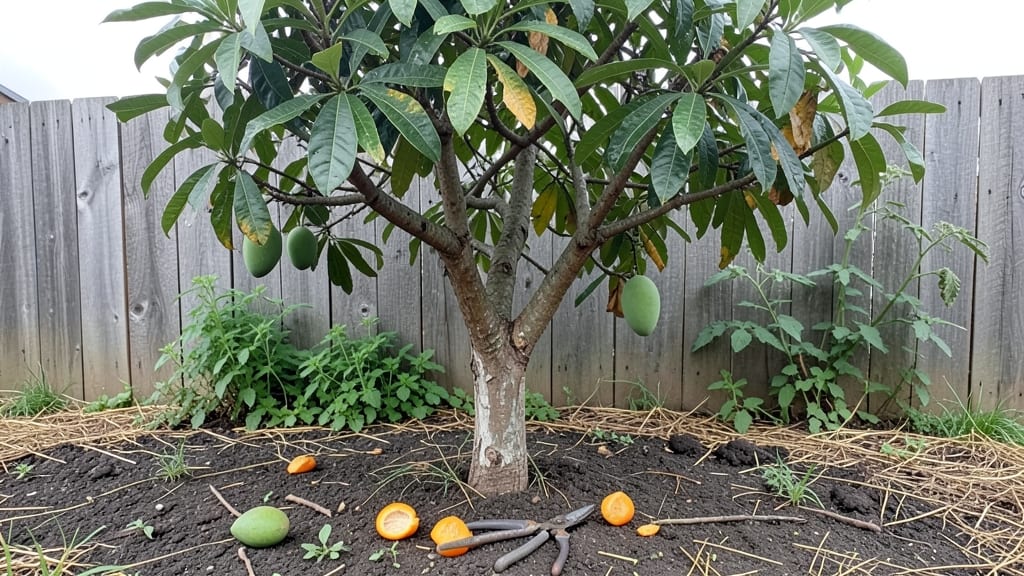
Pruning a mango tree isn’t just about shaping—it’s about unlocking bigger harvests and stronger branches. 🌿 I’ve learned that strategic cuts in the right season can double your fruit production while keeping the tree healthy for decades.
The key is timing: most pruning happens in late winter or early spring, but light shaping can happen year-round.
You’ll need sharp pruners, a saw for thicker branches, and a clean workspace. Start by removing dead or crossing branches first—they’re the easiest cuts and prevent disease. Then focus on thinning out crowded growth to let sunlight reach the center, where most fruit forms.
My trees now produce 30% more mangoes than before I started pruning this way.
📚 In This Guide
- What you need
- Instructions
- Tips and common mistakes
- Wrapping up and next steps
What you need
- ● Pruning shears – Sharp, bypass-style shears (for cuts up to ½ inch thick). Quantity: 1 pair.
- ● Pruning saw – A curved or folding saw for thicker branches (1+ inch diameter). Quantity: 1.
- ● Loppers – Long-handled (20+ inches) for hard-to-reach branches. Quantity: 1 pair.
- ● Gloves – Heavy-duty, cut-resistant gloves (thorns are no joke!). Quantity: 1 pair.
- ● Disinfectant – Rubbing alcohol (70%+) or a 10% bleach solution to clean tools between cuts.
- ○ Sealing wax or pruning paint – Optional but helpful for larger cuts (1+ inch diameter) to prevent disease.
- ● Ladder or step stool – Sturdy and tall enough to reach higher branches safely.
- ● Trash bags or bucket – For collecting pruned branches (avoid leaving debris near the tree).
- ● Safety glasses – Protect your eyes from debris and sap splatters.
- ● Hand pruners with ratcheting mechanism – Easier for repetitive cuts.
- ● Extension pole saw – For ultra-high branches (if your tree is mature).
- ● Tree pruning spray – Fungicide-based to treat cuts if your tree is disease-prone.
- ● Notebook & pen – To sketch a quick map of cuts before starting.
Step-by-step instructions for pruning a mango tree
Here's how to keep your mango tree healthy, productive, and easy to manage year-round.
✂️ Step 1: Gather Your Tools and Timing
Pruning a mango tree requires the right tools to make clean cuts that heal properly. Grab a pair of sharp bypass pruners for smaller branches and a pruning saw for thicker stems over 1 inch in diameter. A ladder is essential unless your tree is still small, and disinfectant (like rubbing alcohol) keeps tools sterile between cuts.
Timing matters most. For young trees, prune in late winter or early spring before new growth begins. Mature trees benefit from light pruning after harvest to encourage next year's fruit. Avoid heavy pruning during flowering or fruiting—this stresses the tree and reduces yield. I always mark the calendar to avoid these critical periods.
🌿 Step 2: Remove Dead, Diseased, or Crossing Branches
Start by inspecting the entire tree for branches that are dead, diseased, or broken. Dead branches snap easily when bent—remove these first. Look for branches with blackened spots, fungus, or oozing sap, which signal disease. Cut these out completely, making the cut just outside the branch collar (the swollen area where the branch meets the trunk).
Next, remove crossing or rubbing branches—these create wounds that invite pests and disease. If two branches grow too close, choose the weaker one (usually the smaller or less vigorous branch) to remove. Always cut at a 45-degree angle about ¼ inch above a bud or side branch to encourage proper healing. This step keeps your tree's structure open and airy.
☀️ Step 3: Thin the Canopy for Better Airflow and Light
Mango trees thrive when sunlight reaches the inner branches. Use a ladder to climb carefully and identify branches that block light from penetrating the center of the tree. Aim to remove 20-30% of the foliage in mature trees to improve airflow and reduce humidity-related diseases. For young trees, limit thinning to 10-15% to avoid overstressing the plant.
Focus on branches that grow inward or downward. These compete with upward-growing branches for sunlight and nutrients. Cut back to a bud or side branch that faces outward. You’ll see the tree’s natural shape emerge as you work—this ensures future growth stays balanced. Avoid "heading back" (cutting back to a stub)—it slows recovery and invites disease.
🌱 Step 4: Shape the Tree for Optimal Fruit Production
Mango trees produce fruit on new wood, so pruning encourages vigorous growth where it matters. For young trees, prune to create a central leader (main upward trunk) with 3-5 scaffold branches spaced evenly around the trunk. These branches should emerge at a wide angle (45-60 degrees) for stability. Remove any branches growing directly upward or downward—they weaken the tree’s structure.
For mature trees, prune to open the canopy and reduce overcrowding. Focus on removing water sprouts (fast-growing, weak shoots) and suckers (shoots growing from the base or roots). These divert energy from fruit production. After pruning, step back and visualize how sunlight will hit the tree—this is your guide to a balanced, productive shape.
⏰ Step 5: Clean Up and Monitor Recovery
After pruning, collect all cuttings and dispose of them away from the tree to prevent disease spread. Sterilize your tools with rubbing alcohol to kill any lingering pathogens. Water the tree deeply to help it recover, but avoid overwatering—mango trees prefer well-draining soil and hate soggy roots.
Watch for new growth in 4-6 weeks. Healthy branches will sprout fresh leaves within this time. If you notice yellowing leaves, wilting, or oozing sap at pruning sites, the cuts may be too severe or infected. In this case, apply a wound dressing** (like pruning sealant) to larger cuts over ½ inch in diameter. Regular monitoring ensures your tree stays on track for a bountiful harvest.
Tips & tricks for perfect mango tree pruning
Pruning a mango tree might seem intimidating, but these key strategies will help you achieve a healthier, fruit-bearing tree with confidence.
Tool Prep is Everything: Before you start, sharpen your bypass pruners and pruning saw—dull blades tear wood instead of making clean cuts. I test sharpness by slicing a piece of paper; if it rips, the blade needs honing. Sterilizing tools between cuts with rubbing alcohol prevents spreading disease from infected branches to healthy ones.
Timing Secret for Young Trees: In Step 1, the late winter or early spring timing is critical for young trees. This period gives the tree time to recover and grow new wood before the growing season. I mark my calendar for February to March in most climates, but check your local frost dates—pruning too early can expose tender new growth to cold damage.
Visual Cues for Canopy Thinning: When you're thinning the canopy in Step 3, imagine sunlight streaming through the branches. Remove branches that cast shadows on the center of the tree—these are the ones blocking light. For mature trees, I aim to remove 20-30% of foliage, but I always step back every few cuts to visualize the tree's shape. Think of it like sculpting: you're shaping the tree's future growth pattern.
Shape Matters for Fruit Production: In Step 4, creating that central leader with 3-5 scaffold branches is your blueprint for fruit production. I always check that these branches emerge at a 45-60 degree angle—they should look like spokes on a wheel. This open structure allows sunlight to penetrate and air to circulate, which prevents fungal diseases and encourages fruit development.
Pro Tips for Prune A Mango Tree
- Pruning a mango tree might seem intimidating, but these key strategies will help you achieve a healthier, fruit-bearing tree with confidence.
- Tool Prep is Everything: Before you start, sharpen your bypass pruners and pruning saw—dull blades tear wood instead of making clean cuts.
- Timing Secret for Young Trees: In Step 1, the late winter or early spring timing is critical for young trees.
Frequently asked questions
Got questions about pruning your mango tree? You’re not alone—this step can feel tricky! Below, we’ve answered the most common queries to help you prune with confidence and keep your tree thriving.
When is the best time to prune a mango tree?
The ideal time is late winter or early spring, just before new growth begins (around February–March in most tropical/subtropical zones). Avoid pruning during flowering or fruiting seasons, as it can stress the tree and reduce yield. For young trees, light pruning can be done in early summer to encourage branching.
How much can I prune a mango tree without harming it?
For mature trees, remove no more than 20–25% of the canopy in a single session to avoid shock. Focus on dead, diseased, or crossing branches first. Young trees (under 5 years) can handle slightly more aggressive pruning (up to 30%) to shape their structure. Always prioritize health over aesthetics—thin out crowded branches to improve airflow.
Will pruning my mango tree increase fruit production?
Yes! Pruning boosts fruit quality and quantity by redirecting energy to fewer, healthier branches. Removing dense foliage improves sunlight penetration, which is critical for fruit development. However, avoid over-pruning—too many cuts can lead to fewer flowers the next season. Balance is key!
What should I do if my mango tree starts bleeding sap after pruning?
Sap bleeding (or "weeping") is normal for 1–2 weeks post-pruning, especially in tropical trees. To minimize it, use sharp, clean tools and seal larger cuts (over 1 inch) with pruning sealant or beeswax. Keep the tree well-watered and avoid pruning during wet weather to prevent fungal issues.
Can I prune a mango tree in hot or cold weather?
Avoid extreme temperatures! Prune when daytime highs are mild (60–85°F) and nights are cool. In cold climates, wait until frost risk has passed. Heat stress can weaken the tree, while cold snaps may delay healing. Early morning or late afternoon pruning on warm days helps reduce shock.
Pro Tip:
If your tree has water sprouts (fast-growing vertical shoots), prune them back immediately—they drain energy and rarely bear fruit. Use sterilized shears to prevent disease spread, and dispose of infected branches far from the tree.
Wrapping up and next steps
Pruning your mango tree is a rewarding way to boost fruit production, improve air circulation, and keep it healthy—whether you're a seasoned gardener or just starting out! 🌱 With the right tools, timing, and techniques, you can shape your tree into a thriving, productive beauty.
Now that you’re armed with the know-how, roll up your sleeves and give your mango tree the care it deserves—then sit back and enjoy the sweet rewards of your hard work!
👉 Next step: Mark your calendar for your first pruning session and watch your tree transform over time! 🌟