
How To
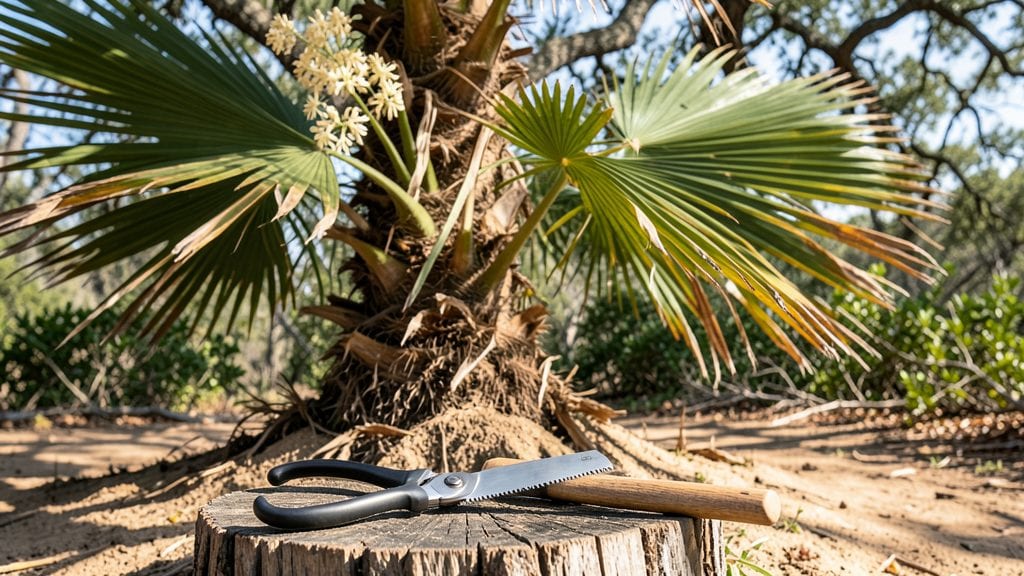
Pruning a palm tree is the key to keeping it healthy and thriving for decades—though I’ve seen too many well-meaning gardeners turn a majestic specimen into a sad, lopsided mess. The secret isn’t just cutting fronds; it’s understanding which ones to remove, when, and how to avoid stressing the tree.
I’ve pruned everything from potted Mexican fan palms to towering Canary Island palms, and the difference between a good cut and a bad one is night and day.
Start with the right tools—a sharp pruning saw for thick fronds, heavy-duty gloves, and a ladder that reaches safely (no wobbly extensions!). You’ll want to work on a dry day when fronds are fully unfurled, and always make clean cuts just above the point where the frond meets the trunk.
The goal is to remove only the dead, brown, or hanging fronds—never more than a third of the crown at once. One wrong cut can leave your palm vulnerable to disease or even death, so take your time.
📚 In This Guide
- What you need
- Instructions
- Tips and common mistakes
- Wrapping up and next steps
What you need
- ● Pruning shears or loppers: Bypass pruners (for clean cuts) – 1 pair (8-10 inch blades for larger fronds)
- ● Loppers (for thicker stems) – 1 pair (24-32 inch reach)
- ● Pole saw or extendable pruner: 12-16 ft. reach (adjustable length) – 1 unit (for high fronds)
- ● Heavy-duty gloves: Cut-resistant, 12-14 inch length – 1 pair (protects from sharp fronds and sap)
- ● Safety goggles: Impact-resistant – 1 pair (debris can fly fast!)
- ● Ladder or lift: Extension ladder (20-30 ft.) – 1 unit (for smaller palms) OR
- ● Cherry picker or hydraulic lift – 1 unit (for tall palms <15 ft.)
- ● Disposable gloves: Nitrile or latex – 1 pack (for handling sap or debris)
- ● Heavy-duty trash bags: 30-50 gallon capacity – 2-3 bags (for frond disposal)
- ● Rope or bungee cords: 1/2 inch diameter – 1 roll (to secure fronds during removal)
- ● Hose or bucket of water: For rinsing sap off tools – 1 unit
- ● Pruning oil or wound sealant: (for sealing cuts on older palms – 1 small bottle)
- ● Sawdust or mulch: (to collect sap and reduce mess – 1 bag)
- ● Work boots with ankle support: (for stability on uneven ground)
- ● Partner or helper: (for larger palms or tricky angles!)
Step-by-step guide for pruning a palm tree
Here’s how to keep your palm thriving with clean, precise cuts that encourage strong growth.
Assess the Tree and Gather Your Tools
Start by examining your palm from all sides to identify dead, diseased, or overcrowded fronds. Healthy fronds are vibrant green with no brown patches or soft spots. Look for fronds that hang downward or have yellowing tips—these are often ready for removal. You’ll need a sharp pruning saw for thicker stems and hand pruners for finer cuts. Wear gloves to protect your hands from sharp edges and sap. Safety glasses are a must too, since palm debris can fly when cutting.
Pick a clear, dry day for pruning—rain or high humidity makes cuts heal slower. Avoid pruning during extreme heat or cold, as stress weakens the tree. If your palm is tall, consider using a pole saw or hiring a professional for high branches. Never work alone if climbing is involved.
Remove Dead or Damaged Fronds
Begin with the easiest cuts: dead or brown fronds. These are usually dry, brittle, and crunchy when bent. Use your hand pruners to snip the frond at its base, where it meets the trunk. Cut cleanly at a 45-degree angle to prevent water from pooling and causing rot. If the frond is still attached by a thick stem, use your pruning saw to sever it about ½ inch above the trunk. This ensures the cut heals properly without leaving a stub.
For fronds with only partial browning, leave them be unless they’re dragging on the ground or blocking sunlight. Palm trees are resilient, and removing too much foliage stresses the tree. Aim to remove no more than one-third of the fronds in a single session. You’ll know you’re doing well if the tree’s crown opens up to let light and air circulate freely.
Trim Overcrowded or Weak Fronds
Next, focus on fronds that are crowding the center of the palm or growing in weak, spindly clusters. These often appear pale or sparse compared to the rest. Use your hand pruners to cut these at the base, just like you did with the dead fronds. Overcrowding blocks sunlight and air, which can lead to fungal issues or pest infestations. A well-pruned palm should have evenly spaced fronds radiating outward like fingers on a hand.
If you notice fronds growing at odd angles or rubbing against each other, trim those too. Rubbing fronds create wounds that attract pests. Always make cuts close to the trunk—never leave long stems behind. After trimming, step back and admire your work. The tree should look balanced, with no fronds dragging or leaning unevenly.
Clean Up and Apply a Protective Treatment
Once all unwanted fronds are removed, gather the debris and dispose of it in a trash bin or compost pile—never leave palm fronds on the ground, as they can harbor pests or diseases. Wipe down your tools with rubbing alcohol to sterilize them before storing. This prevents the spread of pathogens between cuts. If your palm has any visible wounds or cuts, apply a tree wound sealant to protect it from infection. While palm trees don’t need sealant as much as other trees, it’s a good precaution if you’ve made deep cuts.
After pruning, water the base of the tree deeply to help it recover. Avoid overwatering, though—palm trees prefer well-draining soil and can rot if soggy. In the weeks following pruning, monitor the tree for signs of stress, like yellowing fronds or wilting. If you see these, adjust your watering or check for pests. With proper care, your palm will bounce back stronger than ever.
Schedule Regular Maintenance
Pruning isn’t a one-time job—palm trees benefit from light maintenance every 6-12 months, depending on their growth rate. Set a reminder to check your palm in early spring, just as new fronds begin to emerge. This is the best time to remove any remaining dead fronds and trim back any fronds that have grown too long or crowded. Regular pruning keeps your palm looking neat and prevents small issues from becoming big problems.
If your palm is young (under 5 years old), you can wait up to 2 years between prunings. Mature palms, especially those over 20 feet tall, may need more frequent attention. Pay attention to how your palm responds after each pruning session—healthy growth means you’re doing it right. Over time, you’ll develop a rhythm that keeps your palm thriving with minimal effort.
Tips & tricks for pruning a palm tree
Pruning a palm tree properly can make all the difference between a thriving specimen and a struggling one. Here are the key insights I’ve learned to keep your palm healthy and beautiful.
The Right Time Matters: Early spring is the best time to prune because it allows your palm to recover before the stress of summer heat. If you must prune at other times, avoid extreme temperatures—both heat and cold can weaken the tree. I always schedule my pruning for a clear, dry morning when the tree has had time to hydrate overnight. This gives the cuts the best chance to heal properly.
Tool Sharpness is Critical: Dull pruning tools crush the fibers of the fronds instead of making clean cuts, which can damage the tree and make it more susceptible to disease. Before you start, sharpen your hand pruners and pruning saw using a file or sharpening stone. I test the sharpness by making a clean cut through a piece of paper—if it tears, your tools need more attention. Clean tools also help prevent spreading any potential diseases between cuts.
Don’t Over-Prune: One of the biggest mistakes I see is removing too many fronds at once. Remember the one-third rule: never remove more than one-third of the fronds in a single session. This ensures your palm retains enough foliage to continue photosynthesizing and supporting itself. If you’re unsure, step back and take a photo of your palm before pruning—it’s easier to assess what to remove when you can compare the before and after.
Clean Cuts Prevent Problems: Always make cuts at a 45-degree angle, about half an inch above the trunk. This angle helps water run off the cut instead of pooling, which can cause rot. For thick stems, use your pruning saw to make a clean cut rather than trying to force hand pruners. I also recommend wiping down your tools with rubbing alcohol between cuts to sterilize them, especially if you’ve made any deep cuts that might expose the tree to pathogens.
Pro Tips for Prune A Palm Tree
- Pruning a palm tree properly can make all the difference between a thriving specimen and a struggling one.
- The Right Time Matters: Early spring is the best time to prune because it allows your palm to recover before the stress of summer heat.
- Tool Sharpness is Critical: Dull pruning tools crush the fibers of the fronds instead of making clean cuts, which can damage the tree and make it more susceptible to disease.
Frequently asked questions
Got questions about pruning your palm tree?
You’re not alone! Here are some of the most common concerns—plus straightforward answers to keep your tree thriving.
When is the best time to prune a palm tree?
The ideal time is during the dormant season (late fall or winter) when the tree isn’t actively growing. Avoid pruning in extreme heat or cold—this helps minimize stress and reduces the risk of disease. Pro tip: If you must prune outside this window, do it on a cool, overcast day to protect the tree from sunburn.
Can I prune a palm tree at any height, or are there safety risks?
Pruning tall palm trees can be dangerous! Always use proper safety gear (gloves, goggles, harness) and consider hiring a professional if the tree is over 20 feet tall. If DIYing, use a stable ladder or lift and never work alone. Warning: Falling fronds or debris can cause serious injury—plan your escape route!
What if my palm tree looks healthy but has brown fronds? Should I cut them?
Yes! Brown or dead fronds (called "skirt") should be removed to redirect the tree’s energy to new growth. However, leave a few healthy fronds to protect the trunk from sun damage. Quick tip: If the brown fronds are still green at the base, they’re not dead—wait a few weeks before pruning.
What mistakes should I avoid when pruning a palm tree?
- Over-pruning: Never remove more than 1/3 of the fronds at once—this weakens the tree.
- Cutting the "heart": Avoid trimming the central bud (the "heart")—this kills the tree.
- Using dull tools: Sharp pruners prevent tearing; dull blades cause jagged cuts that invite pests.
- Ignoring disease signs: If you see black spots, oozing sap, or fungal growth, prune carefully and disinfect tools.
Do palm trees regrow after pruning, or is it permanent?
Palm trees do not regrow lost fronds, but they’ll produce new ones from the center as they mature. Pruning encourages healthier, fuller growth over time. Fun fact: Some palms (like Canary Island palms) grow new fronds year-round, while others (like Date palms) have seasonal cycles.
What if I accidentally damage the trunk while pruning?
Minor scrapes are usually fine, but deep cuts or exposed tissue can lead to rot or pests. Clean the wound with rubbing alcohol and apply a tree sealant (like horticultural wound dressing) to protect it. If the damage is severe, consult an arborist to assess long-term risks.
Wrapping up and next steps
Pruning your palm tree doesn’t have to be intimidating—with the right tools, timing, and technique, you can keep it thriving while ensuring safety for both you and your tree. 🌿 Whether you’re trimming dead fronds, removing seed stalks, or shaping for aesthetics, each step is an investment in your palm’s long-term health.
Now that you’re equipped with the know-how, grab your pruners and get ready to give your palm the care it deserves!
Next step: Schedule your pruning session during the right season (like early spring or summer) and take before-and-after photos to track your progress. Happy pruning! 🌴✨