
Diseases
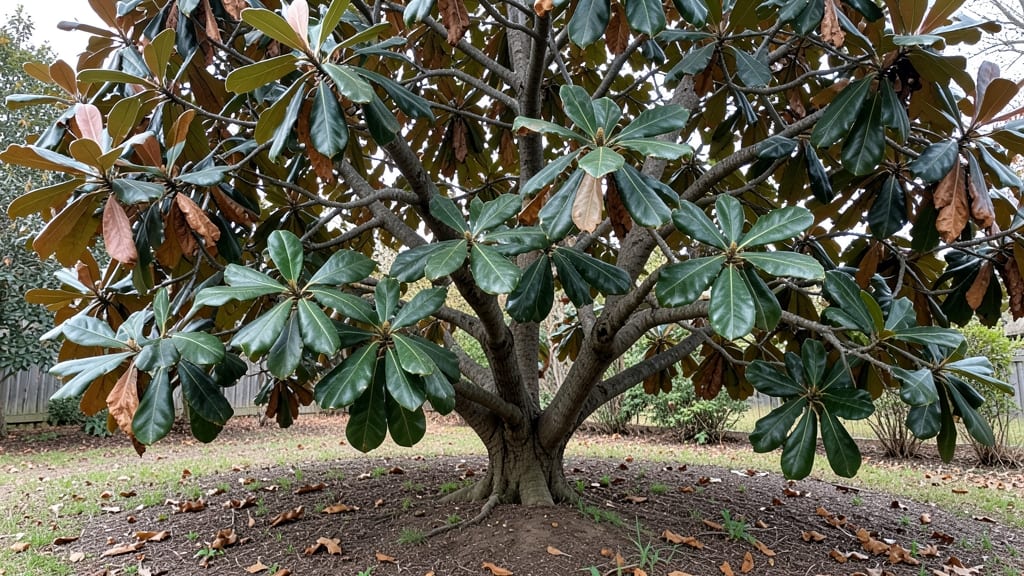
Before you panic over magnolia tree problems with brown leaves, know this: your tree is just waving a flag for help—and the solution might be simpler than you think. 🌿 The key is figuring out whether it’s a fungal infection, drought stress, or something else entirely.
Most brown leaves start with tiny yellow spots that spread, or crispy edges from too much sun. I learned the hard way that overwatering can drown roots just as much as drought—my first magnolia nearly died from soggy soil.
The good news? Pruning out dead branches, adjusting watering, and sometimes a simple fungicide spray can turn things around fast.
By the time you’re done, your tree will look lush again—deep green, glossy leaves that make neighbors stop and stare. The secret is acting early: catch it in spring, and you’ll see new growth by summer. Let’s get your magnolia back to its showstopping self.
Works for both backyard trees and container-grown magnolias—just adjust the care routine to your setup. Here’s how to diagnose and fix it step by step.
Root Causes Of Leaf Discoloration
Brown leaves on your magnolia tree can be frustrating, but understanding the underlying causes is the first step to restoring its health. Magnolias are generally hardy, but environmental stress, pests, or diseases can trigger leaf browning.
Below, we break down the most common reasons—backed by science—and what they mean for your tree.
Magnolias thrive in specific conditions, and deviations can lead to browning leaves. Here’s how environmental factors play a role:
💧 Water Issues: Too Much or Too Little
- Overwatering: Magnolias prefer well-draining soil. Excess moisture suffocates roots, cutting off oxygen and nutrients.
This leads to anaerobic conditions, where harmful bacteria thrive, causing leaves to turn brown and wilt. Look for yellowing between veins first, followed by browning. - Underwatering: Drought stress forces the tree to conserve water, causing leaves to curl, crisp, and brown at the edges.
Deep roots help magnolias survive dry spells, but prolonged drought weakens them.
☀️ Sunlight Exposure Problems
- Sun Scorch: Young or newly planted magnolias can suffer from sun scorch when exposed to intense afternoon sun without acclimation.
Leaves develop brown, papery patches, especially on the upper surface. This is common in spring when new growth emerges. - Shade Deficiency: While magnolias tolerate partial shade, prolonged deep shade weakens the tree, making it susceptible to pests and diseases. Weak leaves may yellow before browning.
🌬️ Wind and Physical Damage
- Wind Burn: Strong winds desiccate leaves, causing brown, dry edges. Magnolias with large, delicate leaves are particularly vulnerable. Prune to improve airflow and protect from harsh winds.
Pests don’t just feed on magnolia leaves—they inject toxins, spread diseases, and weaken the tree’s defenses. Here’s how they cause browning:
🐜 Scale Insects and Mealybugs
- These sap-sucking pests cluster on stems and undersides of leaves, draining nutrients and excreting honeydew (a sticky residue). Sooty mold grows on honeydew, causing leaves to turn brown and brittle. Check for white cottony masses or small brown bumps on stems.
🐛 Magnolia Scale and Spider Mites
- Magnolia scale (a type of armored scale) burrows into bark and leaves, causing stunted growth and brown, curled leaves. Spider mites, though tiny, create fine webbing and cause stippling (tiny brown dots) before leaves turn entirely brown.
🐜 Japanese Beetles
- These metallic-green beetles chew irregular holes in leaves, leaving a lacy brown pattern. Heavy infestations can defoliate branches entirely. Look for beetles clustered on leaves during late summer.
Pathogens thrive in moist, stressful conditions, leading to unsightly (and often deadly) leaf browning:
🍄 Anthracnose: The Silent Leaf Killer
- Caused by the fungus Colletotrichum, anthracnose thrives in wet springs. It creates dark brown, sunken spots with yellow halos on leaves, which eventually crisp and fall. Prune infected branches in dry weather and avoid overhead watering.
🍄 Target Spot (Corynespora Leaf Spot)
- This fungal disease causes concentric brown rings on leaves, which expand and merge. Severe cases lead to premature leaf drop. Fungicides with copper or chlorothalonil can help, but prevention (proper spacing, airflow) is key.
🦠 Bacterial Leaf Spot
- Bacteria like Pseudomonas syringae create water-soaked brown spots with yellow borders. Unlike fungal spots, bacterial infections often ooze when wet. Remove infected leaves immediately and sterilize pruners with rubbing alcohol.
Even the hardiest magnolias suffer when their diet is off. Soil imbalances can manifest as brown leaves:
🔥 Magnesium Deficiency (Interveinal Chlorosis)
- Brown or yellow patches between leaf veins (while veins stay green) signal magnesium deficiency. This micronutrient is vital for chlorophyll production. Test soil pH—magnesium is less available in acidic soils (pH < 5.5).
☠️ Iron or Manganese Toxicity
- Overly wet or compacted soil can lead to iron or manganese buildup, causing brown, crinkled leaves with dark spots. Amend soil with organic matter to improve drainage.
⚗️ Herbicide or Salt Damage
- Drift from broadleaf herbicides (like 2,4-D) or excess salt (from road salt or poor-quality fertilizer) burns leaves, turning them brown and brittle. Flush soil with water if salt buildup is suspected.
Pro Tip: 💡 Before treating, inspect leaves under a magnifying glass or take a sample to a local extension office for diagnosis. Many issues (like fungal diseases) spread quickly—early action is critical!
Quick Fixes for Brown Leaves
Brown leaves on your magnolia tree can be frustrating, but the good news is that most issues are fixable with the right approach. Below, we’ve mapped out practical solutions for each common cause, along with prevention tips to keep your tree thriving.
Let’s get your magnolia back to its vibrant best!
Problem: Brown, crispy edges or wilted leaves often signal underwatering or heat stress, especially in hot, dry climates.
How to Fix It: 🔥 Step 1: Deep Watering – Water the tree slowly and deeply (1–2 inches per week) at the base of the trunk, not just the surface. Use a soaker hose or drip irrigation for even moisture. 🍳 Step 2: Mulch Properly – Apply 2–4 inches of organic mulch (like shredded bark or pine straw) around the root zone, but keep it 6 inches away from the trunk to prevent rot. 👨🍳 Step 3: Water in the Morning – Wet the soil before 10 AM to reduce evaporation and fungal risks. 🥘 Step 4: Provide Shade (If Needed) – If your magnolia is in a full-sun area, consider temporary shade cloth during extreme heatwaves (especially for young trees).
💡 Prevention Tips: ✔ Check soil moisture weekly by sticking your finger 2 inches deep—if it’s dry, water immediately. ✔ Group plants together to create a microclimate that retains moisture. ✔ Avoid overhead watering—it encourages fungal diseases like leaf spot.
Problem: Yellow-brown spots, powdery white residue, or blackened leaves mean a fungal infection is at play.
How to Fix It: 🔥 Step 1: Prune Infected Branches – Use sterilized pruners to remove and dispose of (not compost) severely damaged leaves. 🍳 Step 2: Apply Fungicide – Spray with a copper-based fungicide or neem oil solution (1 tbsp neem oil + 1 quart water + a drop of dish soap) every 7–10 days until new growth appears. 👨🍳 Step 3: Improve Airflow – Thin out dense branches to reduce humidity around the tree. 🥘 Step 4: Water at the Base – Avoid wetting leaves to prevent spore spread.
💡 Prevention Tips: ✔ Clean up fallen leaves regularly—fungi love hiding in debris. ✔ Space trees properly (15–20 feet apart) for better airflow. ✔ Water early in the day so leaves dry quickly.
Problem: Sticky residue (honeydew), tiny webs, or white bumps on stems/buds indicate pest infestations.
How to Fix It: 🔥 Step 1: Blast Off Pests – Use a strong hose spray to dislodge mites or scale from leaves and branches. 🍳 Step 2: Apply Insecticidal Soap – Mix 1.5 tbsp mild castile soap + 1 quart water and spray both sides of leaves (repeat weekly for 2–3 weeks). 👨🍳 Step 3: Introduce Beneficial Insects – Ladybugs and lacewings love eating spider mites—buy them online or attract them with native plants. 🥘 Step 4: Prune Heavily Infested Areas – Cut and dispose of branches with severe infestations.
💡 Prevention Tips: ✔ Inspect new plants before bringing them home—quarantine them for a week. ✔ Encourage natural predators by planting dill, fennel, or marigolds nearby. ✔ Avoid over-fertilizing with nitrogen—it attracts soft-bodied pests like aphids.
Problem: Brown, dry patches on leaves (especially on exposed sides) after a hard freeze or winter wind.
How to Fix It: 🔥 Step 1: Prune Dead Branches – Cut back only the brown, brittle branches (healthy tissue will be green underneath). 🍳 Step 2: Fertilize Lightly – Apply a balanced, slow-release fertilizer (10-10-10) in early spring to help recovery. 👨🍳 Step 3: Protect from Wind – Use a burlap windbreak on the north or west side of the tree if it’s in a exposed area. 🥘 Step 4: Mulch Heavily – Add extra mulch (4–6 inches) around the base to insulate roots.
💡 Prevention Tips: ✔ Water deeply before the first freeze to help roots withstand cold. ✔ Choose cold-hardy magnolia varieties (e.g., Magnolia stellata or Magnolia grandiflora) if you live in Zone 6 or colder. ✔ Avoid late-season pruning—it reduces winter hardiness.
Problem: Uniform yellowing between veins (chlorosis) or brown leaf tips often mean iron, nitrogen, or magnesium deficiency.
How to Fix It: 🔥 Step 1: Test Your Soil – Use a home soil test kit to confirm deficiencies (or send a sample to a local extension office). 🍳 Step 2: Apply Iron Supplement – For chlorosis, use chelated iron (like Ironite) in early spring when soil is moist. 👨🍳 Step 3: Fertilize with Organic Matter – Mix compost or worm castings into the top 6 inches of soil around the root zone. 🥘 Step 4: Use Epsom Salt for Magnesium – Dissolve 1 tbsp Epsom salt in a gallon of water and spray on leaves monthly until improvement.
💡 Prevention Tips: ✔ Avoid over-fertilizing—magnolias prefer acidic, well-draining soil (pH 5.0–6.0). ✔ Top-dress with pine needles annually to maintain acidity. ✔ Water before fertilizing to prevent root burn.
| Issue | Best Time to Treat | Avoid Treating When |
|---|---|---|
| Drought/Heat Stress | Late afternoon (cool hours) | During peak sun (10 AM–4 PM) |
| Fungal Diseases | Early morning (leaves dry fast) | After rain (spores spread easily) |
| Pest Infestations | Late evening (pests are active) | Windy days (spray drifts) |
| Cold Damage | Early spring (before new growth) | Winter (can stress weak branches) |
Final Pro Tip: 🌟 Monitor your magnolia weekly—catching problems early (like a few brown leaves) is far easier than reviving a severely stressed tree. With the right care, your magnolia will bounce back with glossy, healthy foliage in no time!
Frequently asked questions about magnolia leaf problems
Why are my magnolia leaves turning brown only at the edges?
This is usually a sign of underwatering or heat stress, especially in dry climates. Magnolias need 1-2 inches of water weekly—check soil moisture by sticking your finger 2 inches deep. If dry, water deeply at the base in the morning to prevent evaporation. Mulch with 2-4 inches of organic material to retain moisture.
How do I tell if brown spots on magnolia leaves are from fungus or pests?
Fungal issues (like anthracnose) create dark brown, sunken spots with yellow halos, while pests like spider mites cause tiny brown stipples or webbing. Check the underside of leaves—pests often leave sticky residue (honeydew) or white cottony masses. Use a magnifying glass for close inspection.
Can I save my magnolia if half the leaves are already brown?
Yes! Act fast by pruning dead branches (cut back to healthy green tissue) and adjusting care. For fungal issues, apply copper fungicide every 7-10 days. If it’s drought stress, deep water and mulch immediately. Most magnolias recover well with 3-4 weeks of proper care, but severe cases may need professional arborist help.
Is it safe to use household items like vinegar or baking soda to treat brown leaves?
Not recommended. Vinegar can burn leaves and disrupt soil pH, while baking soda may help with fungal spores but lacks the effectiveness of copper fungicides or neem oil. For pests, insecticidal soap (1.5 tbsp castile soap per quart of water) is safer than DIY sprays. Always test solutions on a small leaf first.
Will my magnolia grow new leaves if I fix the brown leaf problem?
Magnolias are resilient. Once you address the root cause (water, pests, or disease), new growth typically appears within 4-6 weeks during the growing season. Focus on spring/summer care—healthy trees produce vibrant foliage by summer. For winter damage, wait until early spring to prune and fertilize lightly.