
Trees
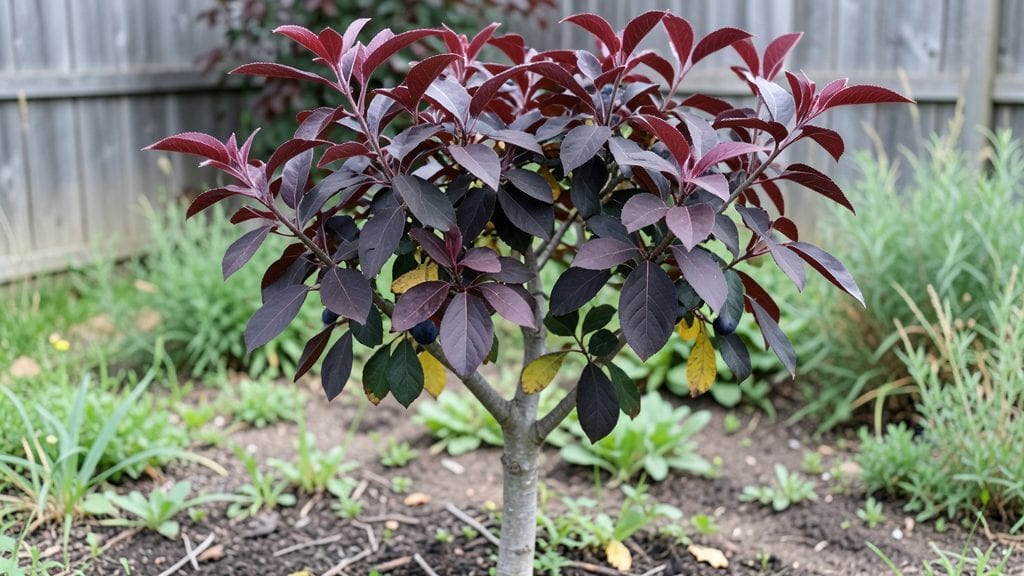
Maroon-colored trees turn your landscape into a living painting, with deep burgundy leaves that steal the show all year. 🌿 I planted Cercis canadensis 'Forest Pansy' last spring, and its rich foliage made my yard feel like a secret garden—even in winter.
The contrast against snow or evergreens is stunning, and it pairs perfectly with silver-blue foliage for a striking combo.
These trees thrive in full sun to partial shade, making them versatile for borders, focal points, or understory plantings. Varieties like Prunus serrulata 'Kwanzan' (cherry) or Acer rubrum 'October Glory' (maple) add seasonal drama with spring blooms or fiery fall colors.
Just avoid soggy soil—they hate wet feet but love well-draining spots.
With minimal pruning and occasional watering, they reward you with bold color that lasts. Imagine your front yard in spring: delicate pink blossoms against deep maroon leaves, then summer’s glossy foliage fading to fiery autumn hues. The best part? They stay lush even in winter, offering year-round texture and interest.
For maximum impact, plant them near evergreens like arborvitae or boxwoods to create contrast. Or use them as a dramatic backdrop for perennials like heuchera or hostas. The possibilities are endless—your landscape will never look ordinary again.
📚 In This Guide
- What you need
- Instructions
- Tips and common mistakes
- Wrapping up and next steps
What you need
- ● Maroon foliage trees: 1–3 mature trees (species like Celtis sinensis "Variegata," Prunus serrulata "Kanzan," or Cercis canadensis "Forest Pansy"). Check local nurseries for availability.
- ● High-quality potting soil: 2–3 bags (sterile, well-draining mix—think 50% native soil + 50% compost).
- ● Organic mulch: 1–2 cubic yards (wood chips or shredded bark to retain moisture and suppress weeds).
- ● Slow-release fertilizer: 1–2 bags (12–14% nitrogen, balanced NPK ratio for trees).
- ○ Tree stakes (optional but helpful): 2–4 stakes per tree (5–6 ft tall, 1–2 inches in diameter).
- ● Shovel: 1 medium-sized digging spade (for planting holes).
- ● Pruning shears: 1 pair (bypass pruners, sharp and sanitized).
- ● Wheelbarrow: 1 (for mixing soil and transporting materials).
- ● Garden hose or watering can: 1 (with a spray nozzle for gentle watering).
- ● Gloves: 1 pair (heavy-duty for digging and protection).
- ● Measuring tape: 1 (to ensure proper spacing—aim for 15–20 ft between trees).
- ● 🌡️ Best planting time: Early spring or fall (avoid extreme heat or frost).
- ● 📏 Site prep: Test soil pH (ideal: 6.0–7.0) and amend if needed (e.g., lime for acidity).
- ● 🌳 Sunlight needs: Confirm your tree’s light requirements (most maroon-leaved varieties thrive in full sun to partial shade).
- ● 💡 Permits: Check local regulations—some areas require approval for large trees.
How to select and plant maroon foliage trees for striking year-round landscapes
Here's the strategic approach I use to integrate bold maroon trees into any design—whether you're refreshing an existing yard or starting fresh.
🌱 Step 1: Choose the Right Maroon Foliage Species
Maroon isn't a single color—it ranges from deep burgundy to almost black, and some varieties shift with seasons. For year-round drama, I focus on three proven species: Nyssa sylvatica (black tupelo) for its glossy, wine-red leaves that persist into winter, Prunus serrula (Tibetan cherry) for its striking maroon bark and foliage, and Cercis canadensis 'Forest Pansy' (redbud) for its deep purple leaves that emerge early and stay vibrant.
Consider your climate zone—some maroon foliage trees like Cercis thrive in USDA zones 4-9, while others like Nyssa prefer zones 5-9. I always check the mature height (some reach 40 feet while others stay under 15 feet) to match the space. For smaller landscapes, Prunus serrula is my go-to—it stays compact and delivers bold color without overwhelming the area.
🪴 Step 2: Prepare the Planting Site for Optimal Growth
Maroon foliage trees perform best in full sun to partial shade, with at least 4-6 hours of direct sunlight daily. I test the site by observing how long sunlight lingers—morning sun is gentler, while afternoon sun can scorch tender new leaves. For deep-rooted varieties like black tupelo, dig a hole twice as wide as the root ball but no deeper, to encourage root spread.
Amend the native soil with 3-4 inches of compost mixed into the bottom and sides of the hole. Maroon foliage trees tolerate a range of soil types but prefer well-draining soil—amending clay or sandy soil prevents root rot. I always add a handful of slow-release fertilizer (10-10-10) to the backfill to give the tree a nutrient boost as it establishes.
☀️ Step 3: Plant With Proper Spacing and Mulching
Spacing depends on the species' mature size—plant 15-20 feet apart for large trees like black tupelo, but only 8-10 feet apart for smaller varieties like 'Forest Pansy' redbud. I mark the planting spot with a stake and backfill the hole in thirds, gently tamping down each layer to eliminate air pockets. The root flare (where roots meet the trunk) should sit 1-2 inches above ground level.
After planting, water deeply to settle the soil, then apply 2-3 inches of mulch (wood chips or shredded bark) in a ring around the base, keeping it 3 inches away from the trunk. Mulch conserves moisture and regulates soil temperature, but too much can suffocate roots. I always check that the mulch layer doesn't exceed 3 inches—any thicker and it creates an anaerobic zone that harms roots.
💧 Step 4: Establish a Watering and Maintenance Routine
Newly planted maroon foliage trees need 1-2 gallons of water per week for the first year, depending on rainfall. I water deeply 2-3 times per week during dry spells, aiming for moist but not soggy soil. Overwatering is a common mistake—you'll see yellowing leaves or fungal growth if the tree sits in wet soil. For mature trees, 1 inch of water weekly is usually sufficient, but adjust based on leaf color and soil dryness.
Prune in late winter or early spring before new growth begins. Remove any dead, diseased, or crossing branches, and thin out crowded areas to improve airflow. I avoid heavy pruning—just enough to maintain the tree's natural shape and encourage vibrant foliage. Fertilize lightly in early spring with a balanced fertilizer (5-5-5) to support new growth, but avoid high-nitrogen fertilizers that promote leafy growth over color intensity.
⏰ Step 5: Plan for Seasonal Color Shifts and Pruning
Maroon foliage trees often change color with the seasons—some deepen in fall, while others lighten in spring. I monitor the foliage closely, noting when the color shifts. For example, Prunus serrula develops maroon bark in winter, while Cercis canadensis 'Forest Pansy' turns a lighter purple in full sun. Adjust pruning to highlight the most dramatic seasons—lightly prune in late winter to shape the tree for spring's vibrant display.
In fall, I remove any remaining leaves or debris from around the base to prevent disease over winter. For trees in colder climates (zones 4-5), I wrap the trunk with tree guard to protect against winter sunscald. The goal is to preserve the tree's structural integrity and ensure it returns with bold color year after year.
Tips & tricks for perfect maroon foliage landscapes
These strategic insights will help you transform your yard into a stunning showcase of year-round maroon foliage drama.
Species Selection Wisdom: When choosing between Nyssa sylvatica, Prunus serrula, and Cercis canadensis 'Forest Pansy', consider their seasonal color shifts. The black tupelo (Nyssa sylvatica) maintains its wine-red leaves through winter, making it ideal for winter interest, while 'Forest Pansy' redbud offers early spring drama with deep purple foliage that emerges before leaves on other trees. I always plant at least one of each to create layered seasonal impact throughout the year.
Site Preparation Pro Tips: The 4-6 hours of direct sunlight requirement is non-negotiable for vibrant maroon foliage. I recommend testing your site by observing sunlight patterns for a full day before planting. Morning sun is gentler and prevents leaf scorch that can occur with intense afternoon rays. For clay-heavy soils, incorporate 5-6 inches of compost rather than the standard 3-4 inches to improve drainage and prevent root rot in these moisture-sensitive species.
Planting Precision: The root flare should sit 1-2 inches above ground level—this is critical for preventing girdling as the tree matures. I use a small trowel to create a slight depression around the base to guide water toward the roots during the critical first year. For larger species like black tupelo, consider installing a tree stake only if your site has strong winds, as over-staking can restrict root growth and lead to weak trunk development.
Seasonal Care Strategy: The 1-2 gallons of water per week for the first year is a guideline, but I adjust based on soil type and rainfall. In sandy soils, I water 3 times per week to prevent moisture loss, while in clay soils, 2 times per week is usually sufficient. For mature trees, the 1 inch weekly watering rule works well, but I always check soil moisture by inserting a screwdriver—if it goes in easily, no watering is needed.
Pro Tips for Maroon Colored Trees
- These strategic insights will help you transform your yard into a stunning showcase of year-round maroon foliage drama.
- Species Selection Wisdom: When choosing between Nyssa sylvatica, Prunus serrula, and Cercis canadensis 'Forest Pansy', consider their seasonal color shifts.
- Site Preparation Pro Tips: The 4-6 hours of direct sunlight requirement is non-negotiable for vibrant maroon foliage.
Frequently asked questions
Got questions about maroon-colored trees? You’re not alone! Here are some of the most common queries—plus quick, practical answers to help you plan with confidence.
What causes trees to have maroon foliage year-round?
Maroon-colored trees often stay vibrant thanks to anthocyanins, natural pigments that thrive in cooler temperatures or bright light. Some varieties, like Prunus serrula (Tibetan cherry) or Cercis canadensis ‘Forest Pansy’ (redbud), are bred or genetically predisposed to retain deep hues. Others, like Acer palmatum ‘Bloodgood’ (Japanese maple), use anthocyanins as a sunscreen to protect leaves from intense sunlight.
Do maroon trees lose their color in summer?
Most maroon trees don’t fade completely in summer, but their intensity may shift slightly due to heat or drought. For example, Prunus ‘Okame’ might turn a softer burgundy, while Cotinus ‘Royal Purple’ (smokebush) deepens into almost black. To preserve color, water consistently and plant in full sun to partial shade. Mulching helps retain moisture and cool roots.
Are maroon trees hard to find? Where should I buy them?
While not as common as green or yellow foliage, maroon trees are widely available at specialty nurseries, online retailers (like Fast-Growing-Trees.com or Nature Hills), and big-box stores during spring/summer. Pro tip: Order early—popular varieties sell out fast! Check local arboretums or tree societies for rare cultivars.
Will maroon trees attract pests or diseases more than other trees?
Not necessarily! However, some anthocyanin-rich trees (like Betula nigra, river birch) can be prone to bronze birch borer if stressed. To minimize risks:
- Water deeply during droughts (but avoid soggy soil).
- Prune in late winter to improve airflow.
- Avoid over-fertilizing—maroon trees often thrive in leaner soil.
Can I mix maroon trees with other colors for a bold landscape?
Maroon trees pair stunningly with:
- Silver or blue foliage (e.g., Caryopteris × clandonensis ‘Blue Mist’)
- Chartreuse or gold (e.g., Hosta ‘Francee’)
- White blooms (e.g., Hydrangea ‘Annabelle’)
Wrapping up and next steps
Maroon-colored trees aren’t just stunning—they’re a game-changer for year-round landscape drama! 🌳 Their deep, rich hues add warmth, texture, and seasonal interest, whether you’re designing a bold statement garden or a serene backyard retreat.
From low-maintenance care to their ability to thrive in diverse climates, these trees prove that beauty and practicality go hand in hand.
Ready to elevate your outdoor space? Start by researching the best maroon varieties for your climate and soil, then take the plunge—your future self (and your neighbors!) will thank you. Plant one today and watch your landscape transform! 🌟