
Blooming
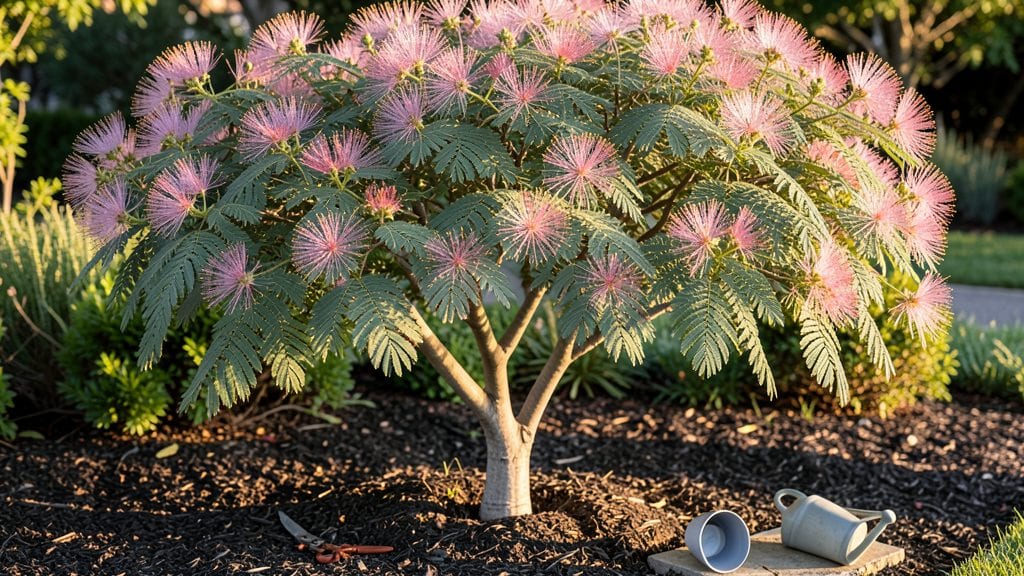
The mimosa tree bloom time is all about spring and summer flurries of pink pom-poms—but what if you could stretch that magic longer?
If you’ve ever dreamed of a mimosa tree 🌿 bursting with fragrant blooms year-round, you’re not alone. The secret isn’t just patience; it’s how you prune, feed, and protect your tree from late frosts. I’ve seen trees with three months of blooms by tweaking just a few habits.
Most mimosa trees in USDA Zone 6a (like mine) wake up in late April with fuzzy buds, but heat waves or drought can cut blooms short. The good news? With the right care, you can push those flowers into early summer—and even coax a second round.
Below, I’ll show you how to read your tree’s signals, the best varieties for extended blooming, and the one pruning trick that doubles flower production. Let’s make that mimosa tree the star of your garden all season.
Natural mimosa tree bloom time: seasons and climate factors
Mimosa trees (Albizia julibrissin) are famous for their delicate, pink pom-pom flowers that appear in late spring. However, their bloom time isn’t set in stone—it depends on climate, sunlight, and regional growing zones.
In the U.S., most mimosas bloom between April and June, but timing shifts 1-2 months earlier in warmer southern states.
The ideal bloom window for mimosas is spring, when temperatures rise above 60°F (15°C). Cooler climates may see blooms delayed until May or June, while USDA Zones 8-10 often enjoy earlier, sometimes even winter blooms in mild winters.
Humidity also plays a role—drier regions may have shorter bloom periods.
Understanding these factors helps you predict and encourage blooms. For example, mimosas in Florida or California might bloom as early as March, while those in New York or Ohio typically wait until late May. Let’s break down the key influences on bloom time in the table below.
🌱
In cooler climates like Zone 5 or 6, mimosas may not bloom until late spring or early summer. However, even in these regions, you can extend the bloom season by providing consistent care.
For instance, mulching around the base of the tree retains moisture and moderates soil temperature, which can encourage earlier bud formation.
If you live in a warmer zone (8-10), your mimosa might surprise you with secondary blooms in fall. This happens when temperatures remain mild, and the tree isn’t stressed by frost.
In Texas or Florida, mimosas can even bloom year-round with proper care, though the flowers will be most abundant in spring.
One common misconception is that mimosas bloom year-round like silk trees (Albizia lebbeck). While silk trees can bloom multiple times, mimosas typically have a single, seasonal bloom cycle.
However, with optimal growing conditions, you can push your mimosa to produce more flowers and extend the season.
🌿
To maximize bloom time, pay attention to bud formation. Healthy buds appear in late winter or early spring, typically when daytime temperatures reach 50°F (10°C). If you notice buds but no flowers, it could signal nutrient deficiency or stress.
In this case, a balanced fertilizer (10-10-10) applied in early spring can boost flowering.
Another pro tip: Prune mimosas in late winter to remove dead or weak branches. This encourages new growth and more flower buds. Just avoid heavy pruning in fall or early spring, as this can delay blooming.
Timing is key—prune when the tree is just waking up from dormancy but before buds form.
Finally, watch for pests like spider mites or aphids
How to trigger early mimosa blooms: pruning and care hacks
Want your mimosa tree to bloom earlier and more abundantly? The secret lies in strategic pruning and seasonal care. Mimosa trees (Albizia julibrissin) naturally flower in late spring, but with the right techniques, you can shift that timeline by 2-4 weeks.
The key is understanding how to stimulate growth while protecting your tree from winter stress. Let’s dive into the hacks that work.
First, timing matters more than you think. Mimosa trees respond best to late winter pruning (just before buds swell) and early spring fertilization. This combo tricks the tree into thinking it’s time to bloom sooner.
But don’t overdo it—aggressive pruning can delay flowering. We’ll cover the exact steps to balance growth and blooms, plus how to adjust for your climate zone.
Step-by-Step Guide to Early Mimosa Blooms
-
Step 1: Late Winter Pruning (Feb-March)
Remove dead or weak branches first, then trim back 1/3 of last year’s growth to encourage new, vigorous shoots. Focus on open-centered pruning to improve airflow and sunlight penetration.
-
Step 2: Early Spring Fertilization (April)
Apply a balanced 10-10-10 fertilizer at soil level, 1 cup per 10 sq ft. Avoid high-nitrogen fertilizers—they promote foliage over flowers. Water deeply afterward to activate roots.
-
Step 3: Deep Watering Schedule
Water deeply once a week (2000ml per tree) in morning hours to prevent fungal issues. Mimosa trees are drought-tolerant but need consistent moisture during bud formation (April-May).
-
Step 4: Summer Pruning for Bud Formation
Lightly trim new growth tips in June-July to redirect energy toward flower buds. Avoid heavy pruning—this stresses the tree and delays blooming. Use sterilized pruners to prevent disease.
-
Step 5: Winter Protection (Oct-Nov)
Wrap the tree trunk with burlap in colder zones (USDA 6a and below). Mulch the base with 3-4 inches of organic mulch to insulate roots. This ensures the tree enters dormancy strong for an earlier spring bloom.
Don’t forget about light exposure—mimosa trees need 6+ hours of direct sunlight daily to trigger blooming. If your tree is in a partially shaded spot, consider relocating it or supplementing with a grow light during shorter winter days.
Even a small increase in sunlight can push blooms ahead by 1-2 weeks.
Pro tip: Watch for bud formation in early spring. Healthy buds are plump and pinkish-green in color. If you see buds but no flowers, your tree might need a light phosphorus boost (use a 5-10-10 fertilizer to encourage blooming).
Avoid over-fertilizing—this can lead to leafy growth at the expense of flowers.
With these pruning and care hacks, you’ll see your mimosa tree bursting into fragrant blooms 2-4 weeks earlier than usual. The secret? A little strategic stress (like pruning) combined with consistent care pays off big time. Happy gardening!