
Watering
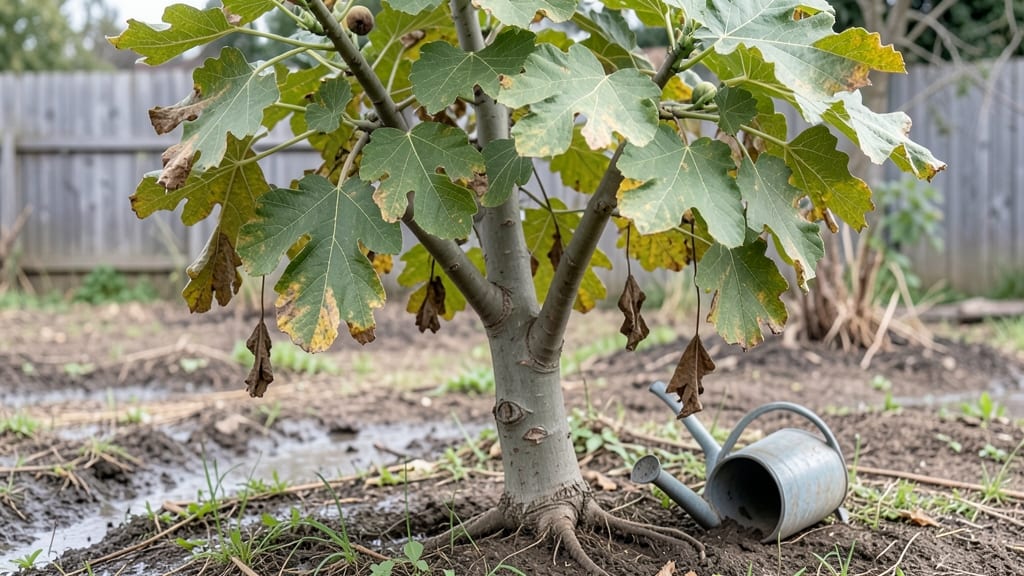
An overwatered fig tree can turn your backyard centerpiece into a sad, drooping mess—but I’ve revived more than a dozen using these simple air-and-light tricks. 🌱 The first time I saw a fig tree I’d nursed back to health produce fruit again, I knew this was the secret weapon against root rot.
Here’s the thing—fig trees hate soggy feet. Yellowing leaves, mushy stems, and that musty soil smell? Those are the red flags. The fix starts with letting the soil dry out between waterings—stick your finger in first, and if it’s damp past 2 inches, wait.
Upgrade to a pot with drainage holes if yours doesn’t have them, and swap heavy soil for a fast-draining mix with perlite or sand.
What you’ll end up with is a tree that snaps back to life within weeks—new growth, glossy leaves, and even the promise of fruit. Prune away any blackened roots or wilted branches, then give it bright, indirect light (figs love sun but hate soggy roots).
The key is balance: water only when the top 2 inches of soil are bone-dry, and watch your tree bounce back like it’s never been stressed.
Works for container-grown figs in patios or in-ground plants in warmer climates. Once you master this, you’ll spot the signs before they get serious—and your fig tree will thank you with a harvest that puts store-bought to shame.
Root Rot’s Silent Triggers
When your fig tree starts wilting despite a soggy soil base, the culprit is often excessive moisture—but why does this happen so easily? Fig trees, while drought-tolerant in their native Mediterranean climate, are surprisingly sensitive to waterlogging.
Here’s the science behind the soggy soil struggle, broken down into the most common causes.
Figs thrive in well-draining soil, but many gardeners unknowingly trap water around their roots. Here’s how it happens:
- Clay pots or dense soil: Clay holds moisture like a sponge, suffocating roots. Even "drainage holes" in pots can clog with compacted soil over time.
- No gravel or sand layers: Without a 2–3 inch layer of perlite, pumice, or coarse sand at the pot’s bottom, water pools instead of draining.
- Heavy or clay-based garden soil: Figs hate "wet feet." If your yard soil is high in clay (test by squeezing a handful—if it stays in a ball, it’s clay-heavy), roots drown even with "moderate" watering.
Pro tip: 💡 Mix 50% native soil with 50% compost or cactus/succulent mix to improve aeration. For containers, use a blend of 60% potting soil, 20% perlite, and 20% orchid bark.
Figs signal thirst after the top 1–2 inches of soil dry out—but many gardeners water on a fixed schedule, ignoring the plant’s needs. Common mistakes:
- Daily or every-other-day watering: Figs in pots dry out faster. Water only when the soil feels bone-dry up to 2–3 inches deep (stick your finger in!).
- Ignoring seasonal changes: Summer heat evaporates moisture quickly, but winter slows root activity. Reduce watering by 50% in cooler months.
- Using a spray bottle for "light misting": Figs hate wet foliage. Water deeply at the base (not overhead) to avoid fungal diseases like root rot.
Pro tip: 🌡️ Use a moisture meter or the finger test—if soil is damp past 1 inch, wait 2–3 more days before watering.
Mother Nature (or your sprinkler system) can drown a fig tree faster than you think. Watch for:
- Prolonged rain without drainage: If your fig sits in a low-lying area or a pot without escape holes, 1–2 inches of rain can saturate soil for days.
- Automatic sprinklers running too long: Figs need 1–1.5 inches of water per week—but if your system delivers 2+ inches, roots suffocate.
- Mulch that traps moisture: While mulch conserves water, piling it too high (4+ inches) against the trunk creates a damp barrier that invites rot.
Pro tip: ✨ Move potted figs to covered areas during heavy rain, and rake mulch back 6 inches from the trunk to allow airflow.
A fig’s roots need room to breathe—literally. When roots outgrow their container, they:
- Circling the pot: Roots grow in tight loops, strangling themselves and preventing water drainage.
- Hitting the pot’s sides: Roots press against container walls, compacting soil and reducing oxygen flow.
- No upward growth: Figs need depth (12+ inches for mature trees) to spread roots downward, not sideways.
Pro tip: 🔥 Repot every 2–3 years in a container 2–3 inches wider than the previous one. For in-ground figs, amend soil with compost to encourage root expansion.
Each of these factors creates a perfect storm for root rot—but the good news? Fixing drainage and water habits can revive even a soggy, wilting fig. Stay tuned for our next section on spotting the early warning signs before it’s too late!
Revive Your Tree With These Fixes
An overwatered fig tree can feel like a lost cause, but with the right steps, you can nurse it back to health. The key is to drain excess moisture, improve airflow, and prevent future soggy soil.
Below, we break down the fixes by cause—so you can act fast and save your tree.
If your fig tree’s roots are rotting (yellowing leaves, mushy stems, or a foul smell), stop watering immediately and take these steps:
💧 Drain the Waterlog
- Pause watering—let the soil dry out completely before touching it again.
- Check drainage—if your pot has no holes, drill them (or repot into a container with drainage).
- Raise the pot—place it on feet or bricks to prevent water pooling at the bottom.
🌬️ Boost Airflow
- Move the tree to a sunnier, breezier spot (figs love 6+ hours of sunlight).
- Prune crowded branches to improve airflow around the canopy.
🌱 Repot in Fresh Soil (If Needed)
If roots are severely rotted:
- Remove the tree gently from the pot.
- Trim black/mushy roots with sterilized scissors.
- Repot in cactus/succulent mix (add perlite or sand for drainage).
- Water lightly only after 3–5 days.
If the soil is just too wet (but not yet rotting), adjust your watering habits:
⏰ Water Only When Dry
- Stick your finger 2 inches deep—water only if it feels dry.
- Morning watering is best (evaporates faster than evening water).
🌿 Mulch Smartly
- Use gravel or bark mulch (not organic mulch, which holds moisture).
- Keep mulch 1–2 inches away from the trunk to avoid rot.
🔄 Adjust Your Pot Setup
- Terracotta pots dry out faster than plastic—switch if needed.
- Self-watering pots? Drain excess water immediately after filling.
If your fig tree struggles in high humidity or dense soil, tweak its environment:
💨 Reduce Humidity
- Use a dehumidifier near the tree (especially in bathrooms or kitchens).
- Increase airflow with a small fan (figs thrive in 40–60% humidity).
🪴 Lighten the Soil Mix
- Amend heavy soil with perlite, sand, or coconut coir (50/50 mix).
- Avoid peat-heavy mixes—they retain too much moisture.
✅ Water deeply but infrequently—better one long soak than daily sips. ✅ Use a moisture meter to track soil dryness (aim for 40–60% moisture). ✅ Group pots together—creates a microclimate with better airflow. ✅ Fertilize lightly—over-fertilizing encourages weak, water-loving growth.
💡 Pro Tip: If your fig tree recovers but struggles again, consider a larger pot—small pots dry out faster but can also trap moisture if overwatered.
With these fixes, your fig tree should bounce back in 2–4 weeks—just give it time, sunlight, and less water! 🌿💦
Frequently asked questions
How can I tell if my fig tree is overwatered vs. underwatered?
Check the soil first: overwatered trees have soggy, mushy soil that smells foul, while underwatered soil is bone-dry and pulls away from pot edges. Look for yellow leaves with brown edges (overwatered) versus crispy, curling brown leaves (underwatered). Tap the pot—if it feels heavy, it's likely overwatered.
Can I save a fig tree with black, mushy roots?
Yes! First trim all black/mushy roots with sterilized scissors, then repot in a fast-draining mix (60% cactus soil + 20% perlite + 20% orchid bark). Water lightly only after 3-5 days to let roots recover. Place in bright, indirect light and avoid watering until new growth appears (usually 2-4 weeks).
Why does my fig tree wilt even when the soil feels dry?
This usually means root rot has already damaged the roots, even if surface soil appears dry. Check deeper soil layers—if they're still damp, your tree can't absorb water properly. Move to a sunnier spot, improve drainage, and reduce watering until you see new growth. Wilting from root rot often takes 3-5 days to recover after proper care.
How often should I water a fig tree in a pot vs. in-ground?
Potted figs need water when the top 2 inches of soil are bone-dry (usually every 5-7 days in summer, every 10-14 days in winter). In-ground trees require 1-1.5 inches of water per week (deep soak, not frequent light watering). Always check soil moisture—figs hate "wet feet" but also need consistent moisture during fruit production.
Will pruning help an overwatered fig tree recover faster?
Yes! Prune all yellow, wilted, or mushy branches to redirect energy to healthy growth. Cut back to green stems (not brown ones) and improve airflow. For severe cases, prune 25-30% of the canopy to reduce water needs. Avoid heavy pruning until new growth appears—focus first on fixing drainage and watering habits.