
Watering
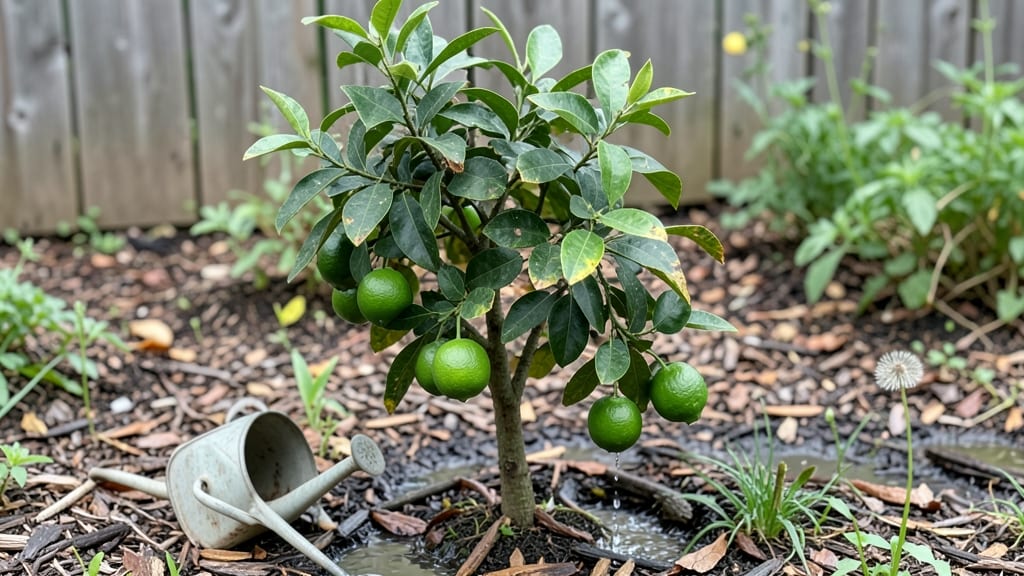
My lime tree’s leaves turned yellow and limp after I drowned it with good intentions—turns out, overwatered lime trees need a reset, not more pity. 🌱 The first sign?
Soil that smells like a swamp, not a citrus grove. I thought I was helping, but too much water suffocates roots faster than a Florida summer storm.
Here’s the fix: stop watering immediately and let the soil dry out 3-4 inches deep before touching it again. Most people overcorrect by dumping more water—don’t. Instead, improve drainage with 1-2 inches of coarse sand or perlite mixed into the top 6 inches of soil.
Your tree’s roots will thank you within 2-3 weeks with fresh green leaves.
Long-term, check soil moisture with your finger—if it’s damp past 1 inch down, wait. Lime trees hate soggy feet, so adjust your watering schedule to once every 7-10 days in summer, less in winter.
Prune any mushy roots you find, and your tree will bounce back like it’s never been neglected.
This works for backyard trees, containers, or even that potted lime tree on your patio. The key? Less water, better drainage, and patience. Your tree’s comeback starts now—let’s get those roots breathing again.
Root Causes Of Overwatering
When your lime tree’s leaves start wilting, turning yellow, or dropping prematurely, the issue often traces back to excessive moisture in the soil. But why does this happen? Overwatering isn’t just about pouring too much water—it’s a chain reaction of environmental, soil, and human factors.
Let’s break down the science behind it so you can diagnose (and fix) the problem.
Lime trees, like most citrus varieties, thrive in well-draining soil. When drainage is compromised, water pools around the roots instead of flowing away, suffocating them. Here’s what causes it:
- Clay-heavy soil: Clay holds water like a sponge, preventing oxygen from reaching roots. Test your soil’s texture—if it forms a hard lump when wet, drainage is likely the issue.
- Compacted soil: Foot traffic, construction, or heavy rainfall can compress soil, reducing pore space for water to escape. Roots struggle to breathe in dense environments.
- Improper pot design: Containers without drainage holes trap water, creating a soggy prison for roots. Even "self-watering" pots can backfire if not monitored.
Pro Tip: 💡 Amend clay soil with coarse sand, perlite, or compost to improve aeration. For potted trees, ensure the pot has 4+ drainage holes and use a mix of potting soil + grit.
Citrus trees like lime don’t follow a rigid watering calendar—they need consistent moisture without saturation. Common mistakes include:
- Ignoring soil moisture: Watering based on time (e.g., "every Wednesday") rather than checking the top 2–3 inches of soil. A finger test reveals the truth: if it’s damp, hold off!
- Overcompensating after drought: If your tree wilts from underwatering, a sudden deep soak can drown it. Gradually reintroduce water to avoid shocking the roots.
- Automatic systems left unchecked: Drip irrigation or timers can run amok, especially in rainy seasons. Always manually verify soil moisture.
Pro Tip: ⏰ Use a moisture meter or the "squeeze test"—grab a handful of soil. If water drips out, it’s too wet. If it crumbles, it’s time to water.
Fungal infections like Phytophthora or Pythium thrive in waterlogged conditions, attacking roots and cutting off nutrient uptake. Signs include:
- Mushy, brown roots: Healthy roots are firm and white; rotted roots smell foul and disintegrate when touched.
- Leaf yellowing (chlorosis): The tree can’t absorb iron or nitrogen, leading to pale, brittle leaves.
- Stunted growth: Even if you water less, the tree may refuse to recover due to irreversible root damage.
Pro Tip: 🔥 If root rot is suspected, prune affected roots with sterilized shears, repot in fresh soil, and apply fungicide (copper-based works well).
Understanding these causes is the first step to revival. Next, we’ll tackle how to reverse the damage before it’s too late.
Reviving your tree with smart fixes
An overwatered lime tree can feel like a lost cause, but with the right approach, you can nurse it back to health—even if the leaves are already drooping. The key is to act quickly, adjust your watering habits, and give your tree the space it needs to breathe.
Below, we’ll break down the most common causes of overwatering and the practical fixes to turn things around, plus tips to keep your lime tree thriving long-term.
Problem: Yellowing leaves, mushy stems, or roots that smell like rot? Your lime tree is drowning in excess moisture, and the roots are struggling to get oxygen.
Fix It: 🔥 Step 1: Pause Watering Immediately Stop adding water until the soil dries out. Let nature do the work—don’t rush it!
🍳 Step 2: Check the Soil Moisture Stick your finger 2–3 inches into the soil. If it’s damp, wait. If it’s bone-dry, you may have overcorrected. Aim for moist but not soggy.
👨🍳 Step 3: Improve Drainage - For potted lime trees: Move to a pot with drainage holes (if not already).
If repotting, use a well-draining mix (50% potting soil, 30% perlite, 20% sand or orchid bark). - For in-ground trees: Amend the soil with compost or coarse sand to break up clay and improve airflow.
🥘 Step 4: Trim Damaged Foliage Snip off any yellow, brown, or mushy leaves with clean pruners. This helps the tree focus energy on new growth.
🌱 Prevention Tip: Water only when the top 1–2 inches of soil are dry. In hot climates, this might mean watering every 3–5 days; in cooler weather, stretch it to once a week.
Problem: Black, slimy roots or a tree that wobbles easily? Root rot has set in, and the tree needs urgent care.
Fix It: ⚠️ Step 1: Remove the Tree (If Necessary) If more than 50% of the roots are mushy or black, the tree may not recover. Sad but true—sometimes it’s better to replant a new one.
🔪 Step 2: Prune Back Severely (For Mild Cases) If root rot is localized, cut back 1/3 of the foliage to reduce the tree’s water needs. This helps the remaining roots recover.
⏰ Step 3: Repot in Fresh, Sterile Soil
- Remove the tree from its pot and rinse the roots gently to remove old soil.
- Trim any black, mushy roots with sterilized pruners.
- Repot in a new container with fresh, well-draining soil (add fungicide if available).
💡 Prevention Tip: Avoid letting water pool in saucers or trays. Always empty excess water after watering!
Problem: Slow growth, wilting leaves, or a tree that looks “stunted”? Compacted soil prevents roots from accessing air and water properly.
Fix It: 🏗️ Step 1: Aerate the Soil
- Potted trees: Loosen the soil with a fork or your fingers. Mix in perlite or vermiculite to improve texture.
- In-ground trees: Use a garden fork to poke holes around the base of the tree, then top-dress with compost or coarse sand.
🌡️ Step 2: Mulch Properly Spread a 2–3 inch layer of organic mulch (like wood chips or straw) around the base, but keep it 6 inches away from the trunk to prevent rot.
🎯 Prevention Tip: Avoid walking or driving near your lime tree—compacted soil is a silent killer!
Want to give your lime tree an extra push?
Try these: - Fertilize lightly with a balanced citrus fertilizer (half-strength) once it’s back on track. - Boost humidity by placing the pot on a tray of pebbles and water (for indoor trees). - Prune for airflow—thin out dense branches to improve air circulation and reduce humidity-related stress.
With these fixes, your lime tree should show signs of recovery in 2–4 weeks. The key is patience—overwatering damage takes time to reverse, but consistency pays off. Once your tree is back in balance, stick to a watering schedule and monitor soil moisture like a pro!
Frequently asked questions
How do I know if my lime tree is overwatered vs. underwatered?
Check the soil first: if it smells sour or feels soggy 1-2 inches deep, you're overwatering. Yellow leaves with brown edges and mushy stems confirm it. For underwatering, leaves turn crispy and brown at the edges while the soil feels bone-dry. The key difference? Overwatered roots smell foul, while underwatered roots look shriveled.
Can I save a lime tree with root rot?
It depends on how severe it is. If more than 50% of roots are black and mushy, the tree likely won't recover. For milder cases, trim all diseased roots with sterilized shears, repot in fresh well-draining soil, and apply copper-based fungicide. Give it 3-4 weeks of dry soil recovery before watering again.
Why does my lime tree keep getting overwatered?
Most people water based on schedules instead of soil conditions. Use the finger test: stick your finger 2 inches deep—if damp, wait. Clay soil and containers without drainage holes also trap moisture. Always check saucers under pots; standing water is a red flag. Adjust to watering only when the top 1-2 inches are dry.
What's the best soil mix to prevent overwatering?
For potted lime trees, use a blend of 50% potting soil, 30% perlite, and 20% coarse sand. This improves drainage while retaining enough moisture. For in-ground trees, amend clay soil with 1-2 inches of compost or coarse sand mixed into the top 6 inches. Avoid heavy garden soil that compacts easily.
How long does it take to revive an overwatered lime tree?
With proper care, you'll see new growth in 2-4 weeks. The recovery timeline depends on how severe the damage was. If you've improved drainage and stopped watering until the soil dries, healthy leaves should start appearing within 3-5 weeks. Be patient—roots need time to recover and establish new growth patterns.