
Trees
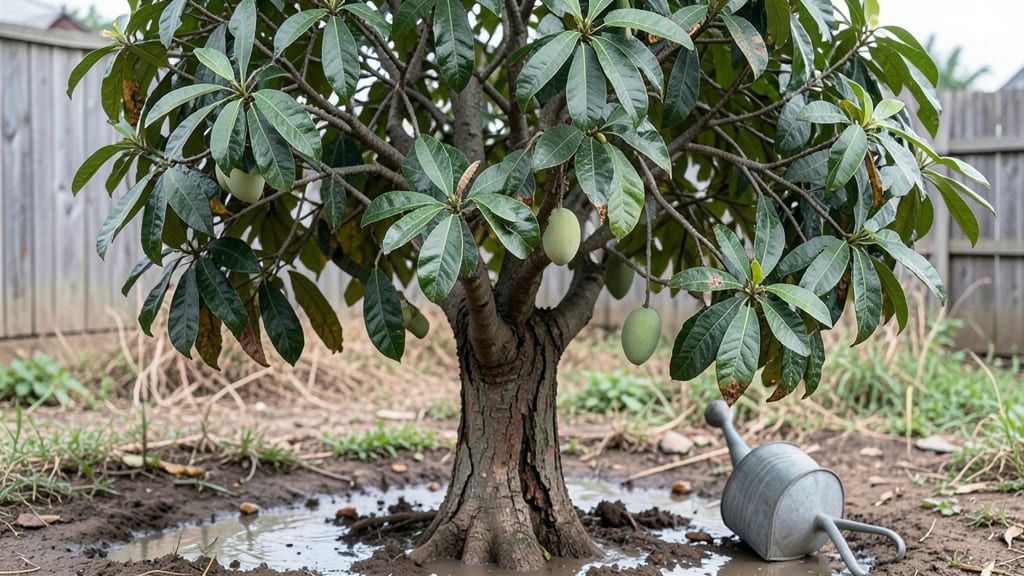
Your mango tree’s yellowing leaves and mushy roots aren’t a death sentence—just a cry for help. 🌱 I’ve nursed back overwatered mango trees with these three simple steps, and the key is acting fast before root rot takes over.
The worst part? Most gardeners drown their trees thinking they need constant moisture, especially in humid climates.
First, stop watering completely for 10-14 days to let soggy roots dry out. Then, prune any blackened or mushy roots (they’ll smell foul—trust me, you’ll know) and improve drainage by mixing in coarse sand or perlite to the soil.
Mango trees in pots need drainage holes, and in-ground trees benefit from raised beds or mounds to prevent water pooling.
Within 3-4 weeks, you’ll see new green growth as roots recover. The secret to long-term health? Water only when the top 2 inches of soil are bone-dry, and adjust for your climate—tropical regions need less frequent deep watering, while subtropical areas may need more shade to reduce evaporation.
This method works for both young saplings and mature trees, and the best part? You’ll avoid the heartbreak of losing a tree to overzealous watering. Let’s get those roots breathing again—your next harvest depends on it.
Why it happens
When your mango tree starts wilting despite a soggy soil surface, the issue likely stems from overzealous watering—a classic case of "too much of a good thing." 🌧️💦 Mango trees, native to tropical climates, thrive in well-draining soil but are surprisingly not drought-tolerant or flood-tolerant.
Here’s why your tree might be drowning in its own moisture—literally—and how simple missteps lead to root rot and stunted growth.
🌊 Poor Soil Drainage Traps Water
Mango trees hate "wet feet." If your soil is clay-heavy, compacted, or lacks organic matter, water pools around the roots instead of draining away. This creates an anaerobic (oxygen-deprived) zone, where beneficial microbes suffocate and harmful pathogens like Phytophthora or Pythium thrive.
Roots starve for oxygen, turning brown and mushy—a classic sign of root rot.
Why it happens:
- Clay soil acts like a sponge, holding water tightly and blocking airflow to roots.
- Lack of sand or compost reduces porosity, preventing excess water from escaping.
- Over-mulching (especially with thick organic layers) can suffocate roots by trapping moisture.
Actionable fix: Test your soil’s drainage by digging a 12-inch hole, filling it with water, and timing how long it takes to drain. If it’s slower than 4 hours, amend with perlite, coarse sand, or coconut coir to improve aeration.
💧 Overwatering Without Checking Moisture Levels
Many gardeners assume "more water = happier tree," but mango trees prefer consistency over excess. Overwatering—especially on a fixed schedule—leads to waterlogging, where roots sit in saturated conditions for days. This disrupts the tree’s osmotic balance, preventing it from absorbing nutrients efficiently.
Why it happens:
- Ignoring soil moisture (e.g., watering every 2–3 days regardless of weather).
- Automatic irrigation systems running on timers without soil sensors.
- Heavy rainfall + manual watering doubling down on moisture.
Actionable fix: Stick your finger 2–3 inches into the soil. If it’s damp, wait. Use a moisture meter for precision, or opt for drip irrigation with a flow sensor to deliver water only when needed.
🌿 Shallow Root Systems Struggle with Depth
Mango trees develop deep taproots to access water in their native habitats, but container-grown or young trees often have shallow, fibrous roots. When these roots can’t reach deeper moisture, they overcompensate by spreading outward—making them vulnerable to surface-level watering.
Shallow roots drown faster because they lack access to drier soil layers.
Why it happens:
- Container-grown trees with root-bound systems.
- Surface watering (e.g., sprinklers) wetting only the top inch of soil.
- Compacted subsoil preventing roots from growing deeper.
Actionable fix: For potted mangoes, ensure the container has drainage holes and use well-draining mix. For in-ground trees, deep-water infrequently (every 7–10 days in dry climates) to encourage root growth downward. Avoid top-dressing with water.
🌡️ Weather Mismatches Water Needs
Mango trees don’t follow a one-size-fits-all watering rule. Humid climates, monsoons, or sudden temperature drops can drastically alter how much water your tree needs. Overwatering in cool, cloudy weather (when evaporation slows) or after heavy rain smothers roots.
Why it happens:
- Seasonal ignorance (e.g., watering the same amount in winter as summer).
- Ignoring humidity—high humidity means soil stays wet longer.
- Wind or shade reducing evaporation, keeping soil damp unintentionally.
Actionable fix: Adjust watering based on weather forecasts. In humid conditions, reduce frequency by 30–50%. Use a rain gauge to track natural water input and compensate accordingly.
🔄 Neglecting Post-Planting Adjustments
Newly planted mango trees require extra care to establish roots, but many gardeners overcompensate by drowning them in the first few weeks. While young trees need consistent moisture, excessive watering without root spread leads to water-stressed roots that can’t absorb nutrients.
Why it happens:
- Frequent shallow watering (e.g., daily light sprinkles) instead of deep, infrequent soaking.
- No root zone development—roots stay clustered near the transplant ball.
- Using tap water with high salts (common in municipal supplies) that build up in saturated soil.
Actionable fix: For the first 3–6 months, water deeply every 5–7 days (not daily). Use rainwater or filtered water to avoid salt buildup. After planting, avoid watering for 3–5 days to let roots adjust before rehydrating.
Revive Your Tree: Step-by-Step Fixes
Overwatering can turn your lush mango tree into a sad, soggy mess—but don’t worry! With the right approach, you can nurse it back to health and prevent future disasters.
Below, we’ll break down practical solutions tailored to the root causes of overwatering, from adjusting watering habits to soil and drainage fixes. Let’s get your tree thriving again!
If your tree is drowning in excess moisture, the first priority is cutting back on water. Overwatering suffocates roots, leading to rot and nutrient starvation.
🔥 How to Adjust Watering
- Check soil moisture before watering: Stick your finger 2-3 inches deep into the soil. If it’s damp, wait.
If it’s dry, water deeply but only once every 7-10 days (adjust based on climate). - Water deeply, less often: Instead of light daily sprinkles, give your tree a slow, deep soak (about 1-2 gallons per watering) to encourage strong root growth. - Morning watering is best: Water early in the day so excess moisture evaporates, reducing fungal risks.
> 💡 Pro Tip: If your tree is severely waterlogged, skip watering for 3-5 days to let the soil dry out before resuming a normal schedule.
Poor drainage is the #1 reason overwatered trees struggle. Fixing this can save your mango tree from root rot.
🍳 Fixing Soil Drainage Issues
| Problem | Solution | Tools Needed |
|---|---|---|
| Compacted or clay soil | Mix in organic matter (compost, coconut coir, or perlite) to loosen soil. | Garden fork, compost, gloves |
| No drainage holes | Dig a French drain (gravel trench) around the base or add a drainage pipe if in a pot. | Gravel, pipe, shovel |
| Raised beds needed | Plant in a slightly elevated mound (6-12 inches high) to prevent pooling. | Soil, landscape fabric |
> 🔥 Quick Fix for Potted Trees: If your mango tree is in a container, poke holes in the bottom (if none exist) and add a layer of pebbles or broken pottery at the base before repotting.
If roots are already damaged, they need air, space, and nutrients to recover.
✨ Root Recovery Techniques
- Aerate the soil: Use a garden fork or aerator to poke holes around the root zone (6-12 inches deep) to improve oxygen flow.
- Apply root stimulator: Mix a mycorrhizal fungus or hydrogen peroxide (3%) into water (1 tbsp per gallon) to boost root health and kill harmful bacteria.
- Prune dead roots (if severe): Carefully dig around the base and trim mushy, black, or foul-smelling roots with sterilized pruners.
> 🎯 Prevention Tip: After recovery, mulch around the base (2-3 inches of wood chips or straw) to retain moisture without suffocating roots—keep mulch 6 inches away from the trunk.
Once your tree is back on track, keep it healthy long-term with these habits:
- Upgrade your pot (if potted): Use a terracotta or fabric pot with drainage holes—avoid plastic, which traps moisture.
- Monitor weather: Adjust watering during heavy rains or humid seasons (reduce by 30-50%).
- Test soil pH: Mango trees prefer slightly acidic soil (pH 5.5-6.5)—use a soil test kit to adjust with lime or sulfur if needed.
- Watch for signs of stress: Yellow leaves, wilting, or fungal growth? Act fast—these are early warnings!
Final Thought: Reviving an overwatered mango tree takes patience, but with these targeted fixes, you’ll see new growth within 4-8 weeks. Stay consistent, and your tree will reward you with sweet, juicy fruit in no time! 🌴🍈
Frequently asked questions about soggy mango trees
How do I know if my mango tree is truly overwatered?
Look for yellowing leaves (especially lower ones), mushy roots that smell foul when dug up, and wilting despite wet soil. Tap the soil—if it feels soggy 2-3 inches deep, you’re overwatering. Another clue: leaf drop or slow growth, even when the tree isn’t flowering.
Can I save a mango tree with root rot?
Yes, but act fast! First, stop watering for 10-14 days to dry the roots. Trim away black, mushy roots with sterilized pruners, then repot in well-draining mix (50% potting soil, 30% perlite, 20% compost). For in-ground trees, improve drainage with gravel trenches or raised beds. Recovery takes 4-8 weeks—be patient!
Why does my potted mango tree need drainage holes?
Without holes, water pools at the bottom, creating anaerobic conditions that suffocate roots. Mango trees hate soggy feet—even in pots! If your container lacks holes, drill them yourself (use a 1-inch bit) or repot immediately. Add a 2-inch layer of pebbles at the bottom to boost drainage further.
How often should I water a recovering mango tree?
After reviving an overwatered tree, wait until the top 2 inches of soil are bone-dry before watering again. In tropical climates, this might mean every 7-10 days; in subtropical areas, stretch it to 10-14 days. Always water deeply (1-2 gallons) to encourage root growth downward, not just surface moisture.
Will overwatering kill my mango tree permanently?
Not necessarily! With immediate action, most trees bounce back. The key is catching root rot early—once 50%+ of roots are damaged, recovery becomes harder. Long-term, adjust your watering habits: check soil moisture, improve drainage, and avoid fixed schedules. Even severely stressed trees can rebound with proper care!