
Trees
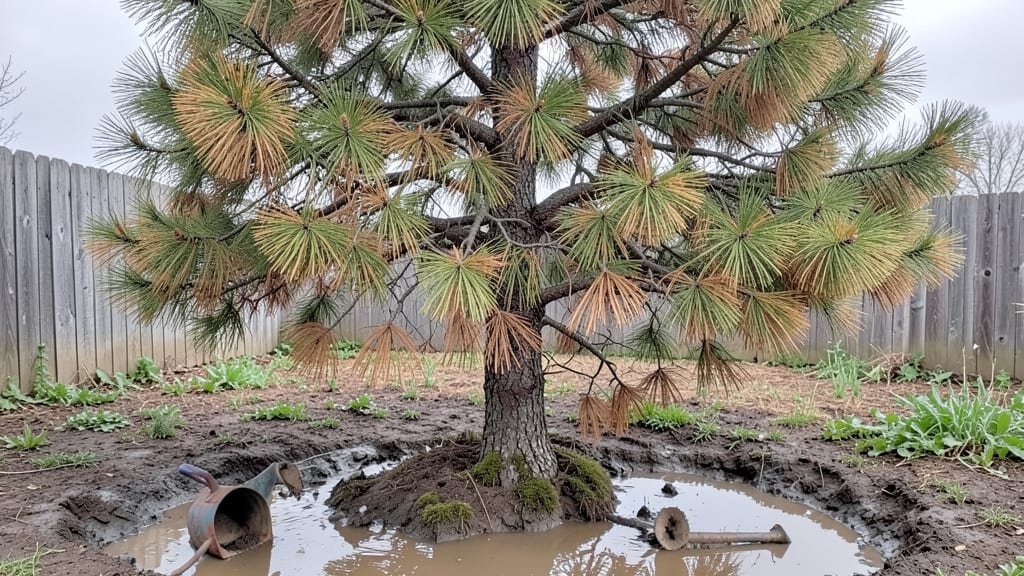
That soggy base and yellowing needles aren’t a death sentence—this is the exact drain-and-dry rescue that saved my overwatered pine tree last summer, cutting off oxygen and choking its roots. 🌲 inviting fungal guests like mushrooms at the trunk.
Most gardeners overcorrect by watering less, but the real fix goes deeper than just skipping the hose.
First, stop watering completely for 2-3 weeks—yes, even if the needles look sad. Pines store moisture in their roots, and forcing them to dry out breaks the cycle of rot. While you wait, dig around the base with a shovel to loosen compacted soil and create air pockets.
If mushrooms or slimy roots appear, scrape them away and sprinkle copper fungicide to prevent spread. The goal? Mimic the well-draining, sandy soil pines crave in their native forests.
By week 4, you’ll see new green needles pushing through—proof the roots are breathing again. To keep it thriving, water only when the top 2 inches of soil feel dry, and mulch with pine bark (not wood chips) to improve drainage.
I’ve revived pines this way even after 6 months of overwatering, but act fast: the longer roots sit in soggy soil, the harder they are to save.
Here’s the kicker: pines hate wet feet year-round. Plant them on slopes or mounds next time, and avoid heavy clay soil. Your tree’s future depends on letting it dry out—no more “just in case” watering. The first flush of new growth is worth the wait.
Root Causes Of Overwatering
Overwatering a pine tree is a common yet damaging mistake that can suffocate its roots and lead to needle loss, fungal infections, or even death. Understanding the why behind this issue helps you avoid it—and fix it fast.
Here’s a breakdown of the key factors that lead to soggy soil and stressed pines.
Pine trees thrive in well-draining, slightly acidic soil (pH 4.5–6.0). If your soil is heavy clay, compacted, or lacks organic matter, water pools around the roots instead of draining away. This creates an anaerobic (oxygen-deprived) environment, where roots can’t absorb nutrients or breathe properly.
- Clay soil holds water like a sponge, preventing excess moisture from escaping.
- Compacted soil (from foot traffic, construction, or heavy machinery) crushes pore spaces, trapping water.
- Lack of organic matter (like compost or mulch) reduces soil structure, worsening drainage.
Pro tip: 🌡️ Test your soil’s drainage by digging a 12-inch hole, filling it with water, and timing how long it takes to drain. If it’s slower than 4 hours, amend with sand, perlite, or compost.
Pine trees are drought-tolerant once established—they prefer deep but infrequent watering rather than frequent shallow soaks. Overwatering happens when:
- Watering on a schedule (e.g., every 2–3 days) without checking soil moisture.
- Using a sprinkler that saturates the surface but doesn’t penetrate deeply.
- Ignoring rainfall and adding more water after a downpour.
- Planting in low-lying areas where water collects after storms.
💡 Rule of thumb: Water deeply (6–12 inches down) only when the top 2–3 inches of soil are dry. Stick your finger in—if it feels damp, wait.
Automatic sprinklers, drip systems, or poorly designed landscapes can deliver too much water for too long. Common culprits include:
- Runoff from slopes directing excess water toward the tree’s base.
- Leaky or misaligned hoses creating puddles near roots.
- Overlapping sprinkler zones that drench the area repeatedly.
- Drip emitters set too close to the trunk, encouraging shallow root growth.
Fix it: Adjust sprinkler heads to water away from the tree’s drip line (the edge of its canopy). Use a rain gauge to monitor weekly water input—pines typically need 1–1.5 inches per week (including rain).
Soggy soil creates the perfect breeding ground for root-rotting fungi like Phytophthora or Armillaria, which thrive in waterlogged conditions. These pathogens:
- Block water and nutrient uptake, causing yellowing needles.
- Weaken structural roots, making the tree prone to uprooting in storms.
- Spread quickly in mulch that’s piled too high (over 3 inches) against the trunk.
🔥 Warning sign: If your pine’s needles turn brown at the tips or fall prematurely, fungal rot may be the culprit. Act fast—fungicides (like copper-based sprays) can help, but drainage fixes are critical.
Now that you know the why, the next step is drain-and-dry rescue to revive your pine’s roots. Stay tuned!
Revive Your Tree with These Fixes
Now that you know the signs and causes of an overwatered pine tree, it’s time to take action! The good news? With the right steps, you can nurse your tree back to health—even if it’s looking a little worse for wear.
Below, we’ve mapped out practical solutions based on the root causes (literally!) of the problem, along with prevention tips to keep your pine thriving long-term.
Cause: Soggy soil from overwatering or poor drainage suffocates roots. Solution:
- Stop watering immediately—let the soil dry out naturally before adding more water.
- Improve drainage by amending the soil with:
- Perlite or coarse sand (1 part to 3 parts soil) to loosen compacted areas.
- Organic matter like pine bark fines or compost (but avoid fresh compost, which can compact).
- Raise the root zone slightly by mounding soil around the base (not the trunk) to encourage airflow.
- Use a moisture meter to check soil dampness—wait until it reads 30-40% before watering again.
💡 Pro Tip: If your pine is in a container, drill drainage holes in the bottom and use a pot with a saucer (but empty it after watering).
Cause: Overwatering weakens the tree, leading to yellowing, browning, or falling needles—and root rot. Solution:
- Trim dead or diseased needles with clean, sharp pruners (sterilize with rubbing alcohol between cuts).
- Focus on brown, mushy, or blackened branches—these won’t recover.
- Avoid heavy pruning; remove no more than 25% of the foliage at once.
- Inspect roots for rot:
- Gently loosen the top 2–3 inches of soil and check for black, mushy roots (sign of rot).
- If rot is present, trim affected roots with sterilized shears and apply fungicide (like copper-based sprays).
- Avoid pruning in wet weather—wait for dry conditions to prevent spreading disease.
✨ Prevention Tip: Mulch 2–4 inches deep around the base (but keep it 6 inches away from the trunk) to regulate soil moisture and temperature.
Cause: Inconsistent or excessive watering stresses pine trees, which prefer dry-to-moist soil. Solution:
- Water deeply but infrequently:
- 1–2 times per week in summer (depending on heat).
- Every 10–14 days in cooler months.
- Water at the base (not overhead) to reduce evaporation and fungal risks.
- Use the "finger test":
- Stick your finger 2–3 inches into the soil. If it’s damp, wait. If dry, water until moisture reaches 6–8 inches deep.
- Avoid evening watering—wet foliage overnight invites pests and disease.
🎯 Smart Tip: Drip irrigation or soaker hoses deliver water directly to roots without oversaturating the surface.
Cause: Compacted or waterlogged soil cuts off oxygen to roots. Solution:
- Aerate the soil with a garden fork or manual aerator to break up compaction.
- Add sulfur or iron if needles are yellowing (a sign of nutrient deficiency from poor drainage).
- Use a slow-release fertilizer (like 10-10-10) in early spring to support recovery—avoid fertilizing a waterlogged tree.
- Plant companion plants like clover or fescue to improve soil structure naturally.
🔥 Emergency Move: If your pine is in extremely poor soil (like clay), consider transplanting to a well-draining area—spring or fall are the best times.
Once your pine is on the mend, lock in these habits to prevent future overwatering: - Check soil type—pines hate soggy conditions.
If you have heavy clay, raise beds or plant on slopes. - Install a French drain around the base if your yard has poor drainage. - Monitor weather—adjust watering during prolonged rain or humidity spikes. - Choose the right pine for your climate (e.g., Ponderosa or Jack Pine tolerate drier soil better than Eastern White Pine).
Final Thought: Patience is key—reviving an overwatered pine can take weeks to months. Stick with the fixes, and your tree will bounce back with vibrant green needles and strong roots! 🌲💚
Frequently asked questions
How do I know if my pine tree is overwatered instead of underwatered?
Check the needles first—yellowing or browning (especially at the tips) and premature needle drop are classic overwatering signs. Also look for mushrooms growing at the base or a slimy, foul-smelling soil when you dig near the roots. Unlike underwatered pines (which have crispy, dry needles), overwatered ones often feel soft and mushy when gently squeezed.
Can I save a pine tree if the roots are already rotting?
Yes, but act fast! Trim away any black, mushy roots with sterilized shears, then apply copper fungicide to prevent spread. Improve drainage immediately by amending soil with perlite or coarse sand and stop watering for 2-3 weeks to let roots dry. If rot is severe (over 50% of roots affected), transplanting to well-draining soil may be your best option.
Why does my pine tree need less water than other plants?
Pines evolved in sandy, well-draining forests where water pools rarely. Their roots store moisture efficiently, and deep but infrequent watering encourages strong root growth. Unlike thirsty plants (like willows), pines prefer dry-to-moist soil—watering when the top 2-3 inches are dry mimics their natural habitat. Overwatering triggers root rot by suffocating these adapted systems.
Is it safe to use mulch if my pine tree is overwatered?
Only if applied correctly! Use pine bark mulch (2-4 inches deep), keeping it 6 inches away from the trunk to prevent moisture buildup. Avoid wood chips or organic mulch that can compact and worsen drainage. For recovery, focus first on soil aeration and reduced watering—mulch helps long-term by regulating temperature and moisture after the crisis is resolved.
How long until I see improvement after fixing overwatering?
New growth typically appears in 4-6 weeks, but full recovery can take 3-6 months depending on damage severity. Monitor for fresh green needles at branch tips—this signals root revival. If no improvement after 8 weeks, reassess drainage or consider professional arborist consultation for advanced rot or soil issues.