
Trees
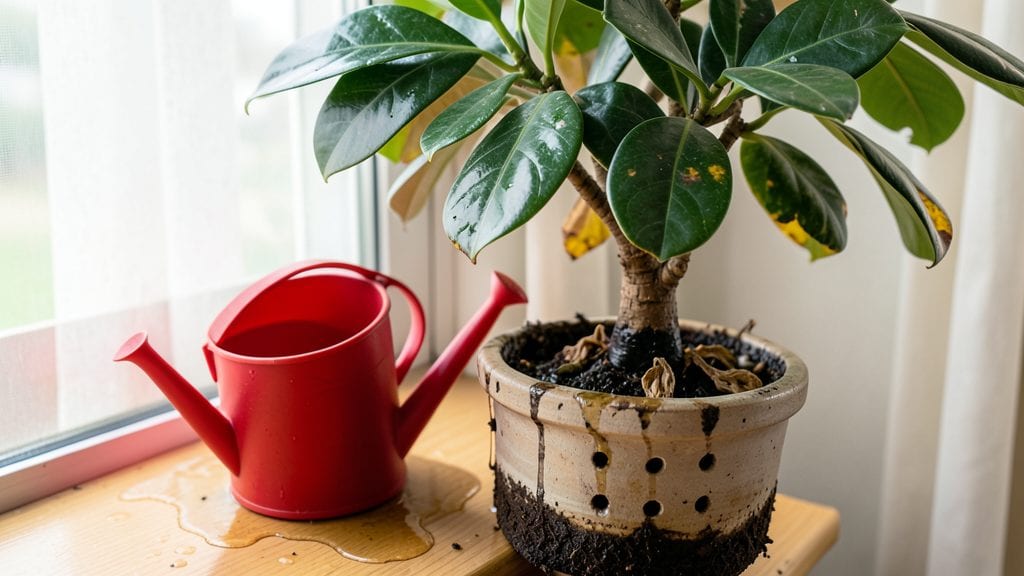
Your tree’s yellowing leaves and mushy soil aren’t a death sentence—overwatered trees can bounce back with the right moves. I’ve nursed back more than my share of soggy-rooted trees, and the fix always starts with cutting back on water and giving roots room to breathe.
The problem usually boils down to two things: too much water sitting at the roots and poor drainage trapping moisture. You’ll know it’s overwatering when the soil smells sour, leaves turn yellow but stay attached, and mushrooms pop up around the base.
The good news? Trees are tougher than they look—once you stop drowning them, they often rally within weeks.
First, adjust your watering schedule to deep soaks every 10-14 days instead of frequent light drinks. Then, loosen compacted soil around the trunk and add 2-3 inches of organic mulch to regulate moisture. Prune any mushy branches—those won’t recover—and watch for new green growth in just a few weeks.
Prevention is easier than cleanup: test your soil’s drainage with a simple jar test (fill a jar with soil and water, then time how long it takes to drain).
If it’s slower than 30 minutes, your tree’s roots are still sitting in a swamp. A little planning now keeps your tree thriving for years.
When Roots Suffocate From Too Much Water
Overwatering might seem like a harmless mistake—after all, trees need hydration to thrive! 🌱 But when roots sit in soggy soil for too long, they struggle to breathe, leading to a cascade of problems.
Let’s break down the key reasons why this happens, rooted in science (and a little common sense).
Not all soil is created equal. Clay-heavy or compacted soils act like a sponge that never lets go—water pools around roots instead of draining away. Even well-draining soils can become waterlogged if:
- Amended improperly: Too much organic matter (like peat moss) can hold moisture like a swamp. Fix: Mix in perlite, sand, or coarse bark to improve aeration.
- Layered incorrectly: A dense subsoil layer (like hardpan) blocks water from escaping. Fix: Test soil depth with a shovel—break up compacted layers or install drainage tiles.
- No slope: Flat or depressed planting spots become puddle zones. Fix: Create a slight mound (6–12 inches) when planting or install French drains.
💡 Pro Tip: The "finger test" reveals drainage issues—stick your finger 2 inches into the soil. If it’s still damp 24+ hours after watering, your tree’s roots are drowning.
Even with good soil, human habits can drown roots. Common mistakes include:
- Ignoring seasonal needs: Trees in active growth (spring/fall) need more water, but dormant trees (winter) barely need any. Fix: Adjust watering to match the season—think "less is more" in winter.
- Watering on a timer: Automatic systems (like sprinklers) can’t account for rain or soil type. Fix: Check soil moisture weekly—if the top 2 inches are dry, it’s time to water.
- Prolonged soaking: Long, slow watering (e.g., hose left running for hours) saturates deep roots. Fix: Water deeply but briefly—aim for 1–2 inches of moisture per week.
⚠️ Warning: Mulch volcanoes (piles of mulch against the trunk) trap moisture, creating a rot-friendly environment. Keep mulch 3–4 inches deep and 6+ inches from the trunk.
When roots are physically restricted or injured, they can’t absorb oxygen or water efficiently—making overwatering even deadlier. Causes include:
- Container shock: Balled-and-burlapped trees (or those in pots) often have circular, tangled roots that can’t spread. Fix: Prune roots before planting (if girdling) and space them out in loose soil.
- Construction damage: Compacted or severed roots from digging, grading, or heavy foot traffic. Fix: Aerate soil annually with a garden fork or hire a professional to repair root zones.
- Fungal infections: Pathogens like Phytophthora thrive in wet conditions, clogging root pores. Fix: Use resistant rootstock and avoid watering foliage (which spreads spores).
🔍 Signs of root stress: Yellowing leaves, stunted growth, or mushrooms sprouting near the base (a red flag for rot).
Some trees are genetically adapted to dry climates (e.g., oaks, pines) and can’t handle frequent watering. Others, like willows or birches, love moisture—but even they can drown if:
- Planted in the wrong zone: A desert-native tree in a humid climate will suffocate. Fix: Choose native species or drought-tolerant varieties for your region.
- Frost or heat stress: Cold roots can’t process excess water, while extreme heat causes osmotic shock (roots "burn" from too much H₂O). Fix: Mulch heavily in winter and water early morning to reduce evaporation.
🌡️ Temperature matters: Soil stays 10–15°F warmer than air—so if it’s 80°F outside, roots may be baking at 95°F. Adjust watering accordingly.
Reviving Your Tree Step by Step
Overwatering can turn your thriving tree into a sad, soggy mess—but don’t worry! With the right approach, you can nurse it back to health. Below, we’ll map out practical fixes based on the most common causes of an overwatered tree, along with prevention tips to keep your tree happy long-term.
If your tree is drowning in excess moisture, the first step is to stop the water flow and let the roots breathe.
🔥 Step 1: Pause Watering Immediately
- Stop all irrigation (rainwater, sprinklers, or manual watering) for at least 1–2 weeks.
- If the soil feels squishy or smells like rot, hold off even longer—roots need time to recover.
🍳 Step 2: Improve Drainage
- Aerate compacted soil with a garden fork or tiller to help water escape.
- Add organic matter (compost or aged bark) to improve soil structure and drainage.
- Consider raised beds if your tree sits in a low-lying area prone to pooling.
👨🍳 Step 3: Test Soil Moisture
- Stick your finger 2–3 inches deep—if it’s damp, wait before watering again.
- Use a moisture meter for accuracy (aim for 40–60% moisture for most trees).
💡 Pro Tip: Mulch 2–4 inches deep (but keep it 6 inches away from the trunk) to regulate moisture without suffocating roots.
If the soil is clay-heavy or waterlogged, roots can’t get oxygen, leading to rot.
⏰ Step 1: Let the Soil Dry Between Waterings
- Water deeply but infrequently—once every 7–10 days (adjust for climate).
- Avoid shallow sprinkling, which keeps the top layer soggy while roots stay dry.
🔪 Step 2: Break Up Compacted Soil
- Gently loosen soil around the base (but avoid damaging roots).
- Mix in perlite, sand, or coconut coir to lighten heavy clay soils.
🌡️ Step 3: Monitor for Fungal Issues
- If leaves turn yellow with brown edges, fungal root rot may be setting in.
- Apply copper fungicide or neem oil if needed, and remove any mushy roots (sterilize tools between cuts).
🎯 Prevention Tip: Plant trees in well-draining soil and avoid spots where water pools after rain.
If your tree is wilting, dropping leaves, or growing poorly, it needs a nutrient and airflow boost.
📊 Step 1: Fertilize Lightly
- Use a balanced, slow-release fertilizer (10-10-10) once roots recover.
- Avoid high-nitrogen fertilizers—they encourage leafy growth but weaken roots.
💪 Step 2: Prune Damaged Branches
- Remove any blackened, mushy, or overly soft branches (sterilize pruners with rubbing alcohol).
- Thin out dense foliage to improve airflow and sunlight penetration.
🥗 Step 3: Support with Mycorrhizal Fungi
- Mycorrhizal inoculants (available at garden centers) help roots absorb water and nutrients better.
- Mix into soil after the tree has stopped wilting.
✨ Bonus Tip: Mulch properly—too much mulch (the "mulch volcano") can trap moisture and harm the trunk.
Final Reminder: Patience is key! Some trees take weeks to months to bounce back. Check soil moisture weekly and adjust care as needed. With the right fixes, your tree will be back to its strong, healthy self in no time! 🌳💚
Frequently asked questions
How do I know if my tree is overwatered instead of underwatered?
Check the soil first—if it smells sour or feels mushy 2+ inches deep, that’s a red flag. Overwatered trees also show yellowing leaves that stay attached (unlike crispy, brown underwatered leaves) and may develop mushrooms or mold at the base. Tap the trunk—if it sounds hollow or feels soft, roots are rotting.
Can I save a tree with root rot from overwatering?
Sometimes! If only surface roots are affected, prune the damaged areas (sterilize tools first) and improve drainage immediately. For severe rot, consult an arborist—they may recommend root pruning or soil replacement. Early action gives your tree the best chance, but advanced cases often require removal.
What’s the best way to test if my soil drains properly?
Fill a clear jar with your soil, add water to the top, and time how long it takes to drain. If it’s slower than 30 minutes, your soil holds too much moisture. For a field test, dig a 6-inch hole near the tree—if water pools after rain, you’ve got poor drainage. Fix it by amending with sand or perlite.
How often should I water a newly planted tree?
New trees need deep watering every 7–10 days (not daily!). Water slowly until soil 6–12 inches deep is moist, then let it dry slightly before the next watering. Avoid wetting leaves—focus on the root zone. Mulch 2–3 inches deep (away from the trunk) to retain moisture without suffocating roots.
Why does my tree look fine but has mushrooms growing at its base?
Those mushrooms are a warning sign! They indicate excess moisture and potential root rot, even if the tree appears healthy above ground. Remove the mushrooms (don’t compost them—they spread spores) and improve drainage. If the tree’s roots are already compromised, you may need to prune affected branches to save the rest.