
Watering
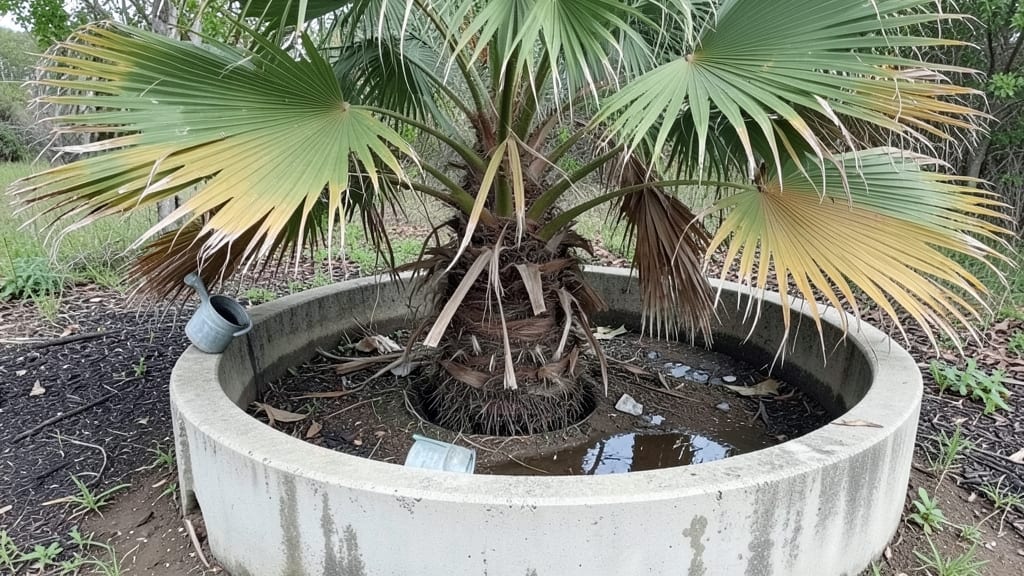
Your palm tree’s drooping fronds and mushy roots aren’t a death sentence—palm tree overwatering is fixable, and I’ve saved more than a few from root rot with these three straightforward steps.
The key? Stopping the water, not the plant. I’ve seen palms bounce back from the brink when given the right care, and you can too.
Yellowing fronds, blackened stems, and soil that smells like a swamp aren’t just ugly—they’re warning signs. Root rot thrives in soggy conditions, and once it sets in, your palm’s roots suffocate. The good news?
Drainage fixes, adjusted watering, and pruning the damaged parts can turn things around in weeks. Even indoor palms (like your parlor palm) respond fast when you cut back on the H₂O.
By the time you’re done, your palm will be standing tall again with vibrant green fronds and a root system that breathes. The trick is consistency: check soil moisture before watering, upgrade to well-draining mix, and never let pots sit in saucers of standing water.
Outdoors? Mulch helps. Indoors? A moisture meter becomes your best friend.
This works for indoor palms, outdoor palms, and even bonsai-sized varieties—just adjust the watering schedule to match your climate. Let’s get that tree back to thriving before the next frond turns yellow.
Root Causes Of Excess Moisture
Overwatering your palm tree isn’t just a gardening mistake—it’s often the result of a mix of environmental, soil, and human factors working in tandem. Understanding why it happens is the first step to fixing it. Let’s break down the science behind those soggy roots.
Palm trees thrive in well-draining soil, but many gardeners unknowingly plant them in heavy, compacted, or clay-rich soil that traps water like a sponge. Here’s why this happens:
- Clay-heavy soil: Clay particles pack tightly, leaving tiny air pockets that restrict oxygen flow to roots. Water pools around roots instead of draining away, creating anaerobic (oxygen-free) conditions where Pythium and Phytophthora fungi flourish.
- Lack of organic matter: Soil devoid of compost or mulch compacts over time, reducing porosity. Without organic material to break up clay, water sits near the surface instead of percolating deeper.
- Improper planting depth: Burying the root flare (the swollen base of the trunk) too deep suffocates roots and traps moisture. This is especially common with container-grown palms transplanted directly into the ground.
Pro Tip: 💡 Test your soil’s drainage by digging a 6-inch hole, filling it with water, and timing how long it takes to drain. If it’s still wet after 4+ hours, amend with perlite, sand, or coconut coir to improve aeration.
Even the most well-meaning gardeners can drown their palms with good intentions. Common watering mistakes include:
- Ignoring rainfall: Many assume palms need frequent watering, but tropical downpours can deliver 2+ inches of water in a single storm. Overwatering after rain is a fast track to root rot.
- Automatic irrigation on timers: Sprinkler systems set to run every 2–3 days (even in winter) can saturate soil long after the tree’s thirst is quenched. Palm roots need dry spells to breathe.
- Watering based on schedule, not soil: Sticking to a rigid "Monday, Wednesday, Friday" routine doesn’t account for temperature, humidity, or soil type. A palm in full sun may need water every 5–7 days, while one in shade could go 2 weeks without.
Pro Tip: 🌡️ Stick your finger 2–3 inches into the soil—if it’s damp, wait. For container palms, lift the pot: if it’s heavy with moisture, skip watering.
Palms in pots are especially vulnerable because their root systems are confined to a limited space. Here’s how containers contribute to overwatering:
- Small or shallow pots: Roots fill the container quickly, leaving no room for excess water to escape. Without drainage holes, water pools at the bottom, creating a perfect breeding ground for rot-causing pathogens.
- Low-quality potting mix: Cheap mixes with high peat moss content retain moisture for weeks, while palms need a blend with 50% inorganic matter (like perlite or pumice) to stay aerated.
- No winter adjustments: Container palms slow their growth in cooler months, but gardeners often keep watering them as if it’s summer. This leads to chronic soggy soil when roots aren’t actively absorbing water.
Pro Tip: ✨ Upgrade to a pot 2–3 inches larger in diameter than the root ball and use a mix designed for palms or tropical plants. Elevate pots on feet to improve airflow underneath.
Some causes of overwatering are beyond your control—but knowing them helps you adapt. Key environmental triggers include:
| Factor | Why It Causes Overwatering | How to Adapt |
|---|---|---|
| 🌊 High humidity | Moist air slows evaporation, keeping soil damp longer. In tropical climates, palms may not need watering for 10+ days even if the soil feels moist. | Reduce watering frequency by 30–50% in humid seasons. |
| 🌑 Shade from other plants | Less sunlight = slower transpiration (water loss through leaves). Shaded palms retain moisture longer, increasing rot risk. | Ensure 6+ hours of direct sunlight daily or adjust watering to every 10–14 days. |
| 🌧️ Monsoon or flood-prone areas | Heavy, frequent rains can waterlog soil for days, drowning roots even if you’re not actively watering. | Plant palms on mounds or slopes to encourage runoff, or use raised beds. |
Pro Tip: 🎯 If your palm is in a high-humidity zone, mulch around the base with bark or gravel to prevent soil from staying too wet.
Fixing Overwatered Palm Trees Fast
Overwatering can turn your lush palm tree into a sad, droopy mess—but don’t panic! With the right steps, you can nurse it back to health and prevent future water woes.
Below, we’ve mapped out practical fixes for the most common causes of overwatering, plus prevention tips to keep your palm thriving.
Cause: Excessive irrigation (manual or automatic) without proper drainage. Fix: Hit the pause button on watering right now.
- For potted palms: Lift the pot and check the drainage holes.
If water is pooling at the bottom, empty it completely and place the pot in a saucer filled with pebbles (not water) to wick away moisture. - For in-ground palms: If the soil feels soggy 2–3 inches below the surface, skip watering for 1–2 weeks and let the roots dry out. - Pro tip: 💡 Use a moisture meter (or your finger) to test soil moisture before watering.
If it’s damp, wait.
Cause: Compacted or clay-heavy soil trapping water around roots. Fix: Give your palm’s roots room to breathe.
| Problem | Solution | Tools Needed |
|---|---|---|
| No drainage holes | Drill 1–2 holes in the bottom of pots (if repotting isn’t an option). | Drill, sandpaper |
| Clay soil | Mix in perlite, sand, or coconut coir (20–30% of the soil volume). | Garden trowel, amendments |
| Poor outdoor drainage | Create a slight slope away from the trunk or install a French drain. | Shovel, gravel, landscape fabric |
🌡️ Pro tip: If repotting, choose a terracotta pot (porous) over plastic to help evaporate excess moisture.
Cause: Root rot from prolonged soggy conditions. Fix: Prune affected roots gently to prevent further decay.
- 🔪 Carefully remove the palm from the pot or dig around the base (for in-ground palms).
- 🧼 Rinse roots with water to see black/mushy areas (rot) vs. firm white roots (healthy).
- ✂️ Snip off rotten roots with sterilized pruners (dip in hydrogen peroxide or rubbing alcohol).
- 🌿 Replant in fresh, well-draining soil and avoid watering for 5–7 days.
⚠️ Warning: Only do this if the rot is severe. Mild cases can recover with better drainage alone.
Cause: Overzealous watering schedule or lack of seasonal adjustments. Fix: Water smartly, not frequently.
- 📅 Seasonal guide:
- Spring/Fall (growing season): Water every 7–10 days (check soil first).
- Summer (hot/dry): Water every 5–7 days (morning only to reduce evaporation).
- Winter (dormant): Water every 3–4 weeks (or less if indoors).
- 💧 Deep watering hack: When you water, soak the soil deeply (6–12 inches down) to encourage roots to grow downward, not stay shallow.
- 🌧️ Rainy days? Skip watering for 48 hours after a heavy rain.
Once your palm is on the mend, lock in these habits to avoid future overwatering:
- 🌡️ Test your soil: Aim for 60% air, 30% minerals, 10% water—never soggy.
- 🕒 Use a timer: Set reminders for watering days (apps like PlantNet help!).
- 🌿 Mulch lightly: Add 2–3 inches of organic mulch (wood chips, straw) to retain just enough moisture without suffocating roots.
- 🏺 Upgrade pots: If repotting, choose one size larger (not much bigger—roots need room to grow, not drown).
- 👀 Watch the leaves: Yellowing fronds? Act fast—it’s often the first sign of overwatering.
🎯 Final Thought: Overwatering is reversible, but consistency is key. With these fixes, your palm should bounce back in 4–8 weeks—just give it time and a little TLC!
Frequently asked questions
How often should I water my palm tree to avoid overwatering?
For potted palms, water only when the top 2 inches of soil are completely dry—usually every 7-10 days in summer and 3-4 weeks in winter. For outdoor palms, check soil moisture 3 inches deep before watering, and reduce frequency during rainy seasons or high humidity. Morning watering prevents evening evaporation, helping roots dry faster.
What are the first signs my palm tree is overwatered?
Watch for yellowing fronds (especially lower ones), mushy brown stems, and soil that smells sour or rotten. Drooping fronds that don’t perk up after watering and blackened roots when inspected are definitive signs. Act fast—root rot spreads quickly in soggy conditions.
Can I save a palm tree with root rot?
Yes, but act immediately! Prune away black/mushy roots with sterilized shears, repot in fresh well-draining mix (50% inorganic matter like perlite), and avoid watering for 5-7 days to let roots recover. For severe cases, consider a terracotta pot (porous) and elevate it on feet for better airflow. Recovery takes 4-8 weeks with consistent care.
Why does my palm tree need drainage holes if it’s planted in the ground?
Even in-ground palms need proper drainage to prevent waterlogging. If your soil is heavy clay, create a slope away from the trunk or amend with sand or compost to improve aeration. For container palms, drainage holes are critical—without them, excess water pools at the bottom, suffocating roots and inviting fungal growth.
Is it better to underwater than overwater a palm tree?
While underwatering causes wilting, overwatering leads to irreversible root rot. The key is balance: let soil dry 50% between waterings. Palm trees store water in their trunks, so they tolerate brief dry spells better than soggy conditions. Always prioritize drainage—even a 10-minute pause before watering can prevent disaster.