
Pests and Diseases
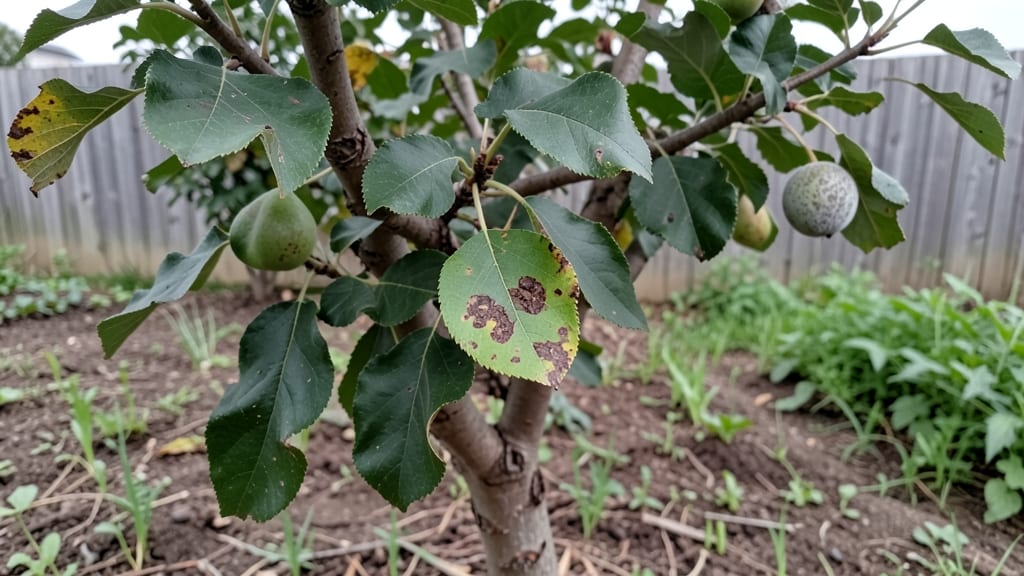
When your pear tree’s branches blacken and ooze, recognizing the signs of pear tree diseases and treatment early could save its life—and here’s how to fight back before it’s too late. 🌿 The good news? Most fungal diseases on pears follow predictable patterns, and early action keeps your harvest safe.
I’ve battled scab, powdery mildew, and fire blight in my orchard, and these are the exact steps I use to save trees every season.
Fire blight spreads like wildfire (literally) through wet springs, while scab thrives in humid summers and mildew clings to crowded foliage. The key is catching symptoms early—wilting leaves, dark streaks, or white powdery coatings—and acting fast with pruning, copper sprays, or organic fungicides.
You don’t need a degree in horticulture; just sharp tools, the right timing, and a little prevention.
By following a 3-step treatment plan—prune infected branches 6 inches below the damage, apply fungicide at bloom time, and thin fruit to improve airflow—you’ll protect your tree’s health and keep those juicy pears growing strong.
The first year I did this, my tree recovered completely and now produces twice as many fruits as before.
This works for backyard pears in zones 5-9, whether you’re growing Bartletts, Asian pears, or heirloom varieties. The same principles apply to apple and quince trees too. Let’s get your orchard back in fighting shape—before next season’s outbreaks.
Root Causes Of Tree Stress
Pear trees, like any living organism, are vulnerable to disease when their natural defenses weaken. Understanding why these diseases take hold is the first step in prevention. Most fungal infections and blights thrive when environmental or cultural factors create the perfect storm for pathogens.
Below, we break down the key reasons your pear tree might be inviting trouble—and how to address them before it’s too late.
Fungal spores love moderate, damp conditions—but they also hate consistent extremes. When pear trees experience sudden shifts—like freezing winters followed by warm, wet springs—their bark and leaves become stressed. This stress creates microscopic cracks or weak spots where fungi like Venturia (the cause of scab disease) can latch on.
🔍 Why it happens:
- Winter injury: Freeze-thaw cycles damage cell walls, making trees more susceptible to infection once temperatures rise.
- Spring heatwaves: Rapid warming after cold snaps causes buds to open prematurely, exposing tender new growth to fungal spores already lurking in the soil or air.
- Heat stress: Prolonged summer drought weakens the tree’s immune response, leaving it defenseless against opportunistic pathogens.
💡 Actionable fix:
- Mulch heavily in late fall to insulate roots from temperature fluctuations.
- Apply a dormant oil spray in late winter to smother overwintering fungal spores before buds break.
- Water deeply but infrequently during droughts to avoid shocking the tree.
Fungi need moisture to spread—think of them as aquatic invaders. When pear trees sit in soggy soil or receive frequent overhead watering (like from sprinklers), water droplets linger on leaves and bark, creating a perfect petri dish for spores to germinate and infect.
🔍 Why it happens:
- Fungal spores splash: Rain or irrigation splashes spores from infected leaves or soil onto healthy ones, spreading disease exponentially.
- Root rot risk: Poor drainage leads to Phytophthora or Armillaria (root rot fungi), which strangle the tree’s nutrient uptake, weakening its resistance to other diseases.
- Leaf wetness: Fungi like Botryosphaeria (canker disease) thrive when leaves stay damp for 9+ hours—common in humid climates or shaded trees.
💡 Actionable fix:
- Switch to drip irrigation or soaker hoses to deliver water at the base, avoiding foliage.
- Improve drainage by amending clay soil with compost or sand and planting on a slight mound.
- Water in the early morning so leaves dry quickly in sunlight.
A malnourished pear tree is like a person with a compromised immune system—it can’t fight off infections. Deficiencies in nitrogen, potassium, or zinc stunt growth, thin the bark, and reduce the tree’s ability to produce protective compounds like phenolics, which naturally repel fungi.
🔍 Why it happens:
- Nitrogen deficiency: Yellowing leaves (chlorosis) signal poor protein production, weakening cell walls and making them easier targets for fungal enzymes.
- Potassium shortage: Brown leaf edges or scorch indicate reduced osmotic regulation, leaving cells vulnerable to fungal invasion.
- Zinc or iron lack: Small, distorted leaves (interveinal chlorosis) reduce the tree’s ability to photosynthesize efficiently, stressing it further.
- Over-fertilization: Too much phosphorus can promote fungal growth by increasing sugar content in leaves, which fungi feast on.
💡 Actionable fix:
- Test soil annually and amend with a balanced fertilizer (e.g., 10-10-10) in early spring.
- Apply compost tea or foliar sprays with seaweed extract to boost natural defenses.
- Avoid high-nitrogen fertilizers in late summer, as they encourage tender new growth prone to infection.
Every cut or bite weakens a pear tree’s armor. Poor pruning techniques or pest damage (like borers or aphids) create entry points for fungi. Even seemingly minor injuries—such as sun scald on bark or hail scars—can become gateways for Nectria or Cytospora canker diseases.
🔍 Why it happens:
- Improper pruning cuts: Jagged or overly deep cuts fail to heal properly, leaving exposed wood prone to infection.
- Pest wounds: Aphids excrete honeydew, a sugary film that fosters sooty mold—a fungal hitchhiker that blocks sunlight and stresses the tree.
- Animal damage: Rabbits or deer chewing bark expose cambium layers, inviting Eutypa (dieback fungus).
💡 Actionable fix:
- Prune in late winter/early spring (dormant season) using clean, sharp tools and make cuts at a 45° angle just outside the branch collar.
- Seal large wounds with pruning sealant (for cuts > ½ inch) to prevent fungal colonization.
- Control pests with neem oil or horticultural oil to reduce honeydew and secondary infections.
🎯 Key Takeaway: Most pear tree diseases don’t appear out of nowhere—they’re invited by stress factors you can control. By addressing temperature extremes, water management, nutrition, and physical trauma, you’ll create an environment where your tree stays too strong for fungi to conquer.
Quick Fixes For Common Pear Tree Ailments
Now that you’ve identified the problem, it’s time to act! Pear trees are tough, but they need the right care to bounce back from diseases like fire blight, black spot, or powdery mildew. Below are practical, step-by-step solutions tailored to each issue—plus prevention tips to keep your tree thriving long-term.
Fire blight turns pear tree branches into blackened, oozing messes—ugly and deadly. Act fast to stop it from spreading.
🍳 Step 1: Sterilize Your Tools
- Use 70% isopropyl alcohol or a 10% bleach solution to clean pruners between cuts.
- Why? Bacteria (Erwinia amylovora) spreads via tools.
👨🍳 Step 2: Prune Infected Branches
- Cut 6–12 inches below the blackened area (healthy green tissue is key).
- Remove all infected blossoms, leaves, and fruit—don’t compost them!
- Pro Tip: Prune on a dry day to avoid splashing bacteria.
🥘 Step 3: Apply Copper-Based Spray
- Use copper fungicide (e.g., Bordeaux mixture) every 7–10 days during bloom.
- Alternative: Streptomycin (for severe cases, but rotate sprays to avoid resistance).
✨ Prevention:
- Resistant varieties: Plant ‘Moonglow’ or ‘Seckel’ pears—they’re fire blight-resistant!
- Prune in late winter to improve airflow and reduce moisture buildup.
Black spot (Marssonina coronaria) causes dark, crinkled leaves that fall prematurely. Stop the fungus before it steals your harvest!
🔪 Step 1: Remove & Destroy Infected Leaves
- Rake up all fallen leaves and dispose of them in the trash (not compost).
- Why? Fungal spores overwinter in debris.
🌡️ Step 2: Spray Fungicide Early
- Apply a fungicide with chlorothalonil or myclobutanil at bud break, bloom, and post-harvest.
- Organic option: Neem oil (mix 2 tbsp per gallon of water, spray weekly).
🎯 Step 3: Improve Airflow
- Thin out dense branches to reduce humidity.
- Space trees 15–20 feet apart for better circulation.
💡 Prevention:
- Water at the base (avoid wetting leaves).
- Mulch with straw to keep soil moist but leaves dry.
This white, powdery coating weakens trees but is easy to control with simple remedies.
🥗 Step 1: Homemade Baking Soda Spray
- Mix 1 tbsp baking soda + 1 tsp horticultural oil + 1 tsp dish soap in 1 gallon of water.
- Spray every 7–10 days (especially undersides of leaves).
- Why? Baking soda raises leaf pH, making it harder for fungus to latch on.
🌿 Step 2: Boost Tree Health
- Fertilize in early spring with a balanced 10-10-10 formula.
- Avoid high-nitrogen fertilizers (they encourage soft, mildew-loving growth).
🌡️ Step 3: Adjust Watering
- Water deeply but infrequently (1–2 inches per week).
- Irrigate early in the day so leaves dry quickly.
✨ Prevention:
- Plant mildew-resistant varieties like ‘Bartlett’ or ‘Anjou’.
- Space trees properly (6–8 feet apart) for airflow.
If your tree is already heavily infected (e.g., fire blight in multiple branches or widespread black spot), take drastic but effective action:
- Isolate the tree – Keep it away from healthy pears to prevent spread.
- Apply a systemic fungicide (e.g., propiconazole) for deep penetration.
- Consider professional help – If >30% of the canopy is dead, consult an arborist.
💡 Final Pro Tip: Monitor your tree weekly during growing season. Early detection = easier fixes! Keep a tree health journal to track symptoms and treatments.
Now grab your pruners and get to work—your pear tree will thank you with juicy, disease-free fruit next season! 🍐🌟
Frequently asked questions about pear tree diseases
What are the first signs my pear tree might have fire blight?
Look for blackened, oozing branches that resemble burned wood, often starting at blossom clusters or tips. Leaves may curl and wilt suddenly, and the edges of infected areas turn brown. If you see these symptoms in spring or early summer, act immediately—fire blight spreads rapidly and can kill entire branches.
Can I use household items like vinegar or baking soda to treat fungal diseases?
Yes! For powdery mildew, a homemade spray of 1 tbsp baking soda + 1 tsp dish soap + 1 gallon water works well when applied every 7–10 days. Vinegar (1 tbsp per gallon) can help with black spot, but test on a small area first—it may burn tender leaves. For severe infections, commercial fungicides are more reliable.
How do I know if my pear tree has scab disease versus black spot?
Scab disease shows as olive-green or brown spots with yellow halos on leaves and fruit, while black spot creates dark, crinkled lesions that cause leaves to drop early. Scab thrives in wet springs, while black spot peaks in humid summers. Both require fungicide treatment, but scab often needs more frequent sprays (every 2 weeks during bloom).
Is it safe to compost leaves from a diseased pear tree?
No! Never compost leaves, fruit, or branches showing signs of fire blight, scab, or black spot. Fungal spores and bacteria survive composting, spreading back to your garden. Instead, bag infected debris in plastic and dispose of it in the trash. Sterilize tools afterward with 70% rubbing alcohol or bleach.
When is the best time to prune to prevent disease spread?
Prune during late winter or early spring (dormant season) to avoid spreading fungal spores. Wait until after the last frost but before buds swell. Cut 6 inches below infected areas and sterilize tools between cuts. Avoid pruning during wet weather—moisture helps diseases like fire blight spread through open wounds.