
Planting
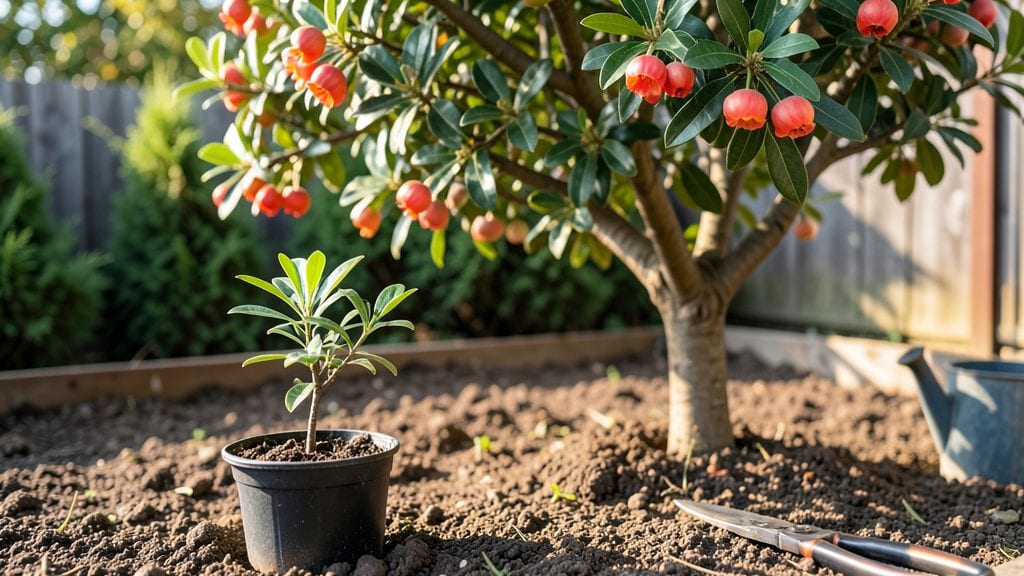
Proper pomegranate tree spacing 🍇 can turn your backyard into a fruit powerhouse—or leave you with skinny branches and a handful of undersized jewels.
Imagine this: You’ve planted your pomegranate trees in spring, watered them faithfully, and waited patiently for harvest season. But when September rolls around, your trees are packed so tightly that airflow stalls, disease creeps in, and your fruit stays small and tart instead of plump and sweet.
Spacing isn’t just about giving roots room to stretch—it’s the secret to bigger fruit, healthier trees, and fewer headaches when pests or fungal infections show up.
Whether you’re working with a small urban garden or a sprawling orchard, getting this right means the difference between a sparse harvest and a tree so loaded with fruit, you’ll need a ladder to pick it.
Below, I’ll walk you through the exact spacing rules for ground planting, container setups, and even dwarf varieties—plus how to tweak your layout for your climate and soil type. Ready to set up your trees for success?
Ideal pomegranate tree spacing by planting method for maximum yield
Getting the pomegranate tree spacing right is one of the most critical decisions for a productive harvest. Too close, and you risk disease from poor airflow and stunted fruit growth.
Too far apart, and you waste valuable garden space. The key lies in balancing tree size, variety type, and your specific planting method—whether in-ground, containers, or dwarf varieties.
Pomegranates thrive when given room to spread their wide-spreading canopies and deep root systems. Standard varieties can reach 20-30 feet tall with a spread of 15-20 feet, while dwarf varieties stay compact at 6-12 feet.
Your climate also plays a role—hotter regions may need slightly more space to prevent heat stress, while cooler climates benefit from closer spacing to share warmth.
Here’s a quick reference for the most common planting scenarios, including tree-to-tree distance, row spacing, and container requirements. Use this as your guide to plan a layout that maximizes both yield and tree health.
🌱
| Planting Method | Tree-to-Tree Distance | Row Spacing | Notes |
|---|---|---|---|
| In-Ground (Standard) | 15-20 ft | 20-25 ft | Full sun, well-draining soil. Prune annually to maintain shape. |
| In-Ground (Dwarf) | 8-10 ft | 10-12 ft | Ideal for small gardens. Harvest 1-2 years earlier than standard. |
| Containers (5+ gal) | 6-8 ft (between pots) | N/A | Use fast-draining mix. Repot every 2-3 years. |
| Hedgerow Planting | 4-6 ft | 6-8 ft (single row) | Prune to encourage dense growth. Great for privacy screens. |
| Orchard Planting | 20-25 ft | 30-40 ft | Maximize sunlight and airflow. Use drip irrigation. |
For in-ground planting, standard pomegranate trees need 15-20 feet between trees to prevent root competition and ensure proper airflow. If you’re planting a hedgerow, you can reduce spacing to 4-6 feet between trees but keep rows 6-8 feet apart to allow for pruning and maintenance.
This method is perfect for small gardens or creating a living privacy barrier.
Dwarf varieties are a game-changer for urban gardeners or those with limited space. With a mature height of just 6-12 feet, they can be spaced 8-10 feet apart while still producing abundant fruit.
These varieties also fruit 1-2 years earlier than standard trees, making them ideal for impatient growers. Just ensure they’re planted in well-draining soil to prevent root rot.
Container growing is another excellent option, especially in apartment settings or areas with harsh winters. Use pots that are at least 5 gallons in size and space them 6-8 feet apart to allow for airflow.
Pomegranates in containers will need regular watering and monthly fertilization during the growing season to compensate for their limited root space.
If you’re planning a large-scale orchard, increase spacing to 20-25 feet between trees and 30-40 feet between rows. This extra space ensures optimal sunlight exposure and reduces the risk of fungal diseases like powdery mildew, which thrives in crowded, humid conditions.
In arid climates, you can reduce row spacing slightly to 25 feet while maintaining 20-foot tree spacing to conserve water.
Pro tip: Always plant pomegranates in full sun locations with at least 6-8 hours of direct sunlight daily. Even with perfect spacing, poor sunlight will lead to smaller fruit and lower yields.
If your garden has partial shade, opt for dwarf varieties or container planting near a south-facing wall to maximize light exposure.
🪴
One common mistake is assuming that more space always means better yields. While overcrowding is detrimental, excessive spacing can lead to uneven fruit ripening and wasted garden real estate.
For example, in USDA Zone 8 or warmer, you can comfortably plant trees 15 feet apart in a grid pattern. In cooler zones (Zone 7 or below), consider planting in small groves of 3-4 trees to share warmth and improve pollination.
Finally, always consider your long-term goals. If you plan to grow pomegranates for decades, account for their mature size. A standard tree planted today could need 30 feet of space in 10 years. Sk
How spacing affects pomegranate tree health and fruit quality
Pomegranate trees thrive when given the right amount of space, but many gardeners underestimate how critical proper spacing is for both tree health and fruit production. A tree that’s too crowded competes for nutrients, while one with too much space may produce smaller, less flavorful fruit.
The science behind airflow and sunlight exposure plays a key role in preventing diseases like powdery mildew and ensuring your pomegranates reach their full sweetness potential.
When pomegranate trees are spaced correctly, they develop stronger branches, better root systems, and larger fruit. Overcrowding leads to stunted growth, while excessive spacing can reduce fruit size and yield.
Understanding these dynamics helps you design a layout that maximizes both harvest quantity and fruit quality. Let’s explore how spacing impacts every stage of your pomegranate tree’s life cycle.
Pomegranate trees spaced closer than 12 feet suffer from reduced airflow, increasing fungal diseases like alternaria and powdery mildew. Poor airflow also traps moisture, leading to root rot and bacterial infections. Even if your trees survive, fruit size shrinks by 30-50% due to competition for sunlight and nutrients.
Sunlight is another critical factor influenced by spacing. Pomegranate trees require full sun exposure (6+ hours daily) to produce sweet, flavorful fruit. When trees are too close, the inner branches become shaded, leading to smaller leaves and fewer blooms.
This sunlight deprivation directly impacts fruit quality—pomegranates grown in partial shade often taste tart and lack the vibrant color of sun-ripened fruit. Proper spacing ensures every branch gets adequate light for optimal photosynthesis.
Disease prevention is perhaps the most compelling reason to prioritize spacing. Pomegranate trees are prone to fungal infections like powdery mildew, which thrives in humid, stagnant air.
When trees are crowded, moisture lingers longer on leaves and branches, creating the perfect conditions for spores to spread. Airflow improvement through proper spacing reduces humidity levels around the foliage, making it harder for pathogens to take hold. A well-spaced orchard can cut disease incidence by up to 40%.
Even fruit size and sweetness are affected by spacing. Trees with ample room produce larger, heavier pomegranates because they aren’t competing for resources. In contrast, overcrowded trees allocate energy to survival rather than fruit development, resulting in smaller, less flavorful harvests.
For example, a pomegranate tree with 15 feet of space may yield fruit weighing 1-2 pounds, while a crowded tree might only produce half-pound pomegranates with thinner arils and less juice.
Don’t overlook the long-term impact on tree longevity. Properly spaced pomegranate trees live longer, producing fruit for decades, whereas crowded trees weaken faster due to stress. If you’re planning a pomegranate orchard, consider spacing trees 12-20 feet apart for standard varieties or 8-12 feet for dwarf types.
This balance ensures healthy growth, disease resistance, and a lifetime of bountiful harvests.