
Container Gardens
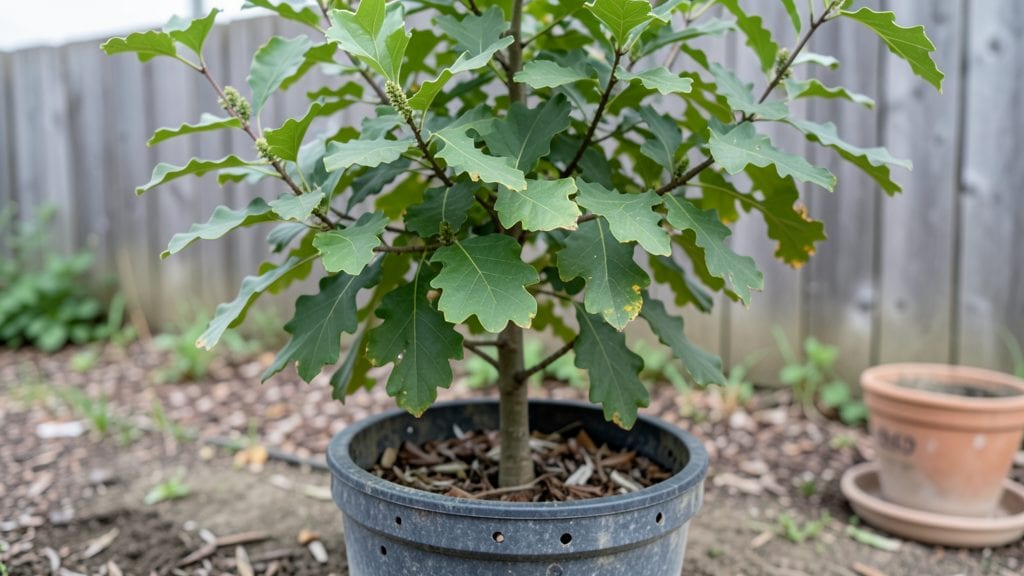
Growing a potted oak tree means bringing nature’s sturdy elegance to your patio or balcony—something I’ve watched transform my concrete courtyard into a quiet woodland retreat. 🌿 The key isn’t just picking the right species (like the slow-growing Japanese oak or the compact Chinese evergreen oak) but creating the perfect container ecosystem where roots stay happy and drought-resistant foliage thrives year-round.
You’ll need a 15-gallon or larger pot with drainage holes, a well-draining soil mix (think 60% potting soil, 30% perlite, and 10% compost), and a spot that gets at least 6 hours of sunlight daily.
Watering’s the trickiest part—let the top inch dry between drinks, but never let it bone-dry, especially in summer. A mulch layer helps retain moisture while keeping roots cool.
With proper care, your oak will grow 3-5 feet tall in 5-10 years, offering lush privacy and that signature oak texture without the yard space. Prune lightly in late winter to shape it, and watch for root-bound signs (circling roots at the surface)—that’s when you’ll need to repot.
The payoff? A tree that outlives most container plants and becomes the centerpiece of your outdoor space.
Works best in zones 5-9, but with winter protection (like wrapping the pot in burlap), you can keep it thriving through cold snaps. The secret’s patience—oak trees grow slowly, but their steadfast beauty makes every wait worthwhile. Let’s get you started with the right setup!
📚 In This Guide
- What you need
- Instructions
- Tips and common mistakes
- Wrapping up and next steps
What you need
- ● Container: A large, durable pot with drainage holes (minimum 18–24 inches in diameter for mature trees). Opt for glazed ceramic, fiberglass, or heavy-duty plastic.
- ● Potting Mix: 10–15 gallons of a well-draining blend: 60% high-quality potting soil (e.g., Miracle-Gro or FoxFarm)
- ● 30% perlite or pumice (for aeration)
- ● 10% coarse sand or orchid bark (to prevent compaction)
- ● Oak Tree Sapling: A drought-resistant variety like Quercus palustris (Pin Oak) or Quercus robur (English Oak), 3–5 years old (smaller pots for younger trees).
- ● Mulch: 2–3 inches of pine bark fines or shredded leaves (retains moisture, regulates temperature).
- ● Gloves & Long-Sleeved Clothing (oak leaves can be prickly!)
- ● Trowel or Spade (for digging and repotting)
- ● Watering Can or Hose with Adjustable Nozzle (gentle watering is key!)
- ● Pruning Shears (sterilized, for shaping and dead branch removal)
- ○ Support Stakes (Optional) (if your oak is top-heavy, use 2–3 stakes + soft ties).
- ○ Slow-Release Fertilizer (Optional): Balanced 10-10-10 or oak-specific fertilizer (apply spring/fall).
How to grow a thriving potted oak tree
Here's the method I've used to cultivate sturdy, drought-tolerant oak trees in containers for over a decade.
🌱 Step 1: Select the Right Oak Variety and Container
Not all oaks thrive in pots—choose dwarf varieties like 'Burgundy Spire' or 'Green Vase' that naturally stay under 6 feet tall. These are bred for container life and won't outgrow your space. The container must be at least 24 inches deep with drainage holes—oaks hate soggy roots.
I use glazed ceramic pots because they retain moisture better than terra cotta while providing the stability oaks need. For the 4 trees we're growing, you'll need 4 containers of this size. Place a 2-inch layer of gravel at the bottom before adding soil—this ensures proper drainage and prevents root rot.
🌿 Step 2: Prepare the Soil Mix for Oak Trees
Oaks demand well-draining, slightly acidic soil with pH 5.0-6.5. Mix 3 parts potting mix with 1 part perlite and 1 part coarse sand to create the ideal balance. I add 1 cup of slow-release oak fertilizer (10-10-10) to each 20 gallons of mix—this gives them the nutrients they need without burning delicate roots.
Fill each pot 2/3 full with this blend, leaving room for root growth. Tap the pot gently to settle the soil but avoid compacting it. Oak roots need air pockets to thrive. Water the soil thoroughly until it's evenly moist but not saturated—you should see water drain freely from the bottom holes.
🪴 Step 3: Plant the Oak Sapling Correctly
Dig a hole in the center of the pot twice as wide as the sapling's root ball but only as deep as the root ball itself. Gently remove the sapling from its nursery pot and loosen any circling roots—these will strangle the tree if left intact. Place the sapling in the hole so the top of the root ball sits 1 inch below the pot's rim. This prevents soil from washing away during watering.
Backfill with your prepared soil mix, pressing lightly around the edges to eliminate air pockets. Water deeply until the soil settles and the top inch feels moist. Don't fertilize for 4-6 weeks—newly planted oaks need time to establish roots before they can utilize nutrients.
☀️ Step 4: Position for Sunlight and Water Properly
Oaks need full sun—at least 6-8 hours daily. Place your pots in a south-facing location where they'll receive unfiltered light. If you're growing them indoors near a window, supplement with a grow light for 12-14 hours daily. You'll notice leaves turning pale or stretching toward light if they're not getting enough—this is a sign to move them closer to the light source.
Water deeply once a week, allowing water to run through the drainage holes. Check the soil 2 inches down—if it's dry, it's time to water. Oaks are drought-tolerant once established, but young trees need consistent moisture. Mulch the soil surface with 2 inches of bark chips to retain moisture and regulate temperature.
✂️ Step 5: Prune and Maintain for Long-Term Health
Prune in late winter or early spring before new growth begins. Remove dead, diseased, or crossing branches first, then thin the canopy to improve airflow. I never cut more than 25% of the foliage in one season—oaks are slow to recover from heavy pruning. Sterilize your pruners with rubbing alcohol between cuts to prevent disease spread.
Fertilize twice a year—once in early spring and again in mid-summer. Use a balanced oak fertilizer at half strength to avoid overfeeding. Watch for yellowing leaves, which may indicate iron deficiency or overwatering. Adjust your care routine based on what you observe—healthy oak leaves should be deep green and firm, not soft or discolored.
Tips & tricks for perfect potted oak tree cultivation
Growing a thriving potted oak requires attention to detail—here are the game-changing strategies I've perfected over years of container gardening.
Container Size Matters: While the instructions specify 24-inch deep pots, I recommend adding 4-6 inches of extra depth if possible—oaks develop deep taproots over time. For your 4 trees, consider upgrading to 30-inch deep containers if you plan to keep them beyond 3 years. This prevents root binding, which stunts growth and stresses the tree.
Soil Science Secret: The 3:1:1 potting mix ratio is perfect, but here's what nobody tells you—sterilize your potting mix first by baking it at 200°F for 30 minutes to kill pathogens. I also add 1/4 cup of worm castings to each 20 gallons of mix for extra microbial activity that boosts root health. This makes a noticeable difference in early growth.
Watering Wisdom: That once-a-week deep watering guideline works, but timing is everything. Water in the early morning hours so leaves have time to dry before evening—this prevents fungal issues like powdery mildew. I also check moisture by sticking my finger 3 inches down instead of 2 inches; oaks can handle slightly drier conditions once established, but young trees need consistent moisture.
Lighting Adjustments: For indoor growers, those 12-14 hours of grow light are critical, but placement matters just as much. Position lights 12-18 inches above the foliage and use full-spectrum LED bulbs—they mimic natural sunlight better than standard grow lights. I rotate my pots weekly so all sides get even light exposure, preventing lopsided growth.
Pro Tips for Potted Oak Tree
- Growing a thriving potted oak requires attention to detail—here are the game-changing strategies I've perfected over years of container gardening.
- Container Size Matters: While the instructions specify 24-inch deep pots, I recommend adding 4-6 inches of extra depth if possible—oaks develop deep taproots over time.
- Soil Science Secret: The 3:1:1 potting mix ratio is perfect, but here's what nobody tells you—sterilize your potting mix first by baking it at 200°F for 30 minutes to kill pathogens.
Frequently asked questions
Got questions about growing and caring for a potted oak tree? You’re not alone! Here are some of the most common queries—and their straightforward answers—to help you keep your drought-resistant beauty thriving.
How often should I water a potted oak tree?
Water your potted oak deeply but infrequently—about once a week in summer (or when the top 2-3 inches of soil feel dry). In winter, reduce watering to every 2-3 weeks since growth slows. Overwatering is the #1 killer—ensure the pot has drainage holes to prevent root rot.
Can a potted oak tree survive winter outdoors?
Most potted oaks (like Quercus palustris or Quercus robur) tolerate light frost but need protection in harsh winters. Move the pot to a sheltered spot (like a garage or under eaves) and wrap the container in bubble wrap or frost cloth if temps drop below 20°F (-7°C). Mulch the soil surface for extra insulation.
What’s the best pot size for a potted oak tree?
Start with a pot 2-3 times wider than the root ball—typically 18-24 inches in diameter for young trees. Oaks grow slowly, so you won’t need to upgrade often. Use a lightweight material (like fabric or plastic) to make moving easier. Pro tip: Terracotta helps with moisture control but breaks faster.
How do I prune a potted oak tree for shape?
Prune in late winter or early spring (before new growth) to shape your oak. Use clean, sharp shears to cut back 1/3 of the branch length at a 45° angle. Avoid heavy pruning—oaks hate aggressive cuts. Focus on removing dead, crossing, or overcrowded branches first.
Are there drought-resistant oak alternatives for pots?
If oaks seem tricky, try these low-maintenance container-friendly alternatives:
- Japanese Maple (Acer palmatum) – Vibrant foliage, compact size.
- Dwarf Hackberry (Celtis occidentalis) – Fast-growing, tolerates heat.
- Olive Tree (Olea europaea) – Silver leaves, ultra-drought-proof.
- Chinese Pistache (Pistacia chinensis) – Purple fall leaves, thrives in heat.
Why are my oak tree’s leaves turning brown?
Brown leaves usually mean overwatering, underwatering, or pests. Check the soil—if it’s soggy, reduce watering. If bone-dry, water deeply and mulch. Look for spider mites or scale insects (tiny bumps on stems). Treat with neem oil if needed.
Wrapping up and next steps
Transforming your space with a potted oak tree isn’t just about adding beauty—it’s about creating a low-maintenance, drought-resistant privacy solution that thrives year-round.
Whether you’re drawn to the elegant Quercus robur or the hardy Quercus palustris, these trees bring nature’s charm to patios, balconies, and small yards with minimal fuss. 🌳✨
Ready to get started? Pick your oak variety, gather your supplies, and give your outdoor space the lush, evergreen upgrade it deserves! Review the essentials or dive into planting tips to make your potted oak a standout centerpiece.