
Pruning
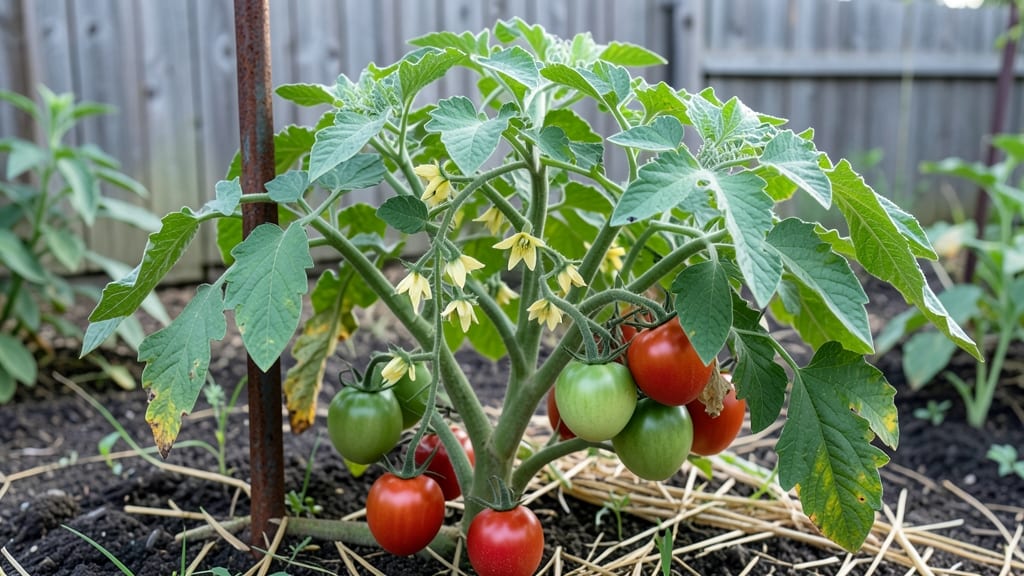
Growing a tomato tree giant variety means your kitchen garden could look like a lush vineyard instead of just a few bushes. 🌱 I’ve trained my ‘Sungold’ plants to climb 10-foot stakes, and the difference in yield—and drama—is night and day.
These indeterminate varieties don’t stop growing, so without control, you’ll end up with a tangled mess instead of a structured, high-yielding plant.
The key is pruning early and often, paired with a sturdy trellis or cage that can handle 50+ pounds of fruit. Start with a 5-foot stake or a wooden A-frame trellis—whatever keeps the plant vertical while leaving room for side branches.
Prune suckers (those little shoots between the stem and branches) when they’re no bigger than a pencil, and never let the plant get top-heavy with unchecked growth.
By mid-summer, you’ll have a 6-foot-tall tomato tree producing 50+ pounds of fruit per plant—if you prune correctly. The secret is balance: remove one-third of the oldest leaves when flowers appear to redirect energy to fruit, and always prune in the morning to let wounds heal by nightfall.
The result? A plant that stays upright, resists disease, and keeps producing until frost.
This method works for any indeterminate variety—‘Cherokee Purple,’ ‘Brandywine,’ or even ‘Big Beef.’ The only downside? You’ll need extra support for windy areas, and a heavy-duty pruner (or sharp scissors) to keep up.
But once you see that first 10-pound tomato hanging from your trellis, you’ll never go back to bush plants again.
📚 In This Guide
- What you need
- Instructions
- Tips and common mistakes
- Wrapping up and next steps
What you need
- ● Pruning shears – Sharp, bypass-style (not anvil) for clean cuts. Recommended: Felco F2 or similar (sterilize with rubbing alcohol between cuts).
- ● Gloves – Heavy-duty, gardening-grade to protect from thorns and sap (nitrile-coated for grip).
- ● Disinfectant – 70% isopropyl alcohol or a copper-based fungicide (e.g., Bonide Copper Fungicide) to prevent disease spread.
- ● Support system – Tall trellis (8–10 ft), cage (6–8 ft), or sturdy stakes (2x4s or bamboo poles).
- ● Twine or plant ties – Jute or soft cloth strips (avoid plastic—it can damage stems).
- ● Potting mix – Well-draining, nutrient-rich soil (e.g., Miracle-Gro Potting Mix + perlite for aeration). For containers: 10–15 gallons minimum.
- ● Fertilizer – Balanced, slow-release (e.g., 10-10-10) or tomato-specific (e.g., Espoma Tomato-Tone).
- ● Loppers – For thicker stems (if your tomato tree grows over 6 ft).
- ● Hand pruners – Compact, ergonomic for precision trimming (e.g., Fiskars Ergo).
- ○ Growth regulator – Optional: Seaweed extract (e.g., Maxicrop) to control excessive growth.
- ● Mulch – Straw or wood chips to retain moisture and suppress weeds.
- ● Spray bottle – For light misting after pruning to reduce stress.
- ● Sunlight – Full sun (6–8+ hours daily). Indoor growers: Use LED grow lights (12–16 hrs/day).
- ● Watering schedule – Deep watering 1–2x weekly (adjust for heat/drought). Drip irrigation recommended.
- ● Variety selection – Choose indeterminate varieties like ‘Big Beef,’ ‘Sungold,’ or ‘Cherokee Purple’ for giant growth.
- ● Patience – Tall tomato trees take 60–90 days to establish before aggressive pruning.
How to prune a tomato tree giant for maximum yield
Transform your sprawling tomato plant into a productive vertical powerhouse with these precision pruning techniques.
✂️ Step 1: Identify and Remove Suckers Early
Start by locating the suckers—those small shoots growing in the V-shaped junction between the main stem and a branch. These energy vampires divert nutrients from fruit production. Use sharp pruning shears to snip them off cleanly at the base. I do this weekly during the growing season because suckers appear fast, especially on vigorous varieties like 'Tomato Tree Giant'.
Here's the thing—don't remove all suckers indiscriminately. Leave the ones growing below the first flower cluster, as they can develop into productive branches. You'll know you're doing it right when your plant focuses energy upward instead of outward, producing thicker stems and more flower clusters.
✂️ Step 2: Prune Lower Leaves for Airflow and Disease Prevention
Remove all leaves from the bottom 12-18 inches of the plant stem. This creates an open framework that improves airflow and prevents soil-borne diseases from splashing onto foliage. I use my fingers to gently twist leaves off rather than cutting—they come away cleanly without leaving stubs that invite infection.
Don't go overboard here. You're aiming for a bare lower trunk but keep the upper canopy dense enough to provide shade for developing fruit. Watch for yellowing leaves—these are your signal to stop pruning below that point. The goal is sunlight penetration without exposing fruit directly to harsh afternoon rays.
✂️ Step 3: Maintain the Main Stem for Structural Support
Allow only 1-2 main stems to grow vertically, removing all competing lateral branches that would create a weak, sprawling structure. Use your pruners to make clean cuts just above a leaf node where new growth can emerge. I tie the main stems to sturdy stakes or a trellis immediately after pruning to prevent them from snapping under fruit weight.
This vertical growth habit is what makes 'Tomato Tree Giant' perform so well. You'll see the plant develop a single strong trunk with heavy clusters of fruit growing along its length. If you notice any branches growing at extreme angles, prune them back—they'll never bear well and just create weak points in your structure.
✂️ Step 4: Thin Fruit Clusters for Larger Tomatoes
When clusters form, leave only 3-5 of the largest, healthiest tomatoes per truss. Remove the smaller ones at the base with your fingers or pruners. This might seem counterintuitive, but it forces the plant to invest all its energy into developing fewer, larger fruit. I do this every 7-10 days throughout the fruiting season to maintain optimal cluster size.
Watch for clusters where tomatoes are growing too close together—they'll compete and produce small, underdeveloped fruit. You'll know you've got it right when your remaining tomatoes are at least 1 inch apart within each cluster and showing good color development. This technique also dramatically reduces cracking in large varieties.
⏰ Step 5: Late-Season Pruning for Extended Harvest
As fall approaches, focus on removing all new suckers and pruning back overly vigorous growth. This redirects the plant's energy toward ripening existing fruit rather than producing new leaves. I make these cuts in the morning when the plant is turgid and can quickly seal the wounds, reducing disease risk.
Don't stop pruning entirely—just shift your focus. Continue removing leaves that shade developing fruit, especially on the lower half of the plant. You'll see your remaining tomatoes color up faster and develop better flavor when they receive direct sunlight. This final pruning push can extend your harvest by 2-3 weeks in favorable climates.
Tips & tricks for pruning tomato tree giant varieties
Mastering the art of pruning your Tomato Tree Giant transforms a sprawling mess into a high-yielding vertical garden—here's what I've learned from years of trial and error.
Timing is Everything: The weekly sucker removal in Step 1 is non-negotiable during peak growing months (June-August in most climates). I've found that morning pruning prevents stress on the plant—cutting in the heat can invite fungal infections through open wounds. For Step 5's late-season pruning, focus on removing only new growth after the first frost date in your area to protect existing fruit from cold damage.
Tool Selection Matters: Sharp pruning shears are essential—they make clean cuts that heal faster than jagged tears. I keep a pair dedicated solely to tomato pruning and sterilize them with rubbing alcohol between plants to prevent disease spread. For lower leaves in Step 2, your fingers work perfectly—just twist gently to avoid leaving stubs that trap moisture and invite rot.
Structural Support Secrets: When maintaining main stems in Step 3, use soft plant ties rather than wire or zip ties that can cut into the stem as it thickens. I install my trellis at planting time and gradually adjust the height as the plant grows, never letting it exceed the trellis by more than 12 inches. This prevents the weight of heavy fruit clusters from causing the plant to snap.
Visual Cues for Perfect Clusters: In Step 4, aim for that "golden triangle" when thinning clusters—each tomato should form an equilateral triangle with its neighbors when viewed from above. This spacing (at least 1 inch apart) ensures optimal air circulation and sun exposure. I use a small ruler to verify spacing, especially with the large fruit this variety produces.
Pro Tips for Tomato Tree Giant
- Mastering the art of pruning your Tomato Tree Giant transforms a sprawling mess into a high-yielding vertical garden—here's what I've learned from years of trial and error.
- Timing is Everything: The weekly sucker removal in Step 1 is non-negotiable during peak growing months (June-August in most climates).
- Tool Selection Matters: Sharp pruning shears are essential—they make clean cuts that heal faster than jagged tears.
Frequently asked questions
Got questions about growing and pruning your Tomato Tree Giant? You’re not alone! Here are answers to the most common queries—from pruning tips to troubleshooting—to help you master this towering tomato variety.
How often should I prune a Tomato Tree Giant?
Prune your Tomato Tree Giant weekly during the growing season (spring to early summer) to control height and encourage fruit production. Focus on removing suckers (side shoots) and lower leaves to improve airflow. Stop pruning 4-6 weeks before harvest to let energy go into fruit ripening.
When is the best time of day to prune?
Prune in the morning when the plant is dry and temperatures are mild. Avoid pruning in extreme heat or late afternoon to reduce stress on the plant. If you must prune later, water thoroughly afterward to help recovery. Never prune wet foliage—it can spread disease!
What if my Tomato Tree Giant isn’t growing tall?
If your plant is stunted, check for these issues:
- Light: Ensure it gets 6+ hours of direct sunlight daily.
- Water: Keep soil consistently moist but not soggy.
- Nutrients: Fertilize with a balanced tomato feed (high in phosphorus).
- Support: Use a sturdy stake or trellis to encourage vertical growth.
Can I prune too aggressively?
Yes! Over-pruning can stress the plant, reduce yields, and even kill it. Never remove more than 1/3 of the foliage at once. Focus on selective pruning: trim suckers, dead leaves, and crowded branches. Leave enough leaves to photosynthesize (aim for 12–18 inches of leaf canopy above the fruit clusters).
Are there alternatives to pruning for smaller spaces?
If pruning feels overwhelming, try these space-saving methods:
- Dwarf varieties: Choose compact tomatoes like ‘Tiny Tim’ or ‘Patio Princess’ if height is a concern.
- Container growing: Use a large pot (15+ gallons) with a trellis to train vines upward.
- Minimal pruning: Let the plant grow naturally but remove only diseased or crossing branches.
Wrapping up and next steps
Growing a tomato tree giant is an exciting journey that rewards patience and care with a bountiful harvest! By mastering the art of pruning—removing suckers, shaping the plant, and maintaining airflow—you’ll ensure your towering tomato vine thrives.
Remember, consistency is key: a little effort now leads to big rewards later.
Ready to take your gardening skills to the next level? Start small—pick one plant to practice your pruning techniques, and soon, you’ll be reaping homegrown tomatoes the size of your fist! 🌱✨ Grab your shears and get pruning!