
Leaf Blower
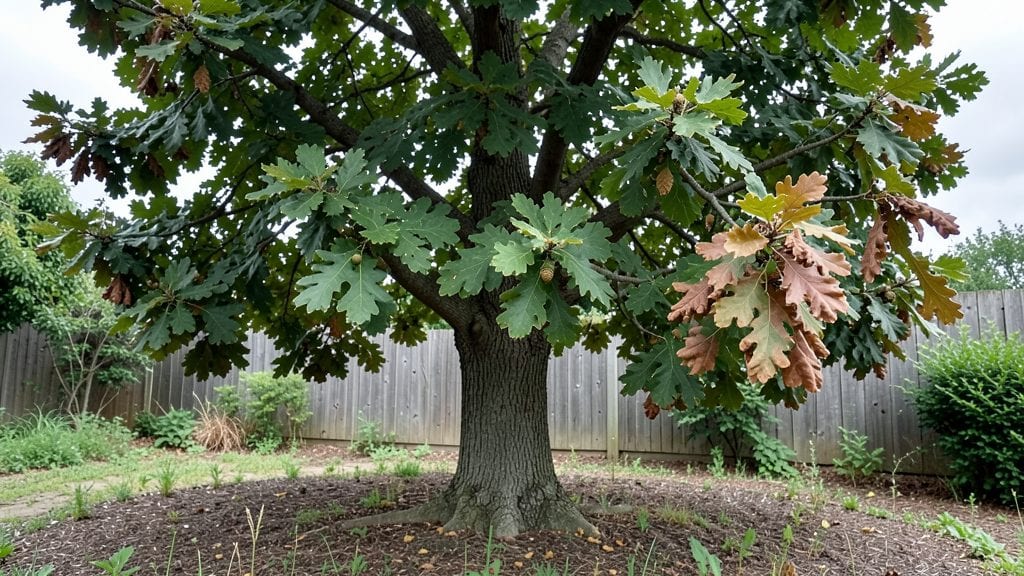
Fungal leaf blight turns your tree’s leaves into curled, crinkled messes—like someone took a blowtorch to your landscape. 🌿 I’ve seen it ruin shade trees, fruit trees, and even prized ornamentals, and the good news is you can stop it before it spreads.
The key is catching it early, identifying the exact cause (fungus, mites, or environmental stress), and treating it right the first time.
Most leaf curl starts with tiny fungal spores hiding in last year’s fallen leaves or splashing up from wet soil. Warm, humid weather gives them the perfect party to multiply, while pests like spider mites or aphids weaken leaves, making them prime targets.
I’ve treated everything from oak leaf blister to peach leaf curl using the same basic steps—prune the worst leaves, clean up debris, and apply the right spray at the right time.
You’ll see results within a few weeks if you act fast: leaves unfurl, new growth stays healthy, and the tree stops looking like it’s suffering from a bad perm. The best part?
Organic options like neem oil or copper fungicide work just as well as harsh chemicals, and they’re safer for kids and pets. Just don’t wait until the tree is half-bare—early intervention is everything.
For stubborn cases or large trees, calling an arborist saves time and frustration. But for most homeowners, this is a DIY fix that keeps your trees thriving year after year. Let’s get those leaves looking normal again.
Understanding Leaf Curl Triggers
When your tree’s leaves start curling, twisting, or developing unsightly bumps, it’s often a sign that something’s amiss beneath the surface. Leaf curl isn’t just a cosmetic issue—it’s usually a response to environmental stress, pests, or fungal infections.
Below, we break down the most common culprits behind this frustrating problem, so you can diagnose the issue accurately and take targeted action.
Extreme heat or prolonged drought forces trees to conserve water by curling their leaves. This is a survival mechanism, but it can leave foliage looking crispy or brittle. When soil moisture drops too low, roots struggle to supply enough water, causing leaves to pucker and thicken.
How to spot it:
- Leaves curl along the edges first, often with a dry, papery texture.
- Yellowing or browning may appear on the undersides.
- Soil feels bone-dry even a few inches below the surface.
What to do: 💡 Water deeply but infrequently—aim for 1–2 inches of water per week (more in extreme heat). Use drip irrigation or soaker hoses to deliver moisture directly to roots. Mulch around the base to retain soil moisture and regulate temperature. If drought persists, consider temporary shade cloth to reduce stress on the tree.
Fungal pathogens like Taphrina (common in peach and cherry trees) or Marssonina (affecting maples and oaks) thrive in moist conditions and cause leaf curl by disrupting cell growth. These fungi often appear as thickened, puckered, or reddish-purple curled leaves, sometimes with a powdery or velvety texture.
How to spot it:
- Leaves curl upward or downward in a symmetrical, wavy pattern.
- Undersides may develop fuzzy or scaly growths.
- Infections often start on young, new growth in spring.
- Severely infected leaves may drop prematurely.
What to do: 🔥 Prune and dispose of infected leaves immediately—do not compost them. Apply a copper-based fungicide (like copper sulfate or Bordeaux mixture) before bud break in early spring. Improve airflow around the tree by thinning dense branches. Avoid overhead watering, as wet foliage encourages fungal spores.
Insects like spider mites, aphids, or scale insects pierce leaves to feed on sap, triggering curling as the tree reacts to their saliva and damage. Heavy infestations can stunt growth and weaken the tree, making it more susceptible to disease.
How to spot it:
- Leaves curl downward or inward, often with sticky residue (honeydew).
- Visible tiny webs (spider mites), white fluff (aphids), or shell-like bumps (scale).
- New growth may appear stunted or distorted.
What to do: 🛡️ Target pests with a strong jet of water to dislodge them, then apply neem oil or insecticidal soap for organic control. For severe cases, use horticultural oil in early spring before buds open. Introduce beneficial insects like ladybugs or lacewings to naturally reduce populations.
When trees lack essential nutrients—especially nitrogen, magnesium, or potassium—leaves may curl as a sign of distress. Yellowing between veins (chlorosis) often accompanies nitrogen deficiency, while magnesium deficiency (common in acidic soils) causes curling and interveinal browning.
How to spot it:
- Leaves curl with yellow or brown patches, often starting on older foliage.
- Slow growth or small, pale new leaves.
- Soil tests may reveal low pH or imbalanced nutrients.
What to do: 🌱 Test your soil (kits are affordable and available at garden centers). Amend with compost or organic matter to improve structure. Apply a balanced fertilizer (e.g., 10-10-10) in early spring, or use Epsom salt (magnesium sulfate) for deficiencies. For acidic soils, add lime to raise pH gradually.
Physical trauma from strong winds, hail, or even heavy rain can cause leaves to curl or tear. While not a disease, this damage weakens the tree and opens it up to secondary infections.
How to spot it:
- Leaves show irregular tears, dents, or curling along edges.
- Damage is localized to exposed branches.
- No signs of pests, fungi, or discoloration.
What to do: 🌿 Prune broken branches to reduce stress, and apply a wound dressing (like pruning sealant) to large cuts. For young trees, consider staking or windbreaks during storm season. Mulch heavily to protect roots from temperature fluctuations.
How to Fix Leaf Distortions
Restoring your tree’s health starts with pinpointing the root cause of leaf curl—whether it’s fungal infections, pests, or environmental stress. Below are practical, step-by-step solutions tailored to the most common triggers, along with prevention tips to keep your trees thriving.
Fungal leaf curl often appears as puckered, discolored leaves with dark spots or powdery mildew. Here’s how to tackle it:
🔥 Remove Infected Leaves & Branches
- 🍳 Prune affected foliage with clean, sterilized shears (wipe with rubbing alcohol between cuts).
- 👨🍳 Dispose of debris in a sealed trash bag—do not compost it to prevent spores from spreading.
- ⏰ Best time to prune: Early morning or late afternoon to reduce stress on the tree.
🌡️ Apply Fungicides (When Needed)
- 💡 Early intervention is key! Use a copper-based fungicide or neem oil spray (1 tsp neem oil + 1 quart water + a drop of dish soap as a surfactant).
- ✨ Spray thoroughly on both sides of leaves and the trunk, especially after rain or watering.
- 🎯 Repeat every 7–14 days until new growth appears healthy.
🌧️ Improve Air Circulation & Drainage
- 🌿 Thin out dense branches to allow sunlight and airflow.
- 💧 Water at the base (avoid overhead sprinkling) and ensure the soil drains well—fungi love soggy conditions.
Pests like aphids or spider mites can cause leaves to curl as they feed on sap. Here’s how to evict them:
🔪 Blast Off Pests with Water
- 🍳 Use a strong hose spray (40–60 PSI) to dislodge aphids and mites from leaves.
- 👨🍳 Repeat every 3–5 days until pests are gone.
🌿 Introduce Beneficial Insects
- 💡 Ladybugs, lacewings, or parasitic wasps eat aphids naturally. Buy them from garden centers or attract them with dill, fennel, or marigolds.
- ✨ Release them in the evening when they’re most active.
🧴 Apply Horticultural Oil or Insecticidal Soap
- 🌡️ Mix 1 tbsp mild castile soap or horticultural oil per gallon of water, then spray directly on pests (avoid sunny days to prevent leaf burn).
- 🎯 Reapply after rain or every 5–7 days.
If leaf curl stems from poor growing conditions, focus on hydration, soil health, and shade.
💧 Deep Watering & Mulching
- 🍳 Water deeply 1–2 times per week (check soil moisture—top inch should be dry before watering).
- 👨🍳 Apply 2–3 inches of mulch (wood chips or straw) around the base to retain moisture and regulate temperature.
🌱 Fertilize for Balance
- 💡 Test soil pH (ideal: 6.0–7.0 for most trees). Amend with compost or a slow-release fertilizer (10-10-10 ratio).
- ✨ Avoid over-fertilizing—too much nitrogen can stress trees.
🌳 Provide Shade & Windbreaks
- 🎯 If in a hot, dry climate, plant fast-growing shrubs or install a windbreak to reduce heat stress.
- 🌿 For young trees, use shade cloth during extreme heatwaves.
Once your tree recovers, proactive care prevents future curl:
| Prevention Step | How to Do It |
|---|---|
| 🌿 Prune regularly | Remove dead/diseased branches twice a year (late winter & early summer). |
| 💧 Water wisely | Drip irrigation > sprinklers to keep leaves dry. |
| 🌱 Soil health | Add compost annually and test soil every 2–3 years. |
| 🛡️ Monitor pests | Weekly inspections—check undersides of leaves for eggs or webbing. |
| 🌳 Choose resistant varieties | Opt for disease-resistant tree species (e.g., oak, maple, or ginkgo). |
💡 Pro Tip: If leaf curl persists after 4–6 weeks of treatment, consult a certified arborist—it could signal a deeper issue like bacterial infection or root rot.
With the right approach, your tree can bounce back stronger than ever—and those curled leaves will soon be a thing of the past! 🌳💚
Frequently asked questions
Why do some tree leaves curl upward while others curl downward?
Upward curling often signals fungal infections like peach leaf curl or oak blister, where pathogens disrupt cell growth. Downward curling usually means pests (aphids, mites) or nutrient deficiencies. Check leaf undersides for webs, sticky residue, or fungal spots to diagnose.
Can I save my tree if most leaves are already curled?
Yes, but act fast! Prune 90% of infected leaves immediately, then apply copper fungicide or neem oil every 10 days. For severe cases, consult an arborist—some fungal infections (like anthracnose) may require systemic treatments. Don’t wait until new growth appears!
Will rain make leaf curl worse?
Yes—wet leaves create perfect conditions for fungal spores to spread. Always water at the base of the tree (not overhead) and prune infected foliage before rain. If a storm is forecast, apply a protective fungicide spray 24 hours ahead.
Are there tree varieties that naturally resist leaf curl?
Some species are tougher than others! Oak, maple, and ginkgo trees show better resistance to fungal curl. For fruit trees, choose disease-resistant cultivars like 'Lodi' peach or 'Liberty' apple. Even resistant varieties need proper care—don’t skip pruning or soil testing!
How long until I see improvement after treatment?
With proper care, you’ll notice new leaves unfurling within 2–4 weeks. Fungal infections may take longer (up to 6–8 weeks) to fully resolve. Consistency is key—skip treatments, and the problem returns. Track progress with weekly photos!