
Tools
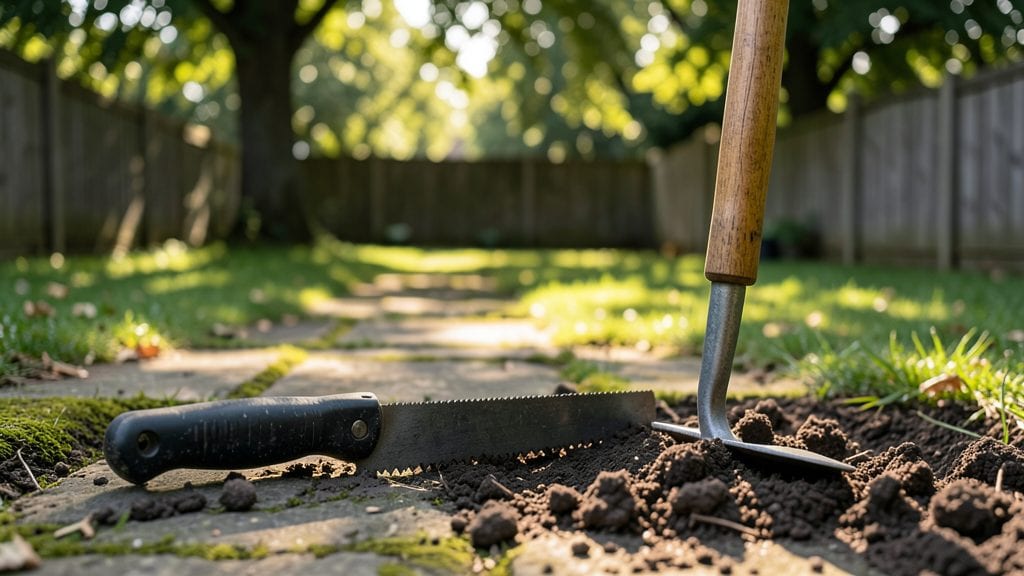
The right tree root removal tools can turn even the most stubborn roots into a manageable task—trust me, I’ve learned the hard way. 🌱 A root saw cuts through thick roots like butter, while a digging bar gives you leverage for those buried deep.
The wrong tool leaves you frustrated, but the right one turns a tough job into a manageable one.
For small roots near shrubs or young trees, a sturdy pruning saw or root pruner works wonders. Larger roots demand heavy-duty tools like a root auger or even a small excavator for extreme cases.
Safety is key—always wear gloves and eye protection, and mark utility lines before digging. I learned that the hard way after nearly hitting a buried pipe while clearing roots near my patio.
You’ll walk away with clean cuts that heal faster, less damage to surrounding plants, and a garden that stays functional. The difference between a hacked-up mess and a precise job comes down to the tools you use. Let’s dive into the best options for your next root-removal project.
Whether you’re dealing with a single stubborn root or a full-scale excavation, the right tool for the job saves time and stress. From manual diggers to mechanical augers, we’ll cover what works best for your situation—so you can tackle roots without turning your yard into a battleground.
Root Causes Of Intrusive Growth
When tree roots become a problem—poking through driveways, clogging pipes, or destabilizing foundations—it’s rarely an accident. These underground invaders follow predictable patterns driven by biology, environment, and human activity.
Understanding why roots spread aggressively (and where) helps you choose the right removal tools and strategies to tackle them effectively. Let’s dig into the science behind the chaos.
Not all trees are root bullies, but some species are genetically wired to spread wide and deep. Fast-growing trees, in particular, prioritize root expansion to stabilize their canopy and compete for resources. Here’s how biology plays a role:
- Shallow vs. deep rooters:
- Shallow-rooted trees (e.g., willows, poplars, silver maples) send out lateral roots horizontally, seeking moisture near the surface. These are the pipe-clogging and foundation-cracking culprits.
- Deep-rooted trees (e.g., oaks, pines, hickories) anchor vertically but can still send aggressive lateral roots if space or nutrients are limited.
- Root pressure: Trees generate osmotic pressure to absorb water, which can force roots through cracks in concrete or asphalt. This is why roots seem to "explode" through surfaces—it’s not brute force, but hydraulic power.
- Succession strategy: Some trees (like Bradford pears or Russian olives) shed weak wood and rely on rapid root colonization to dominate an area. Their roots grow 3–4 times faster than mature trees, making them high-risk for property damage.
Actionable tip: If you’re planting near structures, research the tree’s root spread potential (look for "root zone" data in nursery guides). Avoid shallow-rooted species within 15–20 feet of foundations or sidewalks.
Roots don’t just grow—they seek out ideal conditions. When soil and water dynamics shift, trees respond with hyperactive root growth to compensate. Here’s how:
| Factor | How It Triggers Root Spread | Example Scenario |
|---|---|---|
| Excess moisture | Waterlogged soil forces roots to spread outward to find oxygen. This creates dense, shallow networks that heave pavement. | Poor drainage near a weeping willow planted in a low-lying yard. |
| Compacted soil | Heavy foot traffic or construction restricts downward growth, so roots burst upward or sideways to escape pressure. | Sidewalks cracked by London planetree roots after years of mowing. |
| Nutrient-rich pockets | Roots hijack concentrated nutrients (like fertilizer runoff or buried organic matter), creating hotspots of aggressive growth. | Roots growing toward a compost heap or septic drain field. |
Pro tip: 🌡️ Soil aeration (using a core aerator) can redirect root growth downward, reducing surface damage. For waterlogged areas, French drains or root barriers (installed before planting) are your best defense.
Most root damage isn’t nature’s fault—it’s human-made. Poor landscaping choices, construction oversights, and even "helpful" gardening can turn a peaceful tree into a structural menace. Here’s how:
- Improper planting depth: Burying a tree too shallow (or too deep) forces roots to sprout erratically to stabilize. The root flare (where the trunk meets the roots) should be visible above ground—if it’s buried, roots will grow upward to escape.
- Lack of root barriers: Without physical barriers (like HDPE plastic sheets or concrete walls), roots will follow the path of least resistance—often straight toward your foundation, driveway, or plumbing.
- Overwatering or irrigation leaks: Constant moisture near structures encourages roots to migrate toward the wet zone. Even drip irrigation near sidewalks can trigger root heaving.
- Construction vibrations: Heavy machinery or soil compaction from building projects can disrupt root systems, causing them to regrow aggressively in unpredictable directions.
Key insight: 🔥 Prevention is cheaper than removal. If you’re installing a tree near a structure, use root barriers (buried 2–3 feet deep) and avoid planting within 10 feet of foundations. For existing problems, soil decompaction (with a manual root rake) can sometimes redirect growth.
Next up: How to identify which tools are best for your root problem—whether you need precision cutters, hydraulic saws, or chemical inhibitors.
Fixing Root Issues Safely
Removing tree roots without causing damage to your property, plumbing, or the tree itself requires the right tools and techniques. Whether you're dealing with invasive roots, clogged pipes, or structural damage, these solutions will help you tackle the problem effectively while keeping your landscape—and your wallet—safe.
Cause: Aggressive root growth near structures, sewer lines, or sidewalks.
Solution:
- 🔍 Identify the Problem Areas
- Look for cracks in walls, uneven flooring, or slow drains—signs roots may be at fault.
- Use a root detection camera (rent or buy) to locate underground roots before digging.
- 🌿 Choose the Right Removal Tool
- Manual Digging: For small roots, use a root saw or pruning shears (for surface-level roots).
- Mechanical Excavation: For deeper roots, a mini excavator or root cutter (like the Bandit Root Hog) is ideal.
- Chemical Treatment (Last Resort): Apply root-killing herbicides (e.g., glyphosate) sparingly—only if removal isn’t possible.
- 🚧 Protect Your Property
- Mark utility lines with paint or flags before digging.
- Use root barriers (metal or plastic) to prevent future growth near structures.
Prevention Tip: 💡 Plant trees 15+ feet from foundations and install root barriers during landscaping.
Cause: Diseased, dead, or overly dense roots strangling the tree’s health.
Solution:
- 🌿 Assess the Tree’s Health
- Check for mushrooms at the base (sign of rot) or cavities in the trunk.
- If the tree is already dying, removal may be necessary—but if it’s salvageable, prune aggressive roots with a sharp root saw.
- 🔪 Safe Root Pruning Techniques
- For Small Roots: Use hand pruners or a root saw to trim excess growth.
- For Large Roots: A chain saw with a root-cutting blade (like the Stihl SR 400) works best.
- Avoid Over-Trimming: Never remove more than 10-15% of the root system at once—this can kill the tree.
- 🌱 Post-Removal Care
- Mulch the base to retain moisture.
- Water deeply after pruning to help recovery.
Prevention Tip: ✨ Aerate compacted soil annually to encourage healthy root spread.
Cause: Roots lifting pavement or cracking concrete over time.
Solution:
- 🛠️ Lift and Trim (Not Just Cut!)
- Use a jackhammer or plate compactor to break up concrete, then excavate carefully with a shovel or root cutter.
- Never just cut roots—this can cause the tree to send out more aggressive growth.
- 🔄 Replace Pavement Properly
- After removing roots, fill gaps with gravel (roots hate compacted stone).
- Use root-resistant pavers (like plastic or metal grids) under new concrete.
- 🌿 Encourage Healthy Root Growth
- Top-dress with compost to strengthen the tree’s root system.
- Avoid over-watering, which can lead to weak, spreading roots.
Prevention Tip: 🌡️ Plant fast-growing trees (like willows) away from hardscapes—their roots spread quickly.
Cause: Tree roots seeking water in pipes, causing backups.
Solution:
- 🔍 Locate the Blockage
- Use a sewer camera to confirm root intrusion before digging.
- If roots are deep, hydro-jetting (high-pressure water) may work first.
- 🔪 Mechanical Root Removal
- For Small Pipes: A drain snake with a cutter (like the Ridgid Plumber’s Snake) can snag and remove roots.
- For Large Lines: A sewer rooter machine (rent from hardware stores) grinds roots into mulch.
- 🛡️ Prevent Future Intrusions
- Install copper sulfate crystals in drains (roots avoid copper).
- Use PVC pipes with root barriers if replumbing.
Prevention Tip: 🎯 Plant trees 50+ feet from sewer lines—distance is the best defense!
Final Pro Tip: 🔥 When in doubt, call a pro! Large or dangerous roots should be handled by arborists or plumbers with specialized tools. Safety first—your property (and tree) will thank you!
Frequently asked questions
What’s the best tool for cutting thick tree roots near my driveway?
A root saw or chain saw with a root-cutting blade (like the Stihl SR 400) works best for thick roots. For roots over 4 inches, a hydraulic root cutter (like the Bandit Root Hog) provides the most control without damaging surrounding pavement. Always wear safety goggles and mark utility lines first!
Can I remove tree roots myself, or should I hire a professional?
Small roots near shrubs or young trees? Go ahead with manual tools like a digging bar or pruning shears. But for roots near foundations, sewer lines, or large trees, call a pro. Roots can regrow aggressively if not cut properly, and you might accidentally damage pipes or electrical lines.
How do I prevent roots from growing back after removal?
Install a root barrier (HDPE plastic or metal) 2–3 feet deep around the tree’s root zone. For existing issues, soil aeration (using a core aerator) encourages downward growth. Avoid overwatering near hardscapes—roots seek moisture and will follow water sources.
What’s the difference between a root saw and a regular pruning saw?
A root saw has hardened teeth designed to cut through dense wood and fibrous roots, while a regular pruning saw is for softer branches. Root saws also have longer handles for leverage. For roots under 2 inches, a heavy-duty pruning saw may suffice, but thicker roots need the extra power.
Are there chemical alternatives to physically removing roots?
Yes, but use them as a last resort. Glyphosate-based herbicides (like Roundup) can kill roots when applied directly to cut stumps. For pipes, copper sulfate crystals deter root growth naturally. Chemical treatments may harm nearby plants, so apply carefully and follow label instructions.