
Trees
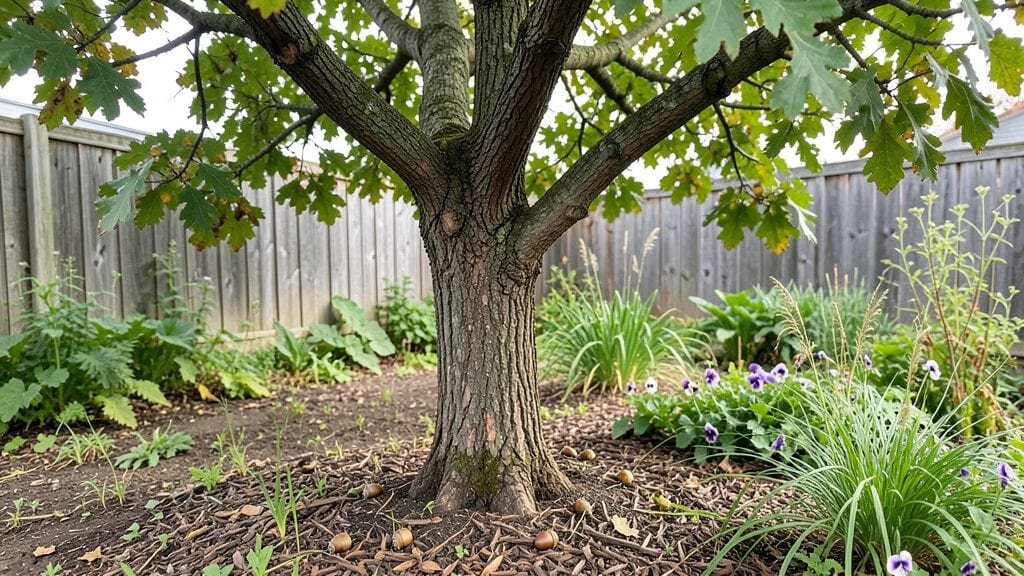
Creating a lush garden under oak trees transforms that tricky shade into your most serene outdoor space. 🌿 I’ve turned my own dappled-light zone into a thriving understory where shade-loving plants flourish while still feeling connected to the sky above.
The key isn’t fighting the oak—it’s working with its natural rhythm, from the way acorns feed the soil to how mulch keeps roots cool.
You’ll need shade-tolerant plants like ferns, hostas, and wild ginger that drink in the filtered light, plus a 3-inch layer of mulch to block weeds and retain moisture. Oak leaves break down into rich, acidic humus—perfect for blueberries, azaleas, and rhododendrons if you amend the soil.
Just watch for that first acorn onslaught in fall, which can smother smaller plants if you don’t clear them regularly.
The payoff? A garden that stays lush even in summer’s heat, with textures that shift from spring’s delicate foliage to fall’s fiery maple leaves. The dappled light creates that magical, ever-changing play of shadow and sun—ideal for cozy seating, a fire pit, or a quiet reading nook.
You’ll end up with privacy that’s alive, not just a static fence.
This works for any oak—white, red, or pin—though soil prep varies by region. In the South, where oaks dominate, the understory thrives with minimal fuss. Northern gardens might need extra organic matter to offset the acidity.
Either way, the rules are simple: embrace the shade, feed the soil, and let nature do the rest.
📚 In This Guide
- What you need
- Instructions
- Tips and common mistakes
- Wrapping up and next steps
What you need
- ● Oak tree seedlings or saplings: Choose between Quercus robur (English oak) or Quercus alba (white oak), depending on your climate. Quantity: 3–5 trees for a small privacy screen (spaced 10–15 ft apart).
- ● High-quality topsoil: 1–2 cubic yards (enough to amend planting holes). Look for compost-blended soil for better drainage.
- ● Organic mulch: 2–3 bags (shredded bark or wood chips) to retain moisture and suppress weeds.
- ● Slow-release fertilizer: 10–20 lb bag (balanced 10-10-10 or oak-specific formula).
- ● Tree stakes & ties: 4–6 stakes (2–3 ft tall) and soft fabric ties to support young trees.
- ● Shovel & spade: For digging planting holes (12–18 inches wide and deep).
- ● Wheelbarrow: To mix soil and transport materials.
- ● Measuring tape & string: For marking tree spacing and layout.
- ● Pruning shears: To trim dead branches or shape young oaks.
- ● Watering can or hose with nozzle: For gentle, deep watering (1–2 gallons per tree initially).
- ● Garden gloves & knee pads: For comfort during planting.
- ● Tree guards: Protective barriers to shield trunks from critters or lawn equipment.
- ● Drip irrigation kit: For automated watering (especially useful in dry climates).
- ● Wildflower seeds: To plant beneath oaks for ground cover (oaks thrive with native understory plants!).
- ● Soil pH tester: Ensure your soil is slightly acidic (pH 6.0–7.5) for optimal oak growth.
How to create a thriving under-oak garden
Oak trees offer natural shade and beauty—but their roots and dappled light demand smart planting.
🌱 Step 1: Test Soil and Amend for Oak Tree Conditions
Oak trees create acidic, compacted soil that struggles to support most plants. Grab a handful of soil from the planting area and squeeze it—if it stays in a tight clump, you'll need to loosen it. I always work in 2-3 inches of compost and 1 inch of coarse sand to improve drainage and aeration.
Oak roots compete aggressively for water, so I avoid planting directly under the canopy. Instead, I focus on the outer edge of the dappled light zone, where roots are less dense. This is where most woodland plants thrive without smothering.
🪴 Step 2: Select Oak-Tolerant Plants for Year-Round Interest
Not all plants survive under oaks. I choose species that handle shade, poor soil, and occasional drought. For ground cover, I use wild ginger or foamflower—both spread gently and tolerate dry shade. For height and structure, dogwood or serviceberry add seasonal color without competing with the oak.
I always plant in small groups of 3-5 to create natural-looking drifts. Space them 18-24 inches apart to allow airflow and prevent fungal issues. Mulch heavily with 3 inches of wood chips to suppress weeds and retain moisture.
☀️ Step 3: Plant in Early Spring or Fall for Best Success
Spring planting (before April 15) gives roots time to establish before summer drought. Fall planting (after September 1) avoids heat stress. I dig holes twice as wide as the root ball but only as deep as the container—planting too deep suffocates roots.
Water deeply right after planting to settle the soil, then let it dry slightly before watering again. Oak shade can be deceiving—what looks like enough light might still be too dry for young plants. I check soil moisture by sticking my finger 2 inches deep; if it's dry, water again.
💧 Step 4: Water Deeply but Infrequently After Establishment
Once plants are established (after 6-8 weeks), I water only when the top 3 inches of soil feel dry. Overwatering under oaks leads to root rot from poor drainage. I use a soaker hose to deliver water slowly at the base, avoiding wetting leaves—which encourages fungal diseases in humid shade.
Fertilizer is rarely needed under oaks, but if growth is slow, I apply a light layer of compost in early spring. I avoid chemical fertilizers—they can harm beneficial microbes in the soil.
✂️ Step 5: Prune and Maintain for Long-Term Health
Prune dead or diseased branches in late winter before new growth starts. I never prune more than 25% of the plant at once—this prevents shock. For ground covers, I trim back leggy growth in early spring to encourage bushier habits.
Watch for oak leaf litter smothering plants in fall. I rake a 12-inch radius around each plant to keep stems exposed to air. This simple step prevents fungal diseases that thrive in damp, shaded conditions.
Tips & tricks for perfect under-oak plantings
Here's what I've learned after years of trial and error with oak-shaded gardens—these little details make all the difference.
Soil Test Trick: That soil clump test in Step 1 is your best friend. If your soil holds together tightly, you're dealing with compacted clay common under oaks. I like to add 1 part perlite to my compost mix (along with the 2-3 inches of compost) to create even better aeration. This helps roots breathe while still improving drainage—especially important since oak roots already compete for water.
Plant Placement Secret: I've found the sweet spot is actually 10-15 feet from the oak trunk rather than the outer edge of the dappled zone. This gives you enough light for most woodland plants while avoiding the most aggressive root competition. Think of it as the "goldilocks zone"—not too much oak competition, not too little light.
Mulching Strategy: Don't just dump those 3 inches of wood chips—create a "mulch volcano" around each plant. Pile the mulch higher at the plant's base (about 4-5 inches) and taper it down to 2 inches at the outer edge. This helps retain moisture where it's needed most while preventing fungal diseases that thrive in damp conditions.
Watering Hack: In Step 4, when checking that top 3 inches of soil, I use a simple tool: a clean chopstick. Push it in—if it comes out clean, you're good. If it has soil clinging, water again. This method is more precise than sticking your finger and gives you a consistent way to track moisture levels without disturbing the soil structure.
Pro Tips for Under Oak Trees
- Here's what I've learned after years of trial and error with oak-shaded gardens—these little details make all the difference.
- Soil Test Trick: That soil clump test in Step 1 is your best friend.
- Plant Placement Secret: I've found the sweet spot is actually 10-15 feet from the oak trunk rather than the outer edge of the dappled zone.
Frequently asked questions
How long does it take for oak trees to provide significant privacy?
Oak trees grow at a moderate pace—typically 1-2 feet per year. For full privacy (15+ feet tall), expect 10-15 years for fast-growing species like pin oak or red oak. Slower-growing white oaks may take 20+ years. Planting multiple saplings in a row speeds up the effect!
Can I plant oak trees in fall or winter for better results?
Fall (October-November) and early winter (before ground freezes)
are ideal times to plant oaks. Bare-root seedlings establish roots before spring growth, giving them a head start. Just avoid planting when the ground is frozen or waterlogged.
What’s a good alternative if I don’t have space for full-sized oaks?
Consider dwarf or columnar oak varieties like ‘Columnar Oak’ (Quercus robur ‘Fastigiata’) or ‘Dwarf Bur Oak’ (Quercus macrocarpa ‘Nana’). These stay 10-15 feet tall while still offering dappled shade. Arborvitae, hornbeam, or Japanese maples also work well for smaller spaces.
Are oak trees messy? Do they drop lots of acorns or leaves?
Yes, but it’s part of their charm! Acorns are seasonal (fall/winter) and attract wildlife. Leaves turn golden in autumn and create a cozy mulch layer—just rake them up if you prefer tidier spaces. Pin oaks have smaller acorns and fewer leaves than white oaks, making them lower-maintenance.
How do I prevent oak wilt or other diseases in my new trees?
Oak wilt spreads via beetles, so avoid pruning oaks from April–July (when beetles are active). If you must prune, sterilize tools with 10% bleach between cuts. Remove infected trees immediately and report them to your local extension office. Healthy soil (well-draining, slightly acidic) also boosts resistance!
Wrapping up and next steps
Planting oak trees isn’t just about adding beauty to your landscape—it’s about creating a serene, private sanctuary that thrives year-round. Their majestic canopies offer dappled sunlight, shade, and timeless elegance, making them a perfect choice for any outdoor space.
Whether you’re dreaming of a cozy reading nook or a peaceful backyard retreat, oaks deliver both function and charm.
Ready to transform your space? Start by choosing the right oak variety for your climate and soil, then gather your tools and materials. With a little patience and care, you’ll soon be enjoying the tranquil magic of life under oak trees—one dappled leaf at a time! 🌳✨