
Plants
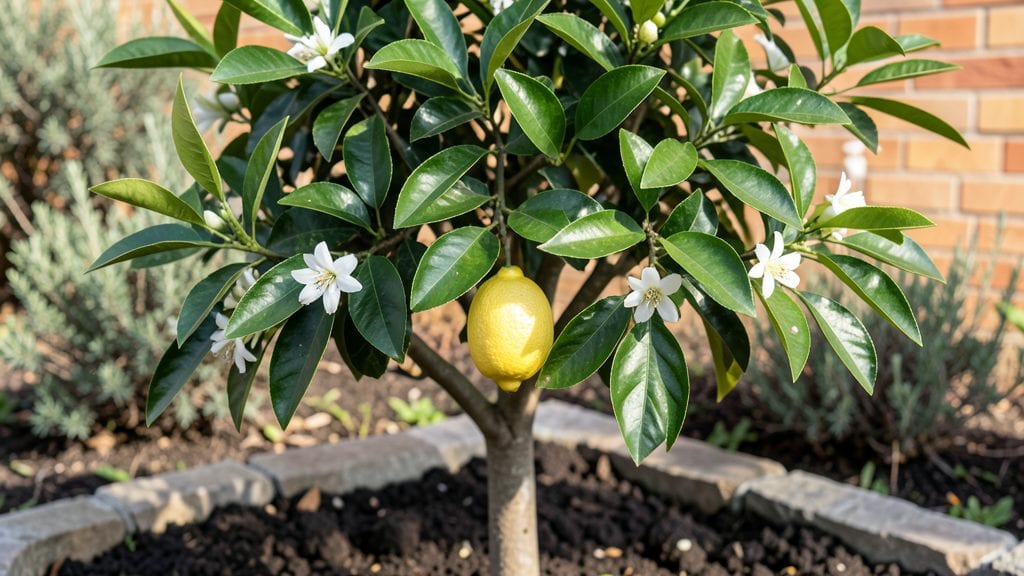
A lemon tree leaf's visual traits make it instantly recognizable to citrus enthusiasts. 🌿 The elongated shape—usually 2 to 4 inches long—combines with its pointed tip and jagged edges to create a signature look.
Unlike its lime or orange cousins, lemon leaves have a thicker, more robust structure that gives them a satisfying snap when gently bent. The dark green hue and subtle waxy coating also help repel pests naturally, making them both beautiful and functional.
What truly sets them apart is that aromatic punch when crushed—imagine a burst of bright, citrusy freshness that lingers in the air. This scent isn't just for show; it's a survival mechanism that deters insects while signaling to pollinators.
I've found that even experienced gardeners can identify lemon trees by smell alone, especially when comparing them side-by-side with other citrus varieties.
💡 In This Article
- Identifying Lemon Tree Leaves by Shape, Color, and Texture
- How to Differentiate Lemon Tree Leaves from Other Citrus
Identifying lemon tree leaves by shape, color, and texture
The shape of a lemon tree leaf follows an ovate-lanceolate pattern—meaning it starts broad at the base and tapers to a sharp point, resembling an elongated teardrop.
The average length falls between 2 to 4 inches, while the width typically measures 0.75 to 1.5 inches, creating an elegant ratio of about 3:1.
This elongated form distinguishes it from rounder citrus leaves like those of grapefruit, which are more circular with a width-to-length ratio closer to 1:1. 🌿
The leaf margins feature fine serrations along the edges, resembling tiny, evenly spaced teeth. These serrations aren't as pronounced as those on some lime leaves, which tend to have more jagged, irregular edges.
The leaf's midrib (central vein) is prominent and slightly raised, with secondary veins branching out at roughly 45-degree angles, creating a feathery pattern that's easily visible when held up to light. This vein structure helps distribute water and nutrients efficiently, contributing to the leaf's sturdy yet flexible nature.
The dark green color of lemon leaves comes from high levels of chlorophyll, but it's not uniform—you'll often notice a slightly lighter underside, a trait shared with many citrus leaves.
The waxy texture isn't just for show; it's a protective layer called the cuticle, which reduces water loss and reflects sunlight to prevent overheating. When you run your fingers along the surface, you'll feel this subtle slickness, similar to the feel of a fresh apple skin but more refined.
This waxy coating also makes the leaves slightly water-resistant, helping rainwater bead up and roll off rather than soak in.
One of the most telling features is the lemony scent released when the leaf is crushed. This aroma comes from limonene, a terpene compound also found in lemon peels, which acts as a natural insect repellent.
Unlike orange leaves, which have a sweeter, more floral scent, lemon leaves emit a bright, almost tangy fragrance that's instantly recognizable. If you've ever rubbed a lemon peel and inhaled that citrus burst, you've experienced the same compound in its volatile form. 💫
Seasonal variations can slightly alter these traits. In hotter months, lemon leaves may appear darker green and slightly thicker, while in cooler seasons, they might take on a lighter hue and feel marginally softer.
Young leaves, still unfolding, often have a lighter green color and a fuzzier texture before maturing into their characteristic smooth, glossy finish. This progression helps gardeners track the tree's growth cycle and health.
Comparing lemon leaves to their citrus relatives reveals subtle but crucial differences. For instance, lime leaves tend to be narrower (often under 1 inch wide) with more pronounced serrations, while orange leaves are broader (up to 2 inches wide) and have a softer, less serrated edge.
The vein patterns also differ—lemon leaves have more evenly spaced secondary veins, whereas orange leaves show a more irregular branching. These distinctions become even clearer when examining the leaves side by side under natural light.