
Plants
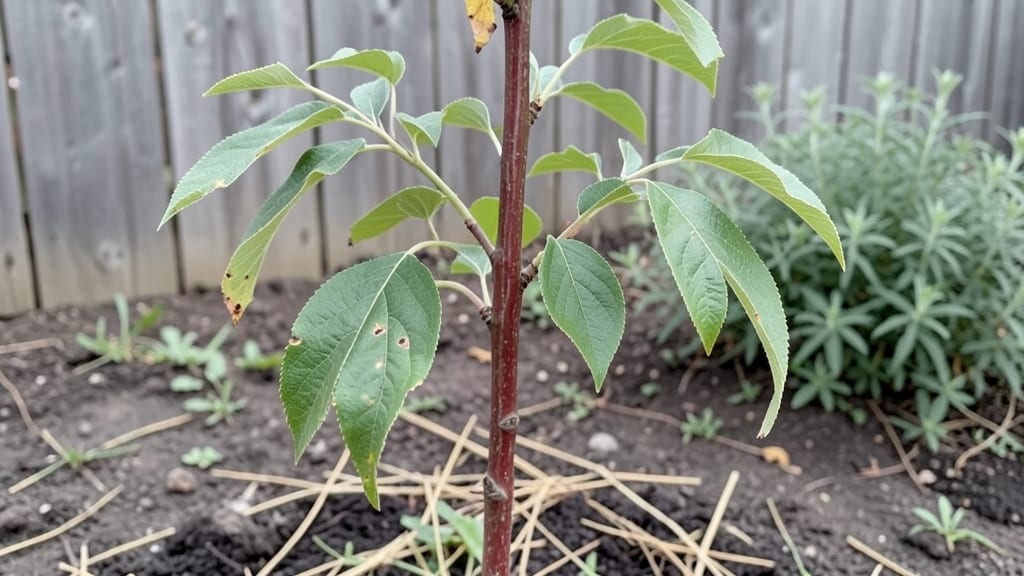
What does a peach tree sapling look like when it first sprouts as a 3- to 5-foot-tall young tree with slender, slightly zigzag branches that feel smooth and silvery-gray? the underside, and a fresh, slightly sweet scent when crushed.
Unlike plum or almond saplings, peach leaves have a distinct reddish tint when new, fading to bright green as they mature.
Look closer at the bark: peach saplings have thin, peeling strips that reveal fresh green underneath, while plum bark stays smooth and gray. The buds are another clue—peach buds are pointy and clustered, often with a hint of pink or red before leaves emerge.
If you see tiny white flowers in early spring, that’s your confirmation: peach trees bloom before leaves fully unfurl.
Common varieties like Elberta or Redhaven saplings follow this pattern, though dwarf varieties stay under 6 feet for years. The key is comparing side by side: peach saplings grow faster than plums but slower than almonds, with a more upright habit early on.
Once you spot these traits, you’ll never confuse them again.
Here’s the trick for beginners: snap a photo of the leaves and bark, then cross-check with a nursery guide. That fuzzy underside and peeling bark are the secret identifiers—no gardening degree required. Now you’re ready to pick the perfect sapling for your yard.
Understanding Sapling Development Factors
Peach tree saplings don’t just pop up looking like miniature versions of their mature counterparts—their appearance is shaped by a mix of biological, environmental, and horticultural influences.
If you’re expecting a sapling to resemble a full-grown peach tree but it doesn’t, here’s why nature (and your care routine) might be throwing curveballs.
A peach tree sapling’s early appearance is heavily influenced by its genetic blueprint. Different cultivars (varieties) of peach trees grow at distinct rates and exhibit unique physical traits from the get-go. For example:
- Dwarf varieties (like ‘Bonanza’ or ‘Redhaven’) may stay compact and bushy even as saplings, with shorter internodes (spaces between leaves).
- Standard varieties (e.g., ‘Elberta’ or ‘J.H. Hale’) often send up taller, leggier growth with larger leaves early on.
- Seed-grown saplings (from pits) can be unpredictable—they might sprout into a completely different type of peach or even a hybrid with traits like thinner bark or delayed flowering.
Actionable tip: If you’re planting a named cultivar, check the breeder’s description for expected sapling characteristics. Seed-grown trees? Be prepared for surprises—consider grafting for consistency.
Peach tree saplings go through distinct juvenile and mature phases, and their looks change dramatically as they age. Here’s what to expect:
| Stage | Typical Sapling Traits | Why It Happens |
|---|---|---|
| Juvenile Phase (0–3 years) |
|
The tree is prioritizing root and structural development over reproduction. Hormonal shifts (like juvenile-to-adult transition) trigger changes in leaf shape, bark thickness, and flowering later. |
| Transition Phase (3–5 years) |
|
The tree shifts focus to reproductive maturity. Environmental cues (like temperature and daylight) signal the plant to start producing flowers, but it may still “test” buds before committing. |
Pro tip: 🌡️ If your sapling is stuck in juvenile mode past 5 years, it might need pruning to stimulate maturity—cut back 1/3 of the oldest growth to encourage new, adult-like branches.
Peach trees are sensitive to their surroundings, and poor conditions can stunt growth or alter appearance in ways that mimic genetic quirks. Common culprits:
🔥 Insufficient Sunlight
Peach trees thrive in full sun (6–8+ hours daily). Saplings deprived of light may:
- Develop long, spindly stems (etiolation) as they stretch toward any available light.
- Grow yellow or pale leaves (chlorosis) due to poor chlorophyll production.
- Have smaller, thinner leaves with weak veins.
Fix it: Move the sapling to a sunnier spot or use a reflective surface (like white plastic) to bounce light onto shaded areas.
💧 Watering Imbalances
Overwatering or underwatering can distort sapling development:
- Too much water: Leads to root rot, causing leaves to yellow, wilt, or develop brown edges. Stems may appear swollen or mushy.
- Too little water: Triggers stress responses like:
- Leathery, curled leaves (to conserve moisture).
- Stunted growth with tiny, dark green leaves (a survival mechanism).
- Premature leaf drop.
Actionable fix: 💡 Water deeply 1–2 times per week (depending on soil drainage) and ensure the top 6 inches of soil stay moist but not soggy.
🌡️ Temperature & Soil Extremes
Peach trees prefer moderate climates (USDA Zones 5–9). Saplings may react to stress with:
- Cold damage: Blackened or curled leaves, brown bark cracks (from frost), or stunted growth if exposed to <32°F (0°C).
- Heat stress: Wilting, bleached or scorched leaves, or premature leaf drop in temperatures above 95°F (35°C).
- Poor soil: Compacted or alkaline soil (
7.0) can cause: - Yellowing leaves with green veins (iron deficiency).
- Slow, twisted growth.
Solution: Amend soil with compost and sulfur (to lower pH) and mulch to regulate temperature. Use shade cloth in extreme heat.
Hidden attackers can sabotage a sapling’s appearance before you even notice. Watch for:
- Peach tree borers (larvae): Create sawdust-like frass at the base of the trunk and oozing sap. Infested saplings may have stunted tops or dieback.
- Aphids or mites: Cause curled, sticky leaves (from honeydew) and yellow stippling (from spider mites).
- Fungal diseases (e.g., brown rot):**
- Dark, tar-like spots on leaves or fruit.
- Premature leaf drop.
Preventative tip: ✨ Inspect saplings weekly for early signs. Treat with neem oil (for pests) or copper fungicide (for diseases) at the first sign of trouble.
Revitalizing Your Young Peach Tree
Got a peach tree sapling that’s not quite living up to its potential? Whether it’s struggling with growth, pests, or environmental stress, these practical, step-by-step solutions will help you nurse it back to health—so you can enjoy lush foliage and future peach harvests.
Let’s tackle common issues head-on with clear fixes and prevention tips to keep your sapling thriving.
If your sapling is slow to grow or looks leggy, it might need a boost in the right direction—literally and figuratively.
🔥 Adjust Planting Depth
Peach tree saplings often struggle when planted too deep or too shallow. - How to fix it: Dig around the base gently and ensure the root flare (the bulge where roots meet the trunk) is just above soil level.
If buried too deep, mound soil around the base to expose it. - Prevention tip: 💡 When planting, use a reference point (like a stake) to mark the root flare before backfilling soil.
🌡️ Optimize Sunlight and Soil
Peach trees are sun-hungry and need well-draining soil to thrive.
- How to fix it:
- Move the sapling to a sunny spot (at least 6–8 hours of direct sunlight daily).
- Amend heavy or clay soil with compost or sand to improve drainage.
- Test soil pH (ideal: 6.0–7.0)—use lime to raise pH if needed or sulfur to lower it.
- Prevention tip: ✨ Mulch around the base (2–3 inches deep) with wood chips or straw, keeping it 6 inches away from the trunk to prevent rot.
Spotting holes, wilting leaves, or strange spots? Pests and diseases are likely culprits.
👨🍳 Treating Common Pests
- Aphids or Spider Mites (Sticky Leaves, Yellowing):
- Fix: Spray with a soapy water solution (1 tsp mild dish soap + 1 quart water) or introduce ladybugs (natural predators).
- Prevention: 🌡️ Install fine mesh netting over young trees to block infestations.
- Borers (Holes in Trunk/Branches):
- Fix: Prune infested branches and treat cuts with pruning sealant.
For severe cases, use beneficial nematodes or insecticidal soap. - Prevention: 💡 Inspect trees regularly and remove weak or dead wood where borers hide.
🍄 Addressing Fungal Issues (Leaf Spots, Powdery Mildew)
- Fix:
- Remove infected leaves immediately.
- Apply neem oil or copper fungicide as a preventive spray (follow label instructions).
- Prevention tip: ✨ Water at the base (avoid wetting foliage) and prune for airflow to reduce humidity around leaves.
Extreme weather, poor watering, or improper pruning can stunt growth or invite problems.
💦 Mastering Watering Techniques
Overwatering or drought stress can both harm saplings.
- Fix:
- Water deeply 1–2 times per week (1–1.5 inches total) during dry spells.
- Check soil moisture 2 inches below the surface—if dry, water again.
- Prevention tip: 🎯 Use drip irrigation or soaker hoses to deliver water slowly at the roots, reducing runoff.
✂️ Pruning for Health and Shape
Poor pruning can weaken saplings or invite disease.
- Fix:
- Remove dead, crossing, or inward-growing branches with clean, sharp shears.
- Make cuts at a 45-degree angle just above a bud or outward-facing branch.
- Prevention tip: 🔥 Prune in late winter/early spring (before new growth) to avoid stressing the tree.
Once your sapling is back on track, keep it healthy with these proactive habits: - 📊 Fertilize Smartly: Use a balanced fertilizer (10-10-10) in early spring, then switch to a low-nitrogen, high-potassium blend (5-10-10) in summer to encourage fruiting. - 🌡️ Monitor for Nutrient Deficiencies: Yellow leaves?
Add iron sulfate (for chlorosis). Weak stems? Try Epsom salt (magnesium sulfate). - 🎯 Protect from Wildlife: Use tree guards or fencing to shield young trees from deer or rabbits.
By addressing these common issues early and methodically, your peach tree sapling will grow into a vigorous, productive tree—ready to reward you with juicy peaches in just a few years. 🍑🌿
Frequently asked questions
How can I tell if a peach sapling is real or grafted?
Grafted peach saplings often show a visible union point where the scion (top) meets the rootstock. Look for a slight bulge or scar about 6–12 inches up the trunk. If the bark texture or color changes abruptly at that spot, it’s likely grafted. Seed-grown saplings will have uniform bark and no graft line.
Why does my peach sapling have fuzzy leaves?
That fuzz is normal! Peach leaves have tiny hairs (trichomes) on the undersides, which help conserve moisture and deter pests. If the fuzz is excessive or paired with yellowing, check for spider mites—use a magnifying glass to spot tiny webs. A spray of neem oil can help if mites are present.
Can I grow a peach tree from a grocery store pit?
Yes, but expect unpredictable results. Pits from store-bought peaches often grow into seedling trees, which may produce small, tart fruit or even no peaches at all. For consistent varieties, buy a named cultivar sapling from a nursery. Grafting onto a rootstock ensures the tree matches the expected fruit quality.
How fast will my sapling grow in the first year?
Most peach saplings grow 2–4 feet in their first year if planted in ideal conditions (full sun, well-drained soil, and proper watering). Dwarf varieties grow slower (1–2 feet), while standard types may reach 5+ feet. Growth slows in winter but accelerates in spring with warm weather.
What’s the best time to plant a peach sapling?
Plant in early spring (just as buds swell) or late fall (6–8 weeks before frost). Avoid planting in summer heat or winter frost. Saplings need time to establish roots before extreme temperatures. If buying bare-root saplings, plant them as soon as possible after purchase.