
Pests
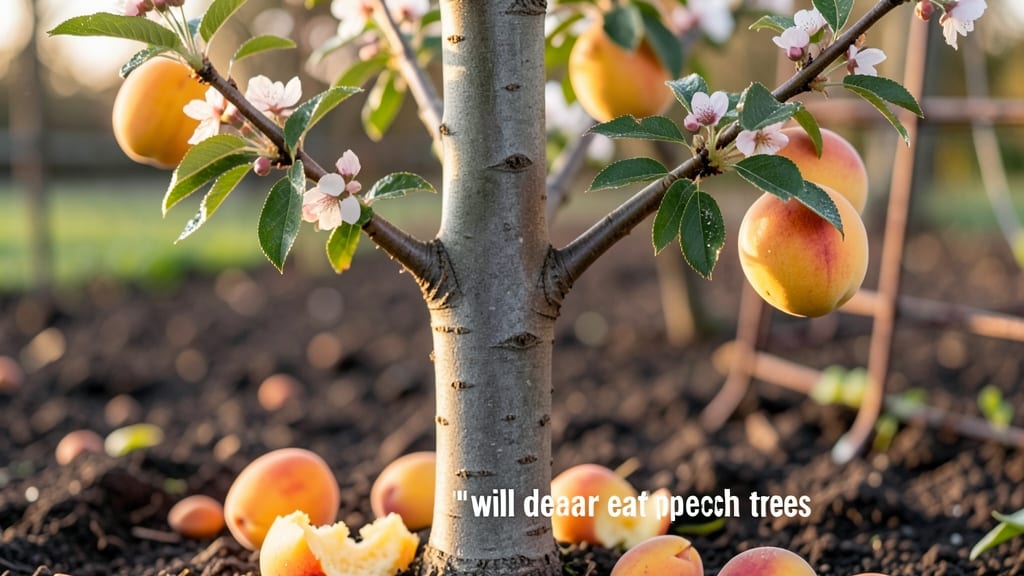
Deer will eat peach trees, especially young shoots, leaves, and developing fruit, as they're drawn to the tender growth and sweet blossoms. Their feeding habits can severely damage or even kill young trees, making protective measures essential for healthy growth.
Deer are particularly drawn to peach trees because of their nutrient-rich foliage and sweet-tasting fruit, which are especially vulnerable during spring and summer when new growth emerges. 🌱 The tender shoots and blossoms provide easy access to protein and sugars, making them irresistible.
Young trees are most at risk, as deer can completely strip them of leaves, leading to weakened roots and potential death if left unprotected.
Understanding their feeding patterns helps homeowners take proactive steps. Deer typically browse at dawn and dusk, so timing your protective measures—like installing fencing or applying repellents—during these hours can make a significant difference.
Additionally, peach trees planted near wooded areas or dense vegetation are more likely to attract deer, as these provide cover for browsing.
💡 In This Article
- Why Deer Target Peach Trees and Their Feeding Habits
- Effective Deer-Protection Strategies for Peach Trees
Why deer target peach trees and their feeding habits
Peach trees become prime targets for deer because their young shoots and blossoms contain high levels of nitrogen and simple sugars—key nutrients that deer seek during spring and early summer.
The tender leaves, particularly those emerging in March through May, have a protein content of about 15-20%, making them an energy-dense snack.
Deer also gravitate toward the fragrant blossoms (which produce nectar) and the developing fruit, which contains 10-15% natural sugars when immature. 🌸 This combination of nutrition and accessibility makes peach trees an all-you-can-eat buffet for browsing deer.
The texture of peach tree foliage plays a role too. Unlike tougher, mature leaves, young shoots have a soft, velvety texture that deer can easily strip with their teeth. Studies show deer prefer plants with a moisture content above 70%, which young peach leaves often maintain—especially after rain.
The scent of crushed leaves releases volatile organic compounds (like terpenes) that deer associate with fresh, high-quality forage. This sensory trigger overrides their natural caution, leading to persistent browsing.
Seasonal patterns amplify the risk. Deer browsing peaks during spring (March-May) when new growth is most tender, and again in late summer (August-September) as fruit ripens. In these periods, deer may spend up to 30% of their feeding time on woody plants like peach trees, according to wildlife studies.
Young trees under 5 feet tall are most vulnerable because deer can reach their foliage without stretching, while mature trees often develop a bark too tough for deer to damage significantly.
What most people don't realize is how deer's digestive system influences their behavior. Deer have a ruminant digestive system that thrives on fibrous, high-cellulose plants—but they crave nitrogen-rich "green browse" to balance their diet. Peach tree leaves provide this perfect mix, making them a dietary staple during critical growth phases.
The act of browsing also helps deer regulate body temperature in warmer months, as the act of chewing and digesting generates heat—a survival advantage in spring and summer.
Here's what actually happens when deer target peach trees: they don't just take a few bites. Deer use a "browse line" technique, where they systematically strip leaves from the top down, creating a horizontal line of defoliation.
This can occur within 24-48 hours if multiple deer feed on a young tree. The damage isn't just cosmetic—removing more than 50% of foliage can kill a tree by preventing photosynthesis, while partial damage weakens it enough to make it susceptible to disease or winter dieback.
Consider these key factors when assessing risk: peach trees planted in open fields (with no natural cover) are less likely to attract deer than those near wooded edges.
Deer also show preference for certain peach varieties—those with larger leaves or more abundant blossoms (like 'Elberta' or 'Redhaven') tend to suffer more damage. Understanding these patterns helps homeowners implement targeted protection strategies during high-risk periods. 🌿