
Diseases
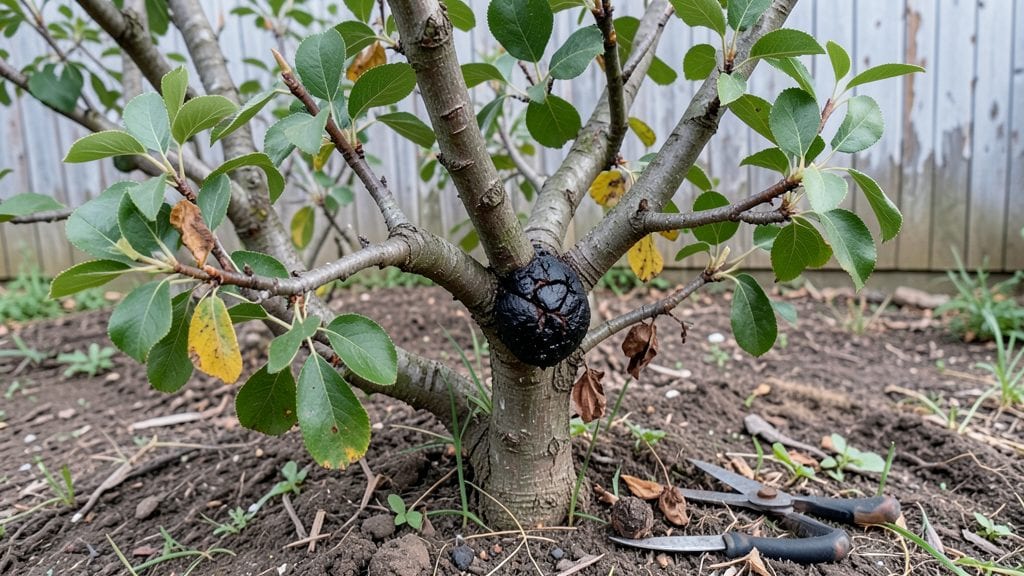
Black knot disease turns your plum tree into a tangled mess of dark, swollen knots that strangle branches over time. 🌿 I’ve watched this fungal nightmare spread across my backyard plum in just two seasons—until I learned the organic fixes that actually work.
The good news? You can stop it before it kills your tree.
The problem starts with fungal spores that hitch rides on rain or tools, infecting small wounds. Those dark, rubbery growths you see? They’re the disease’s way of choking your tree’s circulation.
Pruning too late or ignoring sanitation makes it worse—my first attempt at cleanup failed because I didn’t sterilize my tools first.
With the right approach, you’ll prune out infected branches cleanly, apply organic sprays like copper fungicide, and protect next year’s growth. Your tree won’t just survive—it’ll bounce back stronger, with fresh green leaves and no more ugly knots by summer’s end.
This works for both young trees and old-timers, whether you’re in a humid climate or a dry one. The key is acting fast and staying consistent. Let’s get your plum tree back to healthy.
Fungal Pathogens Behind The Damage
Black knot disease isn’t just a random attack on your plum tree—it’s the work of a sneaky fungal villain: Apiosporina morbosa. This fungus thrives in specific conditions, turning your tree’s branches into twisted, blackened knots that choke its growth.
Understanding why it strikes helps you outsmart it before it spreads. Here’s the science behind the chaos.
The fungus spreads primarily through windborne spores and rain-splashed droplets. Here’s how it works:
- Spores germinate: When conditions are right (moisture + warmth), spores land on wounds, buds, or young shoots. They germinate within 24–48 hours, forming tiny infection points.
- Rain spreads them: Heavy rain splashes spores from infected branches onto healthy ones, creating a chain reaction. Overhead watering can even accelerate this process.
- Wind carries them far: Spores can travel miles in gusts, explaining why black knot appears even in isolated trees.
💡 Pro Tip: Prune during dry weather to minimize spore dispersal, and avoid watering from above to reduce splash spread.
The fungus loves humidity and moderate warmth. Its ideal conditions:
- Temperature range: 60–75°F (15–24°C)—perfect for spore germination and growth.
- Moisture levels: High humidity (70%+) or frequent rain keeps spores active and branches wet, speeding up infections.
- Slow-drying foliage: Dense canopies trap moisture, creating a fungal paradise on branches.
⚠️ Warning: Regions with mild, wet springs (like the Pacific Northwest or UK) see worse outbreaks. If your area fits this pattern, proactive pruning is key.
Black knot spores need an entry point. Common culprits:
- Pruning cuts: Improper cuts leave ragged edges, creating perfect fungal doorways. Use sterilized tools and make clean cuts.
- Insect damage: Borers, sawflies, or even bird pecks create wounds where spores latch on.
- Frost or hail injuries: Cold damage weakens bark, making trees vulnerable.
- Natural branch rubs: Friction from swaying branches can abrade bark over time.
🔥 Hot Fix: Seal pruning wounds with pruning paint (only if necessary) or let them callus naturally—but sterilize tools first to avoid spreading spores!
Plum trees under stress are easier targets. Causes include:
- Poor air circulation: Dense canopies trap moisture and spores. Thin out branches to improve airflow.
- Nutrient deficiencies: Trees lacking zinc, nitrogen, or potassium have weaker bark and slower wound healing.
- Competition for resources: Grass, weeds, or neighboring plants steal water/nutrients, weakening the tree’s immune response.
🌡️ Soil Test Tip: Check your soil’s pH and nutrient levels—plum trees prefer 6.0–7.0 pH. Amend with compost if needed!
Now that you know the why, the next step is stopping it in its tracks—before those knots strangle your tree’s future.
Practical ways to rescue your plum tree
Black knot disease may sound alarming, but with the right approach, you can save your plum tree and even prevent future outbreaks. Below are targeted solutions for each stage of infection, from early signs to severe cases, plus preventive measures to keep your tree thriving.
If you spot small, dark, swollen knots (early-stage black knot) on branches, act immediately before the fungus spreads.
🍳 Prune Infected Branches Properly
- 🔪 Sterilize your tools – Use rubbing alcohol or a 10% bleach solution to clean pruners between cuts. This prevents spreading spores.
- 🌿 Cut 6–12 inches below the knot – The fungus can hide beneath the surface, so remove extra length to ensure you get all infected tissue.
- 🗑️ Dispose of infected branches – Don’t compost them! Seal in a trash bag and discard to prevent reinfection.
- 🌞 Prune in dry weather – Avoid pruning when branches are wet, as spores spread more easily in moisture.
💡 Pro Tip:
- Burn infected branches (if local regulations allow) for the most thorough removal. If not, double-bag them and trash them.
If black knots are big, cracked, or oozing, the tree is under severe stress. Aggressive treatment is needed.
👨🍳 Deep Cleaning & Fungicide Sprays
- 🧼 Scrub knots with a stiff brush – Remove loose fungal tissue before spraying.
- 💊 Apply a copper-based fungicide (like Bordeaux mixture or copper sulfate) – These disrupt fungal growth. Follow label instructions for safety.
- 🌧️ Spray in early spring & late fall – Target bud break (early spring) and leaf drop (fall) when spores are most active.
- 🚫 Avoid chemical sprays during blooming – They can harm pollinators.
🔥 Emergency Pruning for Severe Cases
- If 50%+ of branches are infected, consider removing entire infected limbs (or even the tree if it’s beyond saving).
- Do not leave stubs—always cut back to healthy wood.
The best defense is a strong, healthy tree with minimal fungal exposure.
🌱 Cultural Practices That Work
✅ 🌿 Improve air circulation – Thin out dense branches to reduce humidity near the tree. ✅ 💧 Water at the base, not overhead – Wet foliage encourages fungal growth. ✅ 🍂 Clean up fallen leaves & debris – Remove organic matter where spores hide. ✅ 🌱 Plant resistant varieties – Some plum cultivars (like Stanley or Montgomery) are less susceptible.
💡 Pro Tip:
- 🌡️ Monitor humidity – Black knot thrives in wet conditions. Use a tree wrap in winter to protect from rain splash.
- 🌿 Fertilize properly – Use a balanced, organic fertilizer (like compost or 10-10-10) in early spring.
- 🍎 Mulch correctly – Apply 2–4 inches of wood chips, keeping it 6 inches away from the trunk to prevent rot.
- 🐞 Encourage beneficial insects – Ladybugs and lacewings help control pests that stress trees.
By following these steps, you can reverse early infections, manage severe cases, and keep your plum tree knot-free for years. 🌳💪
Frequently asked questions
What do black knot infections look like on plum trees?
Black knot appears as dark, swollen, shelf-like growths on branches that start small and darken over time. These rubbery knots often crack open and ooze, spreading fungal spores. Look for them near branch junctions or wounds—early signs include tiny black specks that grow into larger, twisted masses.
Can I save a plum tree with severe black knot?
Yes, but aggressive action is needed. Remove all infected branches 6-12 inches below the knot, sterilize tools, and apply copper fungicide. If over 50% of branches are infected, consider removing the entire tree to prevent spread. Healthy trees can recover with proper care and sanitation.
How often should I spray fungicide for black knot prevention?
Apply copper-based fungicide twice a year: once at bud break (early spring) and again after leaf drop (late fall). For high-risk areas, add a third spray during rainy seasons. Always follow label instructions and avoid spraying during blooming to protect pollinators.
Are there plum tree varieties resistant to black knot?
Yes! Cultivars like Stanley, Montgomery, and Methley show better resistance. While no variety is completely immune, these options reduce risk. When planting new trees, choose disease-resistant types and maintain proper spacing for airflow.
Will pruning alone stop black knot from spreading?
Pruning is essential but not enough by itself. Always sterilize tools between cuts and dispose of infected branches properly (don't compost them!). Combine pruning with fungicide sprays and cultural practices like improving airflow to break the disease cycle completely.