
Pruning
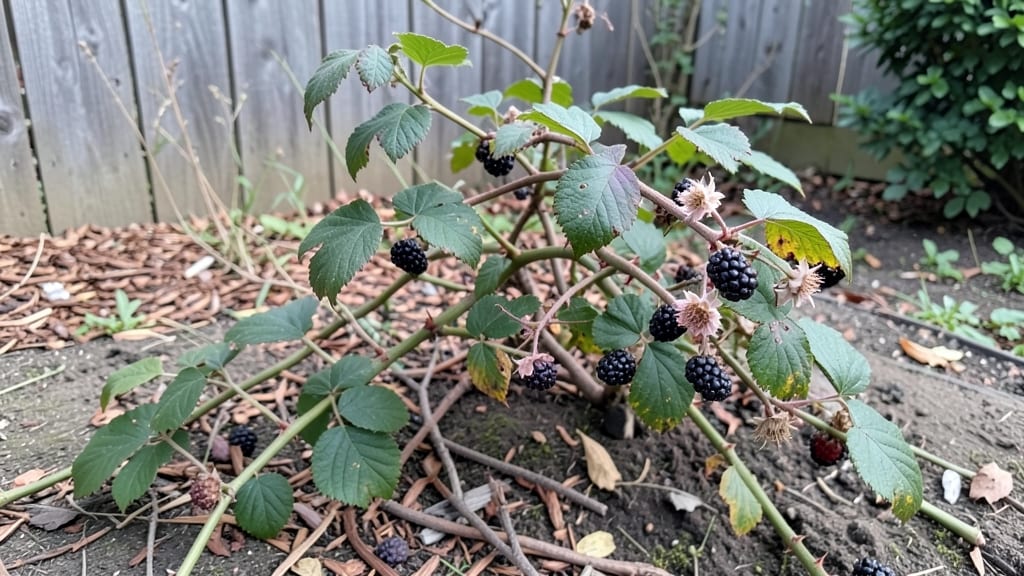
The identification of a blackberry tree begins with its telltale five-lobed leaves and the way its thorns grow in tight clusters—key traits that distinguish it from raspberries and dewberries. I’ve spent years distinguishing these plants in my garden, and those leaf shapes and thorn patterns are your first clues.
The lobed leaves look almost like tiny maple leaves, while raspberries have serrated edges and no thorns.
Thorn patterns are the real giveaway: blackberries have sharp, curved thorns that grow in groups, while dewberries have fewer, straighter thorns. The fruit also differs—blackberries grow in long, dangling clusters, whereas raspberries form hollow, cup-shaped clusters.
If you’re still unsure, snap a photo and compare it to a plant ID app like PlantNet or ask your local extension office.
Why does this matter? Blackberries need different pruning and care than raspberries—like aggressive summer pruning to control growth. Misidentifying them could mean wasted effort or even inviting pests that target one species over another. Once you’ve got the ID down, you’ll spot them anywhere—even in the wild.
Regional variations exist, though: Pacific Northwest blackberries often have larger leaves, while Southern varieties might have thicker canes. Keep an eye on those details, and you’ll never mix them up again. Now grab those pruners—you’re ready to tackle them like a pro.
What Triggers Misidentification
Identifying a blackberry tree can be tricky, especially when its unique traits blend with those of other brambles or shrubs. Several key factors—some natural, others human-induced—can lead to confusion. Understanding these causes helps gardeners and botanists spot the subtle (or not-so-subtle) differences that set blackberry trees apart.
Blackberry trees share the Rubus genus with raspberries, dewberries, and loganberries, all of which have similar leaf structures and thorny canes. Here’s why this overlap causes mix-ups:
- Compound Leaf Shapes: Blackberry leaves are pinnately compound (3-5 leaflets per stem), but so are raspberry and dewberry leaves. The key difference? Blackberry leaflets often have serrated (toothed) edges and a slightly hairy underside, while raspberries tend to have smoother edges and fewer hairs.
- Thorn Patterns: Blackberries typically grow arching canes with thorns pointing downward, whereas raspberries have upright canes with thorns pointing outward or upward. However, young or damaged canes can distort these patterns, making identification harder.
- Bristles vs. Thorns: Some brambles (like Rubus allegheniensis) have soft, bristly hairs instead of sharp thorns. These can mimic blackberry canes if not examined closely.
💡 Pro Tip: Look at the base of the leaf stem (petiole)—blackberry petioles often have glandular hairs, while raspberries usually don’t.
Blackberry trees don’t always reveal their true form right away. Immature plants or those under stress can display traits that mislead even experienced growers:
- Juvenile Leaves: Young blackberry plants may have simpler, lobed leaves that resemble those of wild grapes or even poison ivy. As they mature, the leaves develop the classic 3-5 leaflet pattern.
- Pruning or Trimming Effects: Heavy pruning can stunt cane development, causing thorns to grow in unusual directions or reducing leaf size. This can make a blackberry bush look more like a raspberry or even a rose bush.
- Disease or Pest Damage: Fungal infections (like anthracnose) or insect damage (e.g., blackberry borer) can distort leaf shapes or cause premature leaf drop, obscuring identification clues.
🔍 Actionable Fix: If a plant’s traits seem "off," check for fruit remnants (blackberries grow in clusters, while raspberries are more individual) or root suckers—blackberries spread aggressively via underground runners.
Not all blackberry trees look the same—genetic diversity and hybridization play a huge role in identification challenges:
- Native vs. Cultivated Types:
- Native blackberries (e.g., Rubus allegheniensis) often have larger, more robust thorns and darker, glossier leaves.
- Cultivated varieties (like Triple Crown or Natchez) may have fewer thorns or lighter-colored canes due to selective breeding.
- Hybrid Confusion: Crosses between blackberries and other Rubus species (e.g., boysenberries or loganberries) can produce plants with intermediate leaf shapes or thorn densities, making them harder to pin down.
- Invasive Species: Plants like Rubus fruticosus agg. (European bramble) can invade regions and mimic blackberries but may lack the classic arching canes or clustered fruit.
📊 Key Comparison Table:
Trait
Blackberry
Raspberry
Dewberry
Cane Growth
Arching, thorns downward
Upright, thorns outward
Low-growing, thorns sparse
Fruit Attachment
Stays on cane after picking
Detaches cleanly
Small, clustered
Leaf Underside
Often hairy
Usually smooth
Variable
Even with perfect plants, misidentification can stem from how we examine them:
- Superficial Checks: Relying only on leaf color or fruit appearance (e.g., "it’s red, so it’s a raspberry") ignores critical structural clues like thorn direction or leaf arrangement.
- Seasonal Blind Spots:
- In winter, dormant canes may look identical across species.
- In spring, new growth can obscure old cane patterns.
- Lighting and Angle: Shadows or viewing leaves from below can hide serrations or hairiness, making traits seem less distinct.
✨ Expert Hack: Always inspect three key areas for accuracy:
- Leaf base and petiole (hairiness/glands).
- Cane thorn direction (arching vs. upright).
- Fruit remnants or scars on the plant.
Quick fixes for blackberry tree struggles
Identifying a blackberry tree is just the first step—keeping it healthy and thriving requires a little troubleshooting. Whether your plant is struggling with pests, poor growth, or misidentification, these practical solutions will help you turn things around.
Below, we’ve mapped common issues to easy fixes, along with prevention tips to keep your blackberry tree in top shape.
If you’ve mistakenly pruned or treated a plant thinking it was a blackberry but it’s not, you might have caused more harm than good. Blackberries belong to the Rubus genus, but they can be confused with raspberries, dewberries, or even invasive species like Rubus armeniacus (Himalayan blackberry).
How to Fix It:- 🔍 Double-check leaf shape and thorn patterns: Blackberry leaves are compound (3-5 leaflets) with arching thorns along the stem. Raspberries have straight thorns, while dewberries have smaller, more delicate leaves.
- 📸 Take photos and compare: Use a plant identification app like iNaturalist or Google Lens to verify before pruning.
- 🌱 Consult a local nursery or extension office: If unsure, bring a sample or photo for expert confirmation. Mispruning can set back growth for years!
Label your plants with stakes or tags as soon as you identify them. Include the name and planting date to avoid future mix-ups.
Blackberries are a magnet for pests like Japanese beetles, spider mites, and aphids. These critters can defoliate your plant overnight, weakening its ability to produce fruit.
How to Fix It:| Pest | Signs | Solution |
|---|---|---|
| Japanese Beetles | Skeletons of leaves, chewed fruit | 🔥 Handpick in the morning (drop into soapy water). Use neem oil or pyrethrin spray as a last resort. |
| Spider Mites | Fine webbing, yellow stippling on leaves | 💦 Spray with water to knock them off. Apply insecticidal soap or horticultural oil every 5–7 days. |
| Aphids | Sticky residue (honeydew), curled leaves | 👨🍳 Blast off with a strong hose. Introduce ladybugs or use soapy water spray. |
Encourage natural predators like birds, lacewings, and parasitic wasps by planting companion flowers (e.g., marigolds, alyssum) nearby. Avoid over-fertilizing with nitrogen, which attracts pests.
Blackberries spread aggressively, and if left unchecked, their canes can tangle, block sunlight, and reduce fruit production. Proper pruning is key to maintaining a healthy, productive bush.
How to Fix It:- 🔪 Prune in late winter or early spring: Remove dead, weak, or crossing canes at the base. Keep only the healthiest 6–8 canes per plant.
- 🍓 Thin out crowded primocanes (first-year growth): These won’t produce fruit but will become fruiting canes next year. Space them evenly to allow airflow.
- 🌱 Cut back old fruiting canes (floricanes): After harvest, prune these to the ground—they’ve served their purpose and won’t produce again.
Use sharp, clean pruners to avoid spreading disease. Disinfect them with rubbing alcohol between cuts. For large patches, consider a string trellis to train canes and improve air circulation.
If your blackberry tree is growing slowly or producing little to no fruit, it might be due to nutrient deficiencies, improper sunlight, or lack of pollination.
How to Fix It:- 📊 Soil test and amend: Blackberries thrive in slightly acidic soil (pH 5.5–6.5). Add compost or well-rotted manure for organic matter. If soil is poor, use a balanced fertilizer (10-10-10) in early spring.
- ☀️ Ensure full sun (6–8 hours/day): Partial shade can reduce fruiting. If your tree is in a shady spot, consider transplanting or thinning nearby vegetation.
- 🐝 Hand-pollinate if needed: Blackberries are self-pollinating, but poor weather can hinder pollinators. Gently shake canes during bloom to release pollen.
- 💧 Water deeply but infrequently: Blackberries hate soggy roots. Water at the base 1–2 times per week (more in extreme heat) and mulch to retain moisture.
Plant blackberries in well-draining soil and avoid overwatering. If your area has heavy clay soil, amend it with sand or perlite to improve drainage.
With these solutions, your blackberry tree should bounce back stronger than ever. Remember, consistency is key—regular pruning, pest monitoring, and soil care will keep your plant happy and productive for years. Happy gardening! 🌿🍇
Frequently asked questions
How can I tell the difference between blackberry and raspberry leaves?
Blackberry leaves are compound with 3-5 lobed leaflets and often have serrated edges and a slightly hairy underside. Raspberries have smoother, saw-toothed edges with fewer hairs. The key is examining the leaf base—blackberry petioles frequently have glandular hairs while raspberries don't.
Why do blackberry thorns grow in clusters while raspberry thorns don't?
Blackberry thorns grow in tight, downward-pointing clusters along arching canes, while raspberry thorns are straighter and more spaced out on upright canes. This difference helps distinguish them even when leaves aren't visible. The thorn pattern is nature's built-in ID system!
Can I use a plant identification app to confirm my blackberry?
Apps like PlantNet or Google Lens are excellent tools. Upload clear photos showing leaves, thorns, and fruit clusters for best results. For tricky cases, consult your local cooperative extension office—they often have botanists on staff.
What should I do if I've been pruning what I thought was a blackberry but it's not?
Don't panic! First verify the plant using the leaf/thorn test. If it's actually a raspberry or dewberry, stop pruning immediately—these plants have different care needs. For blackberries, prune in late winter to remove dead canes and encourage new growth. Always label your plants to avoid future mix-ups.
Do blackberry leaves change appearance as the plant matures?
Yes—they start simpler and more lobed when young, resembling wild grape leaves. As they mature, they develop the classic 3-5 leaflet pattern. Young plants may also have fewer thorns that become more pronounced with age. This is why proper identification requires examining multiple growth stages.