
Trees
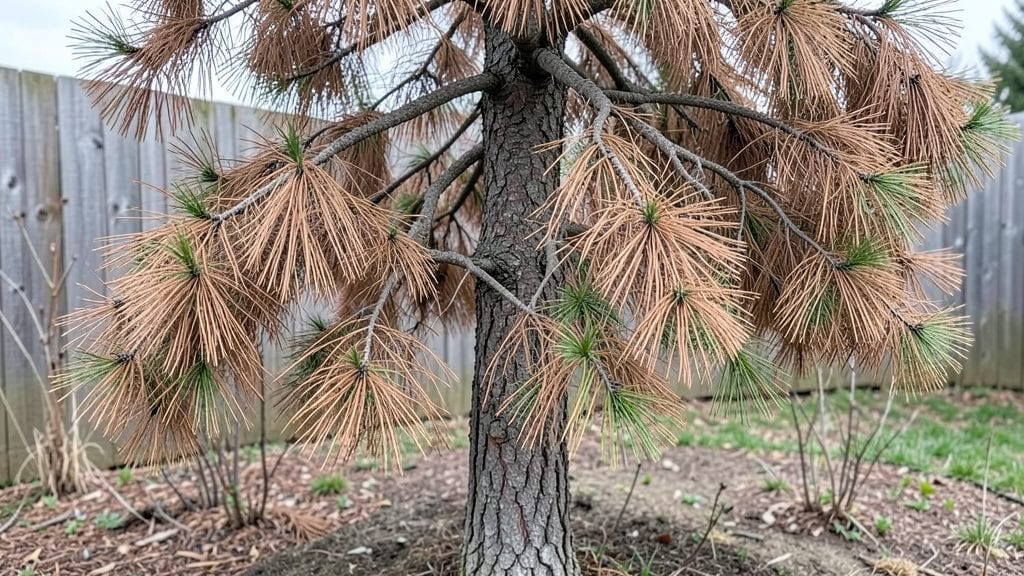
Your pine tree’s brown needles aren’t a death sentence—they’re a cry for help. 🌲 I’ve nursed back more than a few struggling pines by pinpointing the exact cause, whether it’s winter burn, bagworms, or just plain thirst.
The key is observing the how: are needles falling or clinging? Yellow first or brown right away?
Most pines turn brown because of three sneaky culprits: drought stress (needles crisp up from the tips), bagworms (tiny silk nests and sawdust-like frass), or winter burn (sun-scalded needles after snowmelt).
Prune dead branches now, water deeply if the soil’s bone-dry, and shake out bagworm nests—one hour of this work saves your tree’s life.
You’ll see fresh green growth within 4-6 weeks if you act fast. The fix isn’t complicated: match the symptom to the solution (fungicide for blight, neem oil for pests, mulch for moisture), and your pine will rebound like it’s spring.
Prevention? A 3-inch layer of mulch and regular inspections keep problems from sneaking up.
Works for all pine varieties—white, ponderosa, Scotch—just adjust for your climate. Let’s turn those brown patches into lush green memories before next season.
Root Causes Of Needle Discoloration
Brown pine trees—especially those struggling with discoloration—often signal underlying stress. Understanding the science behind these changes helps you take precise action. Here’s why your pine’s needles might be turning brown, broken down into clear, actionable causes:
Pines are drought-tolerant but not drought-proof. Water stress—whether from overwatering or underwatering—disrupts the tree’s ability to transport nutrients and photosynthesize efficiently.
- Underwatering: When soil moisture drops below 30%, root activity slows, and needles lose their vibrant green hue.
Brown tips or patches appear first, often on older needles. 💡 Pro Tip: Test soil moisture by sticking your finger 2–3 inches deep; if dry, water deeply until runoff occurs. - Overwatering: Compacted or poorly drained soil leads to root asphyxiation (lack of oxygen).
Brown needles paired with yellowing or wilting indicate suffocation. ⚠️ Warning: Pines hate "wet feet"—ensure soil drains within 24 hours after watering. - Salt Buildup: Over-fertilizing or using tap water high in chlorides/sodium causes osmotic stress, where roots struggle to absorb water.
Brown, crispy needles at the tips are a classic sign. 🔧 Fix: Flush soil with 2–3 inches of water monthly to leach excess salts.
Science Spotlight: Needles contain chlorophyll, which breaks down when water transport (via xylem vessels) is blocked. Without water, cells dehydrate, and pigments like anthocyanins (red/brown compounds) become visible.
Fungal pathogens thrive in humid, stagnant conditions and attack pine needles directly, causing brown spots, banding, or premature needle drop. Common culprits include:
| Fungus | Symptoms | Conditions That Trigger It |
|---|---|---|
| Lophodermium needle cast | Tiny black fruiting bodies; needles turn brown and fall | Wet springs, dense canopies (poor airflow) |
| Sphaeropsis tip blight | Brown, blistered tips; spreads upward | Overwatered soil, high humidity |
| Cronartium rust | Orange pustules on needles; stunted growth | Cool, wet summers; alternate hosts (oaks) |
How to Stop It:
- Prune to improve airflow (remove 10–20% of dense branches).
- Apply fungicide (copper-based or myclobutanil) in early spring before spores spread.
- Mulch properly: Keep mulch 6 inches away from the trunk to prevent moisture retention.
Insects like pine needle scale, pine bark beetles, and sawfly larvae feed on needles or phloem, disrupting nutrient flow. Brown needles often accompany sticky sap (honeydew) or frass (insect droppings).
- Needle Scale: Tiny, armored insects cluster on needles, causing yellowing then browning.
Heavy infestations lead to premature needle drop. - Bark Beetles: Adults bore into bark, while larvae tunnel through phloem, starving the tree. Pitch tubes (sap oozing from holes) signal an attack. - Sawfly Larvae: Green, worm-like larvae skeletonize needles, leaving brown, lace-like patterns.
Defense Strategies:
- Horticultural oil (dormant season) smothers eggs/larvae.
- Beneficial nematodes (Steinernema carpocapsae) target beetle grubs in soil.
- Remove infested branches and burn/dispose of them (don’t compost!).
Pines adapted to specific climates can suffer when sudden temperature shifts or intense sunlight overwhelm their protective adaptations.
- Sun Scorch: Young pines or those transplanted in summer experience heat stress, causing brown patches on southwest-facing sides.
Needles may curl or dry out. - Cold Damage: Freeze-thaw cycles rupture cell walls, leading to brown, mushy needles (common in jack pines or white pines). - Air Pollution: Ozone or sulfur dioxide from urban areas cause interveinal browning (brown areas between green veins).
Solutions:
- Acclimate gradually: Move potted pines outdoors for 1–2 hours/day before full sun exposure.
- Mulch deeply: 3–4 inches of organic mulch insulates roots from temperature swings.
- Avoid late-season fertilizing: New growth is more vulnerable to cold damage.
Pines require specific nutrients for chlorophyll production and needle health. Deficiencies often mimic water stress but respond differently to treatment.
| Deficiency | Visual Clues | Corrective Action |
|---|---|---|
| Nitrogen (N) | Pale yellow needles; stunted growth | Apply slow-release nitrogen (e.g., blood meal) in early spring. |
| Magnesium (Mg) | Yellowing between veins; brown edges | Use Epsom salt (1 tbsp/gallon water) as a foliar spray. |
| Iron (Fe) | Yellowing new growth; brown tips | Apply chelated iron (avoid high pH soil). |
| Boron (B) | Thickened, brittle needles; dieback | Use borax (1 tsp/gal water) in early spring. |
Soil Test First: Before fertilizing, test soil pH (pines prefer 4.5–6.5). Locked-out nutrients (like iron) become available only in acidic conditions.
Trauma from lawnmowers, string trimmers, or hail can sever needles or bark, creating entry points for pathogens. Brown patches may appear irregularly shaped with no clear pattern.
- Mower Scars: Circular brown rings on trunks or roots signal girdling (damage to the vascular cambium).
- Hail/Frost: Bruised needles turn brown within 24–48 hours; severe cases cause needle cast.
Recovery Steps:
- Protect young trees with burlap wraps during hail season.
- Avoid "volcano mulching"—keep mulch level with the root flare to prevent bark damage.
- Seal wounds with pruning sealant (for cuts >1/4 inch wide) to prevent infection.
Revive Your Pine Tree Naturally
When your pine tree starts turning brown, it’s often a sign of stress—but don’t panic! With the right approach, you can nurse it back to health and even prevent future issues. Below are practical, step-by-step solutions tailored to common causes, from overwatering to pest infestations.
Each fix is designed to be easy to follow, whether you're a gardening novice or a seasoned green thumb.
Cause: Brown needles or stunted growth often stem from poor soil moisture balance—either too dry or soggy.
How to Fix It:
- Check the Soil 🧑🌾
- Stick your finger 2–3 inches deep into the soil. If it feels like a dusty desert, it’s time to water. If it’s muddy or clumps together, you’re overdoing it.
- Adjust Watering Habits 💧 - Underwatered? Water deeply once a week (or more in extreme heat) until the soil is moist but not waterlogged. Use a soaker hose or drip irrigation to deliver water slowly to the roots. - Overwatered? Let the soil dry out between waterings.
Improve drainage by adding organic matter (like compost or pine bark) to sandy or clay-heavy soil.
- Mulch for Moisture Retention 🌿
- Spread 2–3 inches of mulch (wood chips or pine straw) around the base of the tree, keeping it 6 inches away from the trunk to prevent rot.
Prevention Tip: 💡 Test your soil’s drainage by digging a small hole, filling it with water, and timing how long it takes to drain. Ideal? Less than 1 hour.
Cause: Sudden exposure to harsh sunlight (or too much shade) can scorch needles, turning them brown.
How to Fix It:
- Gradual Sun Transition 🌞
- If your pine was recently moved or planted, acclimate it slowly to full sun. Start with morning sun only, then gradually increase exposure over 2–3 weeks.
- Provide Afternoon Shade 🌳
- Use a lightweight shade cloth (30–50% coverage) during peak afternoon heat (12 PM–4 PM) if your tree is in a hot, exposed area.
- Water in the Heat 💦
- Water deeply in the early morning to reduce evaporation and stress. Avoid evening watering, as wet foliage can attract pests.
Prevention Tip: ✨ Plant pines in locations where they’ll get partial shade (especially young trees) to avoid shock.
Cause: Brown needles can signal an invasion of pine beetles, spider mites, or fungal diseases like needle blight.
How to Fix It:
- Identify the Culprit 🔍
- Pine beetles? Look for small holes in bark or sawdust-like frass.
- Spider mites? Check for fine webbing on needles.
- Fungal disease? Brown needles with yellow tips or black spots may indicate blight.
- Apply Targeted Solutions 🛡️
- For beetles: Use neem oil spray (mix 2 tbsp neem oil + 1 tsp mild soap + 1 quart water) and apply every 7–10 days.
- For mites: Spray with water (miters hate humidity!) or use insecticidal soap.
- For fungal issues: Prune infected branches (sterilize tools with rubbing alcohol) and apply copper fungicide.
- Encourage Beneficial Insects 🐞
- Plant marigolds or lavender nearby to attract predatory insects that eat pests.
Prevention Tip: 🌡️ Keep your pine healthy with balanced fertilization (low nitrogen, high phosphorus) to boost resistance.
Cause: Yellowing or browning needles can mean your pine is starving for key nutrients like nitrogen, iron, or magnesium.
How to Fix It:
- Test Your Soil 📊
- Use a DIY soil test kit (available at garden centers) to check pH and nutrient levels. Pines prefer acidic soil (pH 4.5–6.0).
- Fertilize Smartly 🌱
- For nitrogen deficiency (yellow needles): Apply slow-release organic fertilizer (like fish emulsion) in early spring.
- For iron/magnesium (brown spots): Use chelated iron or Epsom salt spray (1 tbsp per gallon of water, spray foliage monthly).
- Avoid Over-Fertilizing ⚠️
- Too much fertilizer can burn roots. Follow package instructions and water thoroughly after applying.
Prevention Tip: 💪 Feed pines once a year in early spring—more isn’t better!
Once your tree is on the mend, proactive care keeps it thriving:
- Prune in late winter/early spring to remove dead branches and improve airflow.
- Monitor for stress signs (wilting, discolored needles) and act fast.
- Plant companion plants like ferns or rhododendrons to create a pine-friendly microclimate.
Final Thought: 🎯 Most brown pine issues are fixable with patience and the right care. Start with one solution, observe for 2–4 weeks, then adjust as needed. Your tree will thank you with lush, green needles in no time!
Frequently asked questions about brown pine trees
Why do pine needles turn brown in winter?
This is often called winter burn, caused by harsh winds and sun exposure after snowmelt. The needles dry out from the tips inward. To prevent it, use windbreaks and avoid fertilizing late in the season. Mulch heavily (3 inches) to protect roots from temperature swings.
How can I tell if brown needles mean my pine tree is dying?
Check for new growth—if you see fresh green needles in spring, the tree is alive. If all needles are brown and falling, or the bark has holes (bark beetles), it may be beyond saving. Focus on prevention for healthy pines by pruning properly and watering deeply but infrequently.
What’s the fastest way to fix brown pine needles?
Start with pruning dead branches (sterilize tools with rubbing alcohol) and deep watering if soil is dry. For pests like bagworms, shake nests into a bucket of soapy water. Apply neem oil spray for insects or fungicide for blight. Results appear in 4-6 weeks with consistent care.
Can I save a pine tree with 50% brown needles?
Yes! Many pines rebound if you act quickly. Focus on three key fixes:
- Adjust watering (deep but infrequent),
- Remove infested branches, and
- Apply targeted treatments (neem oil for pests, copper fungicide for blight). Monitor for new growth—healthy pines can recover even with heavy browning.
Why do some pine branches stay green while others turn brown?
This often signals localized stress. Brown branches may have poor circulation (prune to improve airflow), pest infestations (check for bagworms or scale), or sun exposure (shade afternoon sun). Test soil moisture in both areas—dry pockets cause uneven browning.