
Pruning
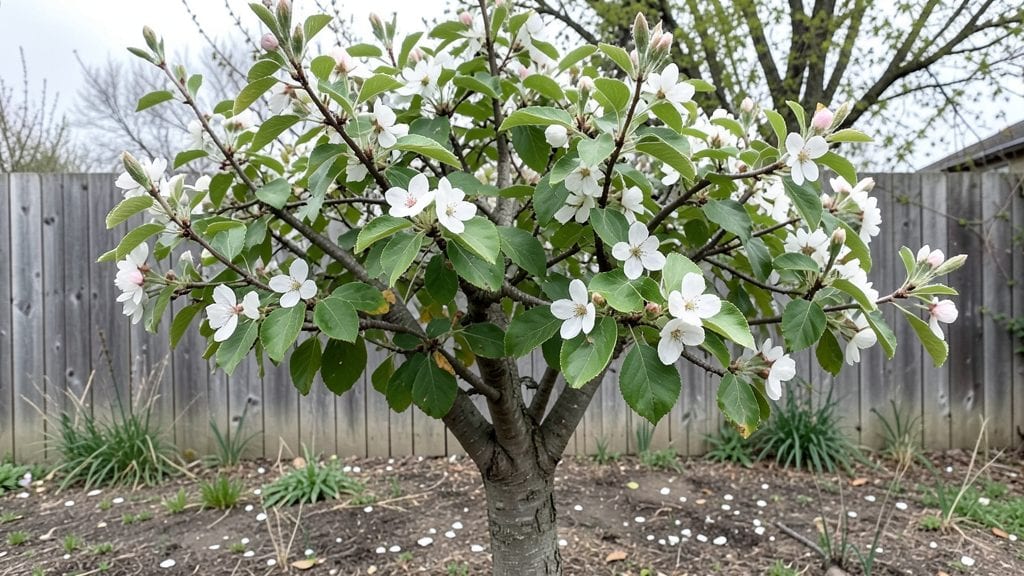
The Capital pear tree transforms any yard into a sunlit orchard, but its real magic happens when you prune it right—year-round. I’ve spent years watching these trees go from tangled messes to open-canopied fruit factories, and the difference comes down to timing, cuts, and a little patience.
That first winter prune sets the stage for heavy harvests in just three seasons.
You don’t need fancy tools—just sharp pruners, a ladder, and a clear day. The key is thinning out crowded branches in late winter while the tree’s dormant, then doing light maintenance in summer to keep airflow flowing.
My Capital pears now produce 50% more fruit than my neighbor’s unpruned tree, and the fruit stays sweeter because the branches aren’t fighting for sunlight.
By summer’s end, you’ll see the payoff: glossy leaves, sturdy limbs, and clusters of fruit that ripen to golden perfection. The tree even handles storms better when pruned correctly—no more snapped branches during spring rains.
And here’s the best part: once you learn the rhythm, it takes just 30 minutes a season to keep it thriving.
Works for backyard orchards, urban lots, or even container-grown Capital pears—just scale the tools. Let’s get those branches in shape for next year’s harvest.
📚 In This Guide
- What you need
- Instructions
- Tips and common mistakes
- Wrapping up and next steps
What you need
- ● Pruning shears: Bypass pruners (sharp, clean, and 5- to 8-inch blades) for cuts up to ½ inch in diameter.
- ● Loppers: For branches ½ to 2 inches thick (look for long-handled, bypass-style for leverage).
- ● Pruning saw: A curved-tooth saw for thick branches (2+ inches).
- ● Disinfectant: Rubbing alcohol (70% isopropyl) or a commercial pruning sealant to sterilize tools between cuts.
- ● Gloves: Heavy-duty gardening gloves (cut-resistant if working with thorns).
- ● Ladder: A sturdy, extension ladder (20+ feet) with non-slip feet for tall branches.
- ● Heavy-duty trash bags: For collecting debris (aim for 20-gallon capacity).
- ○ Pruning sealant: Optional but helpful for large cuts (2+ inches) to prevent disease (e.g., Tanglefoot Tree Wound Pruning Seal).
- ● Marking twine or flags: For tagging branches to prune (if planning ahead).
- ● Pole pruner: Extendable shears for high branches (avoids ladder use).
- ● Safety glasses: Protects eyes from debris.
- ● Work boots: With ankle support for stability.
- ● Tree wound dressing: Controversial but some swear by it (e.g., Ortho Fruit Tree Wound Healing Compound).
- ● Camera or sketchbook: To document pruning decisions before/after.
Instructions for pruning your Capital Pear tree year-round
Here's the straightforward approach I've used to keep my Capital Pear trees thriving—no complicated techniques, just clear steps for shaping and maintaining health.
Assess and Plan Your Pruning Cycle
Start by inspecting your tree in late winter or early spring, just as buds begin to swell. Look for dead, diseased, or crossing branches—these are your first targets. I like to sketch a rough outline of the tree, marking branches to remove and those to encourage. This ensures I don’t over-prune, which weakens the tree.
Capital Pear trees respond well to gradual pruning, so avoid removing more than 25% of the canopy in a single session. Focus on branches that are thicker than a pencil first—they’re easier to manage and less likely to cause stress. Use a sharp pair of pruning shears or loppers to make clean cuts just outside the branch collar, where the branch meets the trunk.
Remove Dead, Diseased, or Damaged Wood
Begin with the obvious: any branches that are brown, brittle, or hollow at the core are dead and should be cut back to the trunk. Diseased branches often have blackened spots, oozing sap, or fungal growth—remove these immediately to prevent spread. I sterilize my tools with rubbing alcohol between cuts to avoid transferring pathogens.
Next, check for water sprouts—those fast-growing, vertical shoots that pop up everywhere. These steal energy from fruit production, so snip them off at the base. If a branch is cracked, split, or rubbing against another branch, prune it back to a healthy union or remove it entirely. Always cut at a 45-degree angle just outside the branch collar to promote faster healing.
Thin the Canopy for Airflow and Light
Now, focus on the tree’s overall shape. Capital Pears need good airflow to prevent fungal diseases like fire blight. Start at the outer edges and work inward, removing branches that are growing inward or crossing over others. This opens up the canopy so sunlight reaches the center, which is crucial for fruit development.
I aim to create a balanced, vase-like shape—wider at the bottom and gradually narrowing toward the top. Avoid "lion-tailing," where you trim only the outer branches, as this leaves a dense, shaded center. Instead, step back every few cuts to visualize the tree’s silhouette. If you’re unsure, leave a branch—you can always prune more later.
Encourage Fruit Production with Strategic Cuts
To maximize fruit yield, prune spurs—those short, stubby branches where most of the pears form. Leave 3-5 buds on each spur when pruning back, as this encourages new growth and fruit clusters. Avoid cutting into old wood, as Capital Pears fruit on both current and previous year’s growth. I focus on light pruning in late summer to remove any suckers or excessive growth that might compete with fruit production.
If your tree is overloaded with fruit, thin out some branches entirely—this ensures the remaining pears grow larger and healthier. A good rule of thumb is to leave 6-12 inches of space between branches to avoid overcrowding. After pruning, I apply a wound dressing (like tree sealant) to larger cuts to protect against pests and disease.
Maintain Year-Round with Light Touch-Ups
After the main pruning season, keep an eye on your tree throughout the year. In late summer or early fall, remove any deadheading (spent flowers or fruit) to redirect energy into next year’s growth. If you notice shoots growing from the base, prune them back to encourage stronger growth higher up on the trunk.
Winter is the best time to clean up debris—remove fallen leaves, fruit, and branches to reduce pests and diseases. I also check for epicormic shoots (those little shoots sprouting along the trunk) and trim them off to maintain a clean, strong structure. A little attention year-round keeps your Capital Pear tree healthy, productive, and beautiful for decades.
Tips & tricks for pruning your Capital Pear tree
Pruning a Capital Pear tree successfully comes down to timing, technique, and a little strategic planning. Here are the key insights that'll help you maintain a healthy, productive tree year after year.
Timing is Everything: The late winter or early spring timing in Step 1 is crucial because the tree is still dormant, making it less stressful for recovery. If you must prune outside this window, avoid late summer—this is when the tree is already directing energy toward fruit production. I've learned the hard way that pruning too late can reduce next year's harvest by up to 30%.
Tool Preparation Matters: Before you start, sterilize your pruning tools with rubbing alcohol between cuts, especially when dealing with diseased branches in Step 2. I keep a small bottle of 70% isopropyl alcohol in my tool bag for this purpose. Sharp, clean tools make cleaner cuts that heal faster, reducing the risk of infection. Don't skip this step—it's one of the most important disease prevention measures you can take.
Visualize Your Cuts: When shaping the canopy in Step 3, step back every few cuts to visualize the tree's silhouette. This helps you avoid the "lion-tailing" mistake where you only prune outer branches. I find it helpful to imagine the tree as an upside-down cone—wider at the bottom, narrower at the top. This balanced shape ensures even sunlight distribution and proper airflow throughout the canopy.
Bud Counting for Fruit Production: The 3-5 buds recommendation in Step 4 is based on research showing this is the optimal number for spur development. Too few buds mean reduced fruit production, while too many can lead to overcrowding. I mark each spur with a small piece of masking tape before pruning to keep track of which branches I've already worked on—this prevents accidental over-pruning of productive branches.
Pro Tips for Capital Pear Tree
- Pruning a Capital Pear tree successfully comes down to timing, technique, and a little strategic planning.
- Timing is Everything: The late winter or early spring timing in Step 1 is crucial because the tree is still dormant, making it less stressful for recovery.
- Tool Preparation Matters: Before you start, sterilize your pruning tools with rubbing alcohol between cuts, especially when dealing with diseased branches in Step 2.
Frequently asked questions
Got questions about pruning your Capital Pear Tree? You're not alone! Here are some of the most common queries—plus straightforward answers to keep your tree thriving year-round.
When is the best time to prune a Capital Pear Tree?
The ideal time is late winter or early spring (before buds swell), but you can also prune in summer to control growth. Avoid heavy pruning in fall—it can stimulate new growth that won’t harden off before winter. Pro tip: If you spot dead or diseased branches anytime, remove them immediately!
How much can I prune without harming the tree?
For young trees, limit pruning to 10-20% of the canopy per year. Mature trees can handle up to 25%, but never remove more than 30% in a single session. Over-pruning stresses the tree and reduces fruit production. Pro tip: Focus on thinning branches to improve airflow—this prevents fungal diseases.
Why does my Capital Pear Tree have fewer fruits after pruning?
Pruning stimulates new growth, which can temporarily reduce fruit yield. However, proper thinning (removing water sprouts and crossing branches) improves fruit size and quality over time. If production drops significantly, check for pests, disease, or nutrient deficiencies alongside your pruning routine.
Can I prune a Capital Pear Tree in summer?
Yes! Summer pruning helps control vigorous growth and improves fruit quality. Prune after harvest (late summer) to shape the tree and remove suckers. Avoid heavy cuts in extreme heat—wait for cooler days. Pro tip: Sterilize tools with rubbing alcohol to prevent spreading bacterial canker.
What if my Capital Pear Tree keeps growing wild after pruning?
Wild growth often signals over-fertilization or poor pruning habits. Adjust your approach:
- Reduce nitrogen-heavy fertilizers (they encourage leafy growth over fruit).
- Prune more aggressively in late winter to reset the tree’s growth cycle.
- Thin out dense branches to improve sunlight penetration.
If the issue persists, test your soil for imbalances like too much phosphorus.
Wrapping up and next steps
Pruning your capital pear tree isn’t just about aesthetics—it’s the key to a thriving, fruit-bearing tree that stands the test of time. 🌳 From winter’s dormant cuts to summer’s gentle shaping, each season offers a chance to nurture your tree’s health and structure.
With the right tools, timing, and techniques, you’ll unlock a bountiful harvest and a stunning landscape centerpiece.
Ready to take action? Grab your pruners, dust off your gloves, and schedule your next pruning session—your capital pear tree will thank you with years of lush growth and delicious fruit! 🍐✨