
Diseases
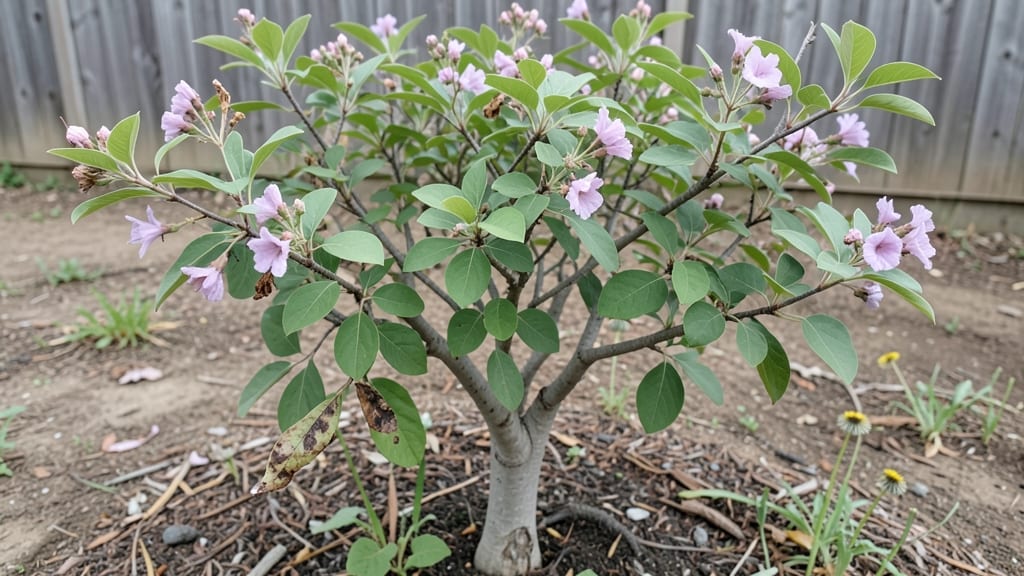
Your crape myrtle’s wilting leaves or strange spots aren’t just bad luck—they’re clues to a disease trying to take over. 🌿 I’ve spent years diagnosing these trees, and the good news is most problems have simple organic fixes once you know what to look for.
The key is catching issues early, before they turn your showstopper into a sad shadow of itself.
Powdery mildew, leaf spot, and bacterial blight are the usual suspects, each leaving its own fingerprint—white fuzzy coatings, dark brown patches, or oozing cankers. The causes? Too much shade, poor airflow, or last summer’s neglected pruning.
But here’s the game-changer: a few targeted sprays and cultural tweaks can turn things around in weeks, not seasons.
You’ll learn to spot the warning signs before they spread, use homemade sprays that actually work, and adjust your care routine to keep your tree thriving. Imagine summer blooms so vibrant they make your neighbors jealous—without a single chemical in sight. Let’s get your crape myrtle back to its best.
The best part? These fixes work for any crape myrtle, from dwarf varieties to towering specimens. Whether you’re dealing with a single branch or the whole tree looking rough, the solutions scale with the problem. Ready to save your tree’s life?
Root Causes Of Crape Myrtle Struggles
Crape myrtles (Lagerstroemia spp.) are prized for their vibrant blooms and adaptability, but like any plant, they’re vulnerable to stress and pathogens. Understanding why these issues arise is the first step to prevention and organic treatment.
Below, we break down the key culprits behind crape myrtle diseases, from environmental factors to biological threats.
Crape myrtles thrive in well-drained soil and full sun, but when their growing conditions stray from ideal, they become weak targets for pests and diseases. Here’s how environmental factors set the stage for trouble:
- Poor Drainage: Crape myrtles hate soggy roots. Waterlogged soil cuts off oxygen, leading to root rot (often caused by Phytophthora fungi). This creates entry points for secondary infections like crape myrtle bark scale or powdery mildew.
- Extreme Heat or Drought: Prolonged dry spells stress the tree, weakening its defenses. Leaf scorch (brown, crispy edges) or anthracnose (dark spots on leaves) can follow, as the tree’s ability to photosynthesize declines.
- Improper Pruning: Over-pruning or cutting into old wood (instead of new growth) invites bacterial infections like crape myrtle bark disease. This bacterial strain (Xanthomonas axonopodis) thrives in open wounds, spreading through rain or tools.
- Compacted or Nutrient-Poor Soil: Lack of organic matter or high clay content restricts root growth, making the tree more susceptible to fungal infections (e.g., armillaria root rot) and nutritional deficiencies (e.g., iron chlorosis, turning leaves yellow).
💡 Pro Tip: Test your soil’s pH (ideal: 5.5–6.5) and drainage before planting. Amend with compost or sand if needed—prevention is easier than cure!
Once environmental conditions weaken a crape myrtle, opportunistic pathogens move in. Here’s how they exploit vulnerabilities:
| Pathogen | How It Starts | Trigger |
|---|---|---|
| Powdery Mildew (Erysiphe spp.) | White, powdery coating on leaves; reduces photosynthesis. | High humidity + poor air circulation (e.g., overcrowded plantings). |
| Anthracnose (Colletotrichum spp.) | Dark, sunken spots on leaves/bark; defoliation in wet seasons. | Fungal spores splash onto leaves during heavy rain. |
| Bacterial Leaf Spot (Pseudomonas spp.) | Water-soaked lesions that turn brown; spreads via rain or tools. | Wet foliage + wounds from hail or improper pruning. |
| Crape Myrtle Bark Scale (Eriococcus lagerstroemiae) | Sticky honeydew on bark; sooty mold growth; weakened tree. | Scale insects feed on sap, stressing the tree and attracting ants (which spread them). |
🔥 Key Insight: Many diseases start as secondary infections—meaning the tree’s initial stress (from drought, poor soil, or injury) opens the door. Break the cycle by addressing root causes first!
Pests don’t just damage crape myrtles—they create conditions for disease. Here’s how:
- Scale Insects: These sap-suckers excrete honeydew, which fosters sooty mold (a black fungal growth). Sooty mold blocks sunlight, further stressing the tree and inviting powdery mildew.
- Japanese Beetles: Their feeding skeletonizes leaves, reducing the tree’s ability to fight off bacterial infections. Frass (insect waste) also clogs stomata, trapping moisture and promoting fungal growth.
- Borers (e.g., Crape Myrtle Bark Borer): Larvae tunnel under bark, creating entry points for bacterial infections like crape myrtle bark disease. Infested trees often show D-shaped exit holes and oozing sap.
- Aphids: While they don’t directly cause disease, their honeydew attracts ant colonies, which protect scale insects and spread fungal spores across the tree.
🎯 Prevention Focus: Healthy crape myrtles resist pests better. Use neem oil for scale/aphids, beneficial nematodes for borers, and prune for airflow to deter fungal hitchhikers.
Quick Fixes for Common Ailments
When your crape myrtle shows signs of stress, acting fast can mean the difference between a full recovery and lasting damage. Below are practical, organic solutions tailored to each issue, along with prevention tips to keep your tree thriving. Think of this as your DIY first-aid kit for crape myrtles!
🔥 Step 1: Prune Infected Areas
- Remove all visibly diseased leaves, branches, or bark using sterilized pruners (wipe with rubbing alcohol between cuts).
- Dispose of pruned material in the trash—not your compost bin—to prevent reinfection.
🍳 Step 2: Apply Organic Fungicides
- Neem oil spray (1 tsp neem oil + 1 tsp mild soap per quart of water): Spray early morning or evening to avoid burning leaves.
Reapply every 7–10 days until symptoms fade. - Baking soda solution (1 tbsp baking soda + 1 quart water + a drop of soap): Best for powdery mildew on leaves. Spray underneath leaves too! - Copper fungicide (organic-based): Follow label instructions for leaf spot or root rot.
👨🍳 Step 3: Improve Airflow & Drainage
- Thin out dense branches to allow sunlight and air to circulate.
- Aerate compacted soil around the base with a garden fork if drainage is poor.
- Mulch properly: Use 2–3 inches of organic mulch (like pine straw or wood chips) but keep it 6 inches away from the trunk to prevent moisture buildup.
💡 Prevention Tip:
- Water at the base (not overhead) to keep foliage dry.
- Space trees 6–10 feet apart to reduce humidity in the canopy.
⏰ Step 1: Act Fast—Remove Severely Infected Parts
- Cut out branches with blackened edges or oozing cankers using sterilized tools.
- Do not compost infected material—burn or bag it to stop bacterial spread.
🔪 Step 2: Clean & Sterilize Wounds
- After pruning, seal cuts with pruning sealant (organic, latex-based) to prevent entry points for bacteria.
- Disinfect tools between cuts with 10% bleach solution or rubbing alcohol.
🌡️ Step 3: Boost Tree Immunity
- Fertilize lightly with compost or fish emulsion in early spring to strengthen the tree.
- Avoid overhead watering—use drip irrigation to keep leaves dry.
- Apply hydrogen peroxide spray (3% solution, diluted 1:1 with water) to sanitize leaves and slow bacterial growth.
🎯 Prevention Tip:
- Test soil pH (ideal: 6.0–7.0). Acidic soil can worsen bacterial issues—amend with lime if needed.
- Plant resistant varieties like Crape Myrtle ‘Muskogee’ if bacterial diseases are common in your area.
🐞 Step 1: Blast Off Soft-Bodied Pests
- Spray with soapy water (1 tsp mild soap + 1 quart water) to smother aphids and scale insects.
- Repeat every 3–5 days until pests are gone.
🔥 Step 2: Trap & Remove Borers
- Look for sawdust-like frass near the trunk or branches—sign of borers.
- Drill small holes (1/8-inch) into the trunk and inject beneficial nematodes (like Heterorhabditis bacteriophora) or neem oil to kill larvae.
- Install pheromone traps for adult borers if infestation is severe.
🌿 Step 3: Attract Natural Predators
- Plant companion flowers like marigolds or cosmos near the tree to attract ladybugs and lacewings, which eat pests.
- Install birdhouses to encourage woodpeckers (they love munching on borers!).
✨ Prevention Tip:
- Inspect new plants before bringing them home—quarantine for 2 weeks to spot hitchhiking pests.
- Apply diatomaceous earth (food-grade) around the base to deter crawling insects.
No matter the issue, stressed crape myrtles often need a reset.
Try these all-around fixes: - Deep watering: Water slowly and deeply once a week (1–1.5 inches) rather than frequent shallow watering. - Balanced fertilizer: Use a slow-release organic fertilizer (like 5-5-5) in early spring. - Avoid over-pruning: Never remove more than 25% of the canopy in one year—it weakens the tree.
📊 Quick Reference Table: Symptoms vs. Solutions
| Symptom | Likely Cause | Fast Fix | Prevention |
|---|---|---|---|
| White powder on leaves | Powdery mildew | Neem oil spray + prune infected parts | Water at base, improve airflow |
| Blackened leaf edges | Bacterial scorch | Remove infected branches, hydrogen peroxide spray | Test soil pH, avoid overhead watering |
| Sticky residue + ants | Scale insects | Soapy water spray, ladybug release | Plant pest-repelling flowers nearby |
| Sawdust near trunk | Borers | Nematode treatment, prune infested wood | Inspect trees regularly for early signs |
🔥 Pro Tip: If your tree is severely weakened, consider mycorrhizal fungi (available as a powder) to boost root health and speed up recovery. Sprinkle it around the root zone during watering!
Frequently asked questions
What are the most common signs my crape myrtle has powdery mildew?
Look for white, powdery patches on leaves—especially on the undersides—and avoid mistaking it for dust. The fungus thrives in humid conditions, so check shaded or overcrowded areas first. If left untreated, it can cause leaves to yellow and drop prematurely.
Can I still save my crape myrtle if the bark is oozing and blackened?
Yes, but act fast! This is likely crape myrtle bark disease. Prune out infected branches below the blackened area with sterilized tools, then apply a copper fungicide. The key is removing infected wood immediately to stop bacterial spread through the tree.
Why does my crape myrtle get leaf spot diseases so often?
Leaf spot thrives when leaves stay wet for long periods—like from overhead watering or rainy seasons. Improve airflow by thinning dense branches and water at the base instead. Clean up fallen leaves in autumn to remove fungal spores before they overwinter.
Is it safe to use neem oil on crape myrtles with flowers or buds?
Yes, but apply it early morning or late evening to avoid harming bees. Neem oil is gentle on blooms and effective against powdery mildew, scale, and other pests. Just avoid spraying when flowers are fully open—wait until buds form for best results.
How do I know if my crape myrtle is dying from disease or just drought stress?
Check the leaves: Drought stress causes crispy, brown edges on leaves that stay attached, while disease often shows spots, powdery coatings, or oozing bark. Press your finger into the soil—if it’s dry 3 inches down, water deeply. If symptoms persist after watering, disease is likely.