
Trees
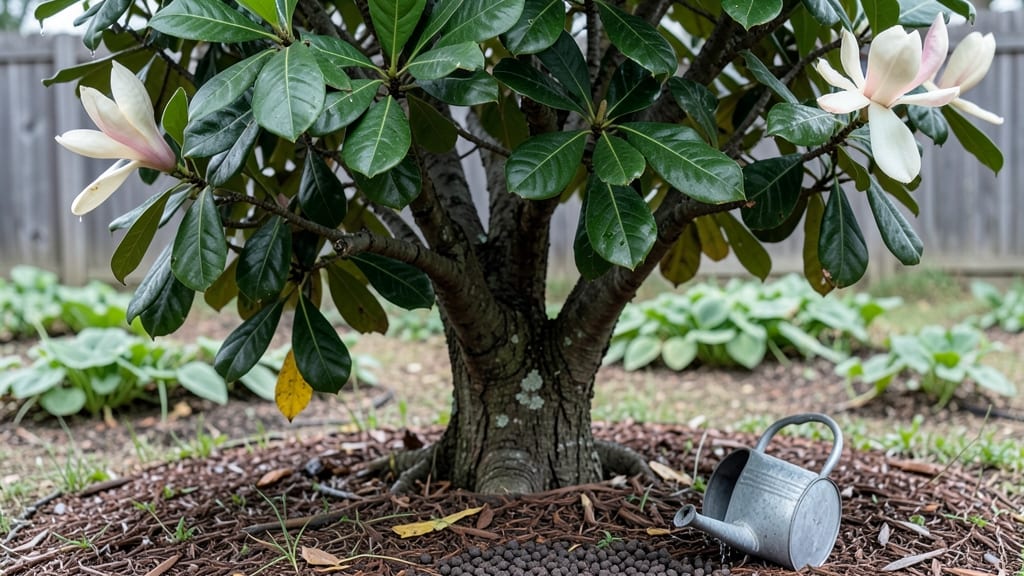
Feeding magnolia trees 🌸 with the right nutrients transforms them from struggling underperformers into showstopping stars in your yard.
Struggling to get your magnolia tree to bloom beautifully year after year? The secret often lies in feeding it the right nutrients at the right time—yet many gardeners overlook this critical step.
Without proper nourishment, even the hardiest varieties can produce sparse blooms or weak growth, leaving you wondering why your tree isn’t thriving like your neighbor’s.
Magnolias thrive when fed a balanced diet of nitrogen, phosphorus, and potassium, but timing matters just as much as the fertilizer itself. Too much too soon can burn roots, while skipping feedings entirely stunts growth.
The good news? With the right approach—whether you prefer organic compost or slow-release granules—you can coax out lush foliage and abundant flowers that’ll make your spring garden the envy of the block.
In this guide, I’ll walk you through the best fertilizers, the perfect feeding schedule, and how to spot when your tree is hungry (or overfed). By the end, you’ll know exactly how to feed magnolia trees for stronger blooms and healthier growth, no guesswork required.

Seasonal feeding schedule for magnolia trees: what to feed and when
Magnolia trees thrive when fed the right nutrients at the right time, but their feeding schedule varies dramatically by season. Unlike many plants, magnolias are sensitive to over-fertilization, which can burn roots and reduce blooms.
The key is a balanced approach—providing nutrients when the tree is actively growing while avoiding feeding during dormancy. Let’s break down the ideal feeding schedule for each season to ensure your magnolia blooms abundantly year after year.
Spring is the most critical feeding window for magnolias. As temperatures rise and buds form, your tree needs a high-phosphorus fertilizer (like 10-10-10) to support root growth and flower development. Apply a slow-release granular fertilizer in early spring, just as new leaves emerge.
For organic gardeners, compost or worm castings work wonders, adding nutrients gradually without risking root burn. Avoid heavy nitrogen feeds—this can lead to leafy growth at the expense of blooms.
Summer feeding should be light and infrequent. Once your magnolia is established, a monthly application of diluted fish emulsion (1-2 tbsp per gallon of water) provides micronutrients without overwhelming the tree. Focus on watering deeply rather than fertilizing heavily, as summer heat stresses roots.
If you notice yellowing leaves, it might signal a magnesium deficiency, which can be corrected with Epsom salt (1 tbsp per gallon of water, applied to the soil).
Fall is a no-feed zone for magnolias. As temperatures drop and growth slows, the tree enters dormancy. Feeding in fall can stimulate late-season growth that won’t harden off before winter, leaving your tree vulnerable to frost damage.
Instead, focus on mulching around the base with 2-3 inches of organic matter (like shredded bark) to insulate roots and retain moisture.
Winter care is all about protection, not feeding. Magnolias are dormant, and their roots are inactive. Avoid disturbing the soil or applying fertilizers, as they won’t be absorbed.
If you live in a USDA Zone 6 or colder, young magnolias may need winter protection, such as wrapping the trunk with burlap or using anti-desiccant sprays to prevent frost cracks.
Here’s a quick reference for your seasonal feeding schedule, including fertilizer types, application timing, and key tips to avoid common mistakes:
For young magnolia trees (under 5 years old), you’ll want to feed more frequently but lightly. Use a half-strength fertilizer every 6-8 weeks during spring and summer to encourage root development without stressing the plant.
Older, established magnolias can handle a full-strength application once or twice per year, typically in early spring and mid-summer. Always water thoroughly after applying fertilizer to help nutrients penetrate the soil.
One of the biggest mistakes I see is over-fertilizing in fall. Many gardeners want to give their trees a "boost" before winter, but this can lead to soft, tender growth that freezes and dies back. Instead, let your magnolia rest and store energy for next year’s blooms.
If your tree isn’t flowering as expected, it might be time to test your soil’s pH—magnolias prefer slightly acidic soil (pH 5.0-6.5). Amend with sulfur if needed to create the ideal growing conditions.
Pro tip: Mix a handful of bone meal into the soil around your magnolia in early spring. Bone meal is rich in phosphorus, which directly supports flower production. Sprinkle it lightly over the root zone and water it in well.
This simple trick can lead to larger, more vibrant blooms the following season. Just be sure to keep it away from the trunk to avoid direct contact with the bark.
Finally, keep an eye out for nutrient deficiencies. Yellow leaves between veins often signal iron deficiency, while purple stems or leaves may indicate phosphorus shortage. If you spot these signs, adjust your fertilizer blend or apply a targeted supplement (like chelated iron or rock phosphate) to correct the imbalance.
With the right feeding schedule, your magnolia will reward you with show-stopping blooms for decades to come. 🌸
Best organic vs. synthetic fertilizers for magnolia trees: pros and cons
Choosing the right fertilizer for your magnolia tree can make the difference between vibrant blooms and stunted growth. Both organic and synthetic fertilizers have their place, but understanding their unique benefits helps you decide what works best for your tree's health.
Let's break down the key differences so you can feed your magnolia with confidence.
Organic fertilizers, like compost, worm castings, and fish emulsion, release nutrients slowly, improving soil structure over time. They’re ideal for gardeners who prioritize long-term soil health and microbiome balance.
On the other hand, synthetic fertilizers provide quick nutrient boosts with precise NPK ratios, perfect for addressing immediate deficiencies or encouraging rapid blooming.
Organic Fertilizers for Magnolia Trees
Pros
- ✅ Improves soil over time
- ✅ Slow-release nutrients reduce burn risk
- ✅ Supports beneficial microbes
- ✅ Eco-friendly and sustainable
Cons
- ❌ Slower results for immediate needs
- ❌ Requires regular application
- ❌ Can attract pests if overused
Synthetic Fertilizers for Magnolia Trees
Pros
- ✅ Fast nutrient delivery for quick results
- ✅ Precise NPK ratios for targeted growth
- ✅ Easy to apply and store
Cons
- ❌ Risk of over-fertilization and burn
- ❌ No soil enrichment benefits
- ❌ Environmental concerns with runoff
If you're growing a Southern magnolia or star magnolia, organic options like well-aged compost or fish emulsion can enhance soil fertility and encourage robust root development.
For faster blooms, a balanced synthetic fertilizer (like 10-10-10) in early spring can give your tree the phosphorus boost it needs for flower production.
For young magnolia trees, I recommend starting with organic matter like worm castings to build a healthy foundation. Once established, you can supplement with a slow-release organic fertilizer or a synthetic bloom booster in late winter to jumpstart spring growth.
Always water thoroughly after applying any fertilizer to prevent root burn.
Remember, over-fertilizing is a common mistake—especially with synthetics. Magnolias prefer moderate feeding and can suffer from nutrient toxicity if overloaded. If you notice yellowing leaves or stunted growth, flush the soil with water to dilute excess salts and adjust your feeding routine accordingly.
For the best results, I suggest a mixed approach: use organic fertilizers to improve soil health long-term while adding a targeted synthetic feed during peak growing seasons. This balance ensures your magnolia stays healthy, blooms beautifully, and thrives for years to come. 🌸