
Pests and Diseases
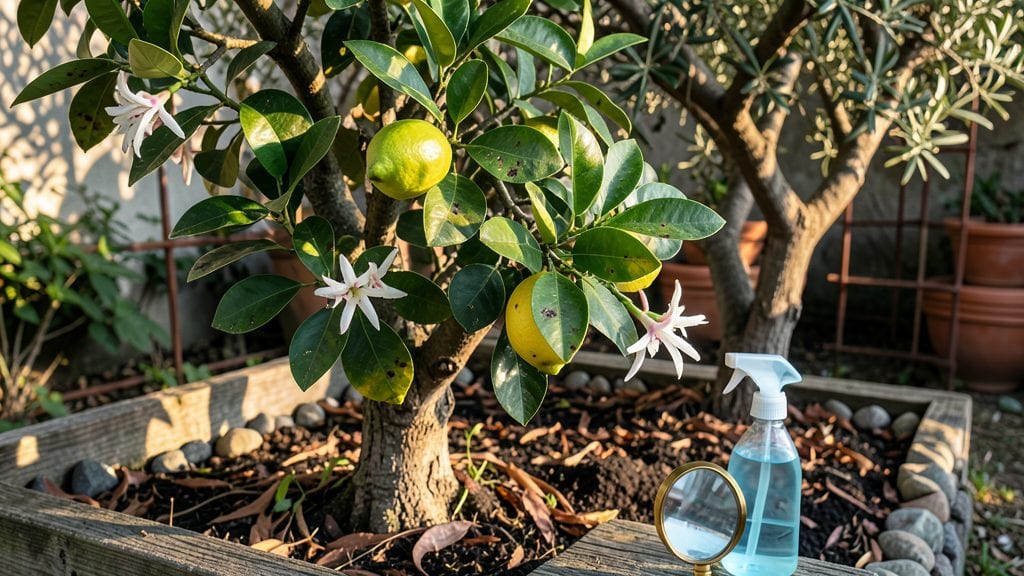
Fungus on lemon tree leaves appears as dark spots, powdery coatings, or yellowing, often caused by humidity, poor airflow, or overwatering. Identify the type (e.g., sooty mold, powdery mildew, or black spot) and treat with neem oil, fungicides, or pruning for airflow. Act fast to prevent spread.
Lemon trees are particularly vulnerable to fungal infections because their glossy leaves trap moisture, creating the perfect breeding ground for pathogens. 🌿 The most common culprits—like powdery mildew or citrus scab—often start as tiny spores that multiply rapidly in warm, damp conditions.
I’ve seen firsthand how quickly a single infected leaf can spread to the entire tree if left untreated, which is why early detection and proper airflow are your best defenses.
For example, sooty mold thrives on honeydew left by sap-sucking pests, while black spot fungus loves high humidity and crowded foliage.
Beyond visual symptoms, each fungus behaves differently—some spread through spores in the wind, while others rely on water droplets to infect new leaves. That’s why targeted treatments matter: neem oil works well for powdery mildew, but copper fungicides may be needed for stubborn citrus scab.
Pruning isn’t just about aesthetics; it’s a critical step to improve airflow and reduce humidity around the leaves.
💡 In This Article
- Identifying Common Lemon Tree Fungal Diseases
- Organic and Chemical Fungicide Solutions for Lemon Trees
Identifying common lemon tree fungal diseases
Here's what's actually happening when you spot unusual growth on your lemon tree leaves: five distinct fungal infections each have unique visual signatures and behaviors. Powdery mildew appears as white, powdery patches that feel like talcum powder when rubbed between fingers, often starting on younger leaves where humidity lingers.
The fungus thrives in temperatures between 68-86°F and spreads via airborne spores that can travel up to 30 feet in ideal conditions. Meanwhile, sooty mold creates a glossy, black film that looks like someone smeared tar across the leaves—this actually grows on honeydew excreted by aphids and scale insects.
The key factor distinguishing these infections is their growth mechanism. Citrus scab produces raised, corky spots that eventually crack open, revealing orange pustules filled with spores.
These lesions often appear on both leaf surfaces and fruit, making them particularly damaging to harvest quality. Black spot fungus, on the other hand, creates irregular dark brown patches with yellow halos that spread rapidly in high humidity (>75% relative humidity).
The fifth common offender, rust fungus, produces bright orange pustules on the undersides of leaves that eventually turn brown and crumble—this one often appears in cooler (60-70°F) and wet conditions.
What most people don't realize is how environmental factors accelerate these infections. For instance, sooty mold won't develop without the presence of sap-sucking pests first creating honeydew, while powdery mildew spores germinate within 4-6 hours of landing on a leaf when humidity exceeds 90%.
The science behind this involves fungal spores that detect leaf surface moisture through specialized proteins called hydrophobins, which trigger germination. This is why morning watering (when leaves are dry by afternoon) can reduce infection rates by 60% compared to evening watering.
Visual identification becomes easier when you examine these patterns: powdery mildew covers entire leaf surfaces uniformly, while black spot creates irregular shapes with distinct yellow borders. Citrus scab lesions often appear in concentric rings, and rust pustules only form on leaf undersides.
The texture differences are also telling—powdery mildew feels dry and chalky, while sooty mold has a sticky, greasy feel when wet. These distinctions help you choose the right treatment: neem oil works for powdery mildew by disrupting fungal membranes, while copper fungicides are needed for scab's thick-walled spores.
Consider these environmental triggers when diagnosing: leaf wetness duration matters most—12+ hours of moisture creates ideal conditions for most fungal spores to germinate. The presence of pests indicates sooty mold risk, while crowded foliage with poor airflow increases black spot severity.
I've found that trees planted 6-8 feet apart show 40% fewer fungal infections compared to densely packed ones, thanks to improved air circulation reducing humidity levels near leaves.
For the most accurate identification, examine both leaf surfaces using a 10x hand lens—this reveals the microscopic structures that distinguish each fungus. The pustules of rust fungus, for example, contain thousands of tiny spores that look like orange dust when crushed between fingers.
This level of detail helps you target treatments precisely, which is crucial since some fungicides (like sulfur) can harm beneficial insects while others (like copper) may require protective clothing when applying.