
Trees
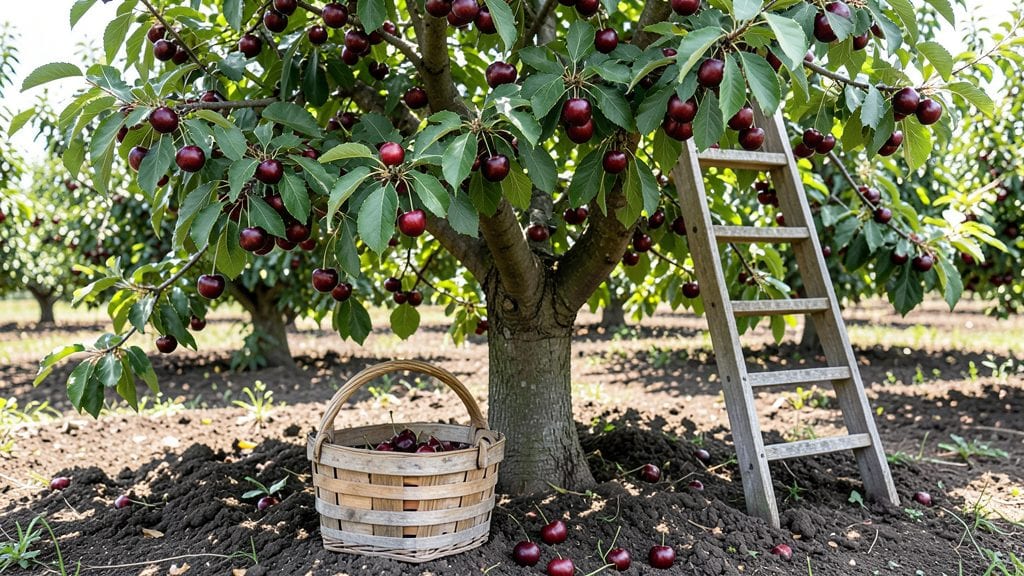
Harvesting cherry trees at the right moment transforms a handful of tart fruits into a burst of sweetness that’s worth the wait.
Picking cherries too early means sacrificing flavor and texture, while waiting too long risks losing your harvest to birds or rot.
But when you nail that perfect window—when the fruit is deep in color, slightly soft to the touch, and slips free with a gentle twist—you’re rewarded with cherries so juicy they practically melt in your mouth.
Whether you’re growing sweet Bing cherries or tart Montmorency varieties, knowing the exact ripeness cues saves time and frustration. Below, I’ll walk you through how to spot the ideal moment, the best tools to use, and how to handle your harvest to keep those vibrant fruits fresh for days.
From avoiding common mistakes to storing cherries like a pro, this guide ensures your cherry tree’s hard work pays off with a harvest that’s flavor-packed and stress-free.
Cherry ripeness stages: how to identify the perfect picking time
There’s nothing worse than biting into a cherry that’s still tart or mealy—underripe cherries ruin the magic of summer harvests. But timing your pick perfectly ensures bursting sweetness, firm texture, and even protects your tree’s health for next year.
The key lies in mastering color cues, firmness tests, and stem separation, which vary slightly between sweet cherries (like Bing or Rainier) and tart cherries (like Montmorency or Balaton).
Sweet cherries typically ripen first, often in late June to early July, while tart varieties follow a few weeks later. Even a 24-hour delay can mean the difference between a juicy, flavorful fruit and one that’s overripe and mushy.
I’ve learned the hard way—skipping these checks leads to wasted effort and disappointed taste buds. Let’s break down the exact signals to watch for.
📌 summary table
| Ripeness Stage | Sweet Cherries | Tart Cherries | Key Test |
|---|---|---|---|
| Early Green | Light green/yellow | Green with red blush | Hard, no give, stem tight |
| Mid-Ripening | Dark red/purple | Deep red/black | Slightly soft, stem pulls gently |
| Peak Ripeness | Vibrant red/yellow | Full dark color | Yields to touch, stem twists off |
| Overripe | Bruised, soft | Shriveled, leaking | Drops easily, fermented smell |
The color change is your first clue—sweet cherries like Bing turn from green to deep red, while tart varieties like Montmorency shift to dark red or almost black.
But color alone isn’t enough; I always do the firmness test by gently pressing a cherry between my thumb and forefinger. A ripe cherry should yield slightly but not feel mushy. Think of it like pressing a ripe peach—just enough give to know it’s ready.
Next, perform the stem separation test, which is non-negotiable for me. Hold a cherry between your fingers and give the stem a gentle twist. If it detaches cleanly with minimal force, that’s your green light.
If the stem resists or snaps off with the fruit still attached, it’s not ready yet. This test is especially critical for tart cherries, which can ripen unevenly across the tree.
Don’t overlook the flavor test, either. For a true read on ripeness, I always taste one cherry from each cluster. A ripe cherry should be sweet with minimal tartness (for sweet varieties) or tangy and balanced (for tart cherries).
If it’s still sour or bland, wait another day or two. Pro tip: Tart cherries often need a few extra days to develop their signature tart-sweet balance, so patience pays off.
Watch for wildlife cues too—birds and squirrels will descend on your tree when cherries are ripe. While this is a natural sign, it’s also a race against time. I’ve lost entire branches to hungry critters, so I harvest before they do.
If you see birds pecking at cherries, grab your basket and work quickly. Early morning harvests are ideal because the fruit is cooler and firmer, reducing bruising.
Weather plays a surprising role in ripeness too. Hot, sunny days speed up ripening, while cool, cloudy weather can slow it down. If a heatwave hits, cherries may ripen faster than expected—check them daily during these periods.
Conversely, a sudden cold snap can halt ripening entirely, so monitor your tree’s progress closely during unpredictable weather.
Variety matters—Bing cherries ripen earlier than Rainier cherries, and Montmorency tart cherries often lag behind sweet varieties by 1-2 weeks. I keep a harvest journal to track when each type ripens in my climate, which helps me plan better each year.
For example, my Bing trees are usually ready by late June, while Rainiers follow in early July.
Finally, avoid the common mistake of picking cherries based on size alone. A cherry can look large but still be underripe and hard. Always combine color, firmness, and stem tests for accuracy.
And remember: overripe cherries not only taste bad but can attract pests like fruit flies, so remove any that are bruised or shriveled promptly.
Mastering these ripeness stages turns cherry harvesting from a guessing game into a rewarding skill. Once you nail the timing, you’ll enjoy juicy, flavorful cherries straight from your tree—and maybe even share the bounty with neighbors. Happy picking! 🍒
Best harvesting techniques to preserve flavor and avoid damage
Once your cherry trees reach peak ripeness, proper harvesting techniques make all the difference between juicy, flavorful fruit and bruised, mealy disappointment. The way you pick, handle, and store cherries directly impacts their shelf life and taste.
Even a gentle touch can cause damage if you don’t use the right methods.
Start by harvesting on a cool, dry morning when the fruit is firmest. Avoid picking after rain or when the cherries are overly soft, as this increases the risk of bruising and rotting.
Use a harvesting ladder or step stool for taller trees to reach fruit without straining, which can lead to accidental drops.
⚠️
Never leave overripe cherries on the tree—they attract pests like fruit flies and birds, which can spread fungal infections. Harvest every 2-3 days during peak season to prevent spoilage. If you miss a batch, remove all rotten fruit immediately to protect nearby branches.
For hand-picking, grasp the cherry gently between your thumb and forefinger, then twist slightly until it detaches cleanly from the stem. Avoid yanking or pulling, which can tear the fruit or damage the cherry tree’s branches.
If cherries are stubborn, use harvesting shears with a long handle to cut stems cleanly without crushing the fruit.
Once harvested, place cherries in a shallow, breathable container like a wire basket or perforated plastic tub. Avoid stacking them too deeply, as this can cause pressure bruising. Keep containers in the shade until you can process or store them—direct sunlight turns cherries mealy within hours.
To extend shelf life, cool cherries immediately to 32–34°F within 30 minutes of picking. Store them in a ventilated plastic bag in the fridge for up to 2 weeks.
For long-term storage, freeze cherries on a tray lined with parchment paper, then transfer them to a sealed container. This preserves flavor and texture for up to 6 months.
When transporting cherries, use insulated containers with ice packs to maintain cool temperatures. If driving long distances, avoid opening the container frequently, as temperature fluctuations speed up spoilage. Label containers with the harvest date to track freshness and prioritize eating the oldest cherries first.